Trachycarpus fortunei
(Hook. f.) H. A. Wendl.
Chinese Windmill palm, Fortune's chusan-palm
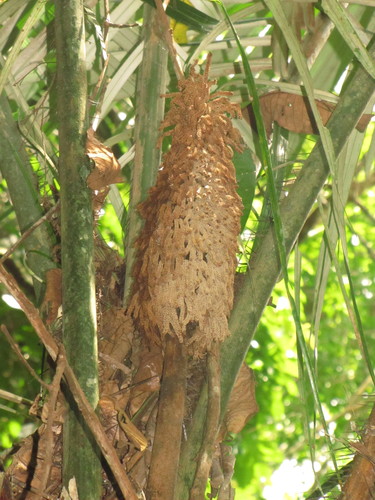
iNaturalist· cc-by-nc
(c) ChuSR, some rights reserved (CC BY-NC), uploaded by ChuSR
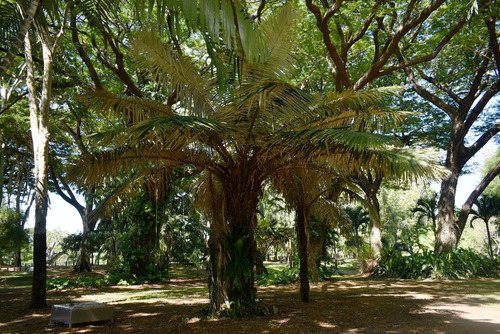
iNaturalist· cc-by
(c) Marco Mussita, some rights reserved (CC BY), uploaded by Marco Mussita
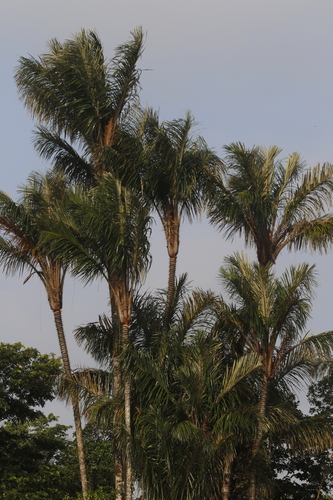
iNaturalist· cc-by-nc
(c) Alexander Rumpel, some rights reserved (CC BY-NC), uploaded by Alexander Rumpel
Summary
Source: WikipediaTrachycarpus fortunei, also known as the Chusan palm, Chinese windmill palm, hemp palm, or simply windmill palm, is a species of hardy evergreen palm tree in the family Arecaceae, native to parts of China, Japan, Myanmar and India.
Description
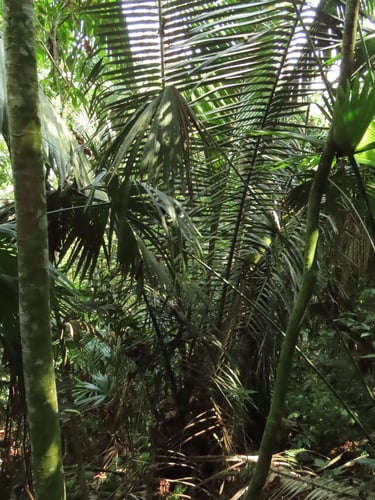
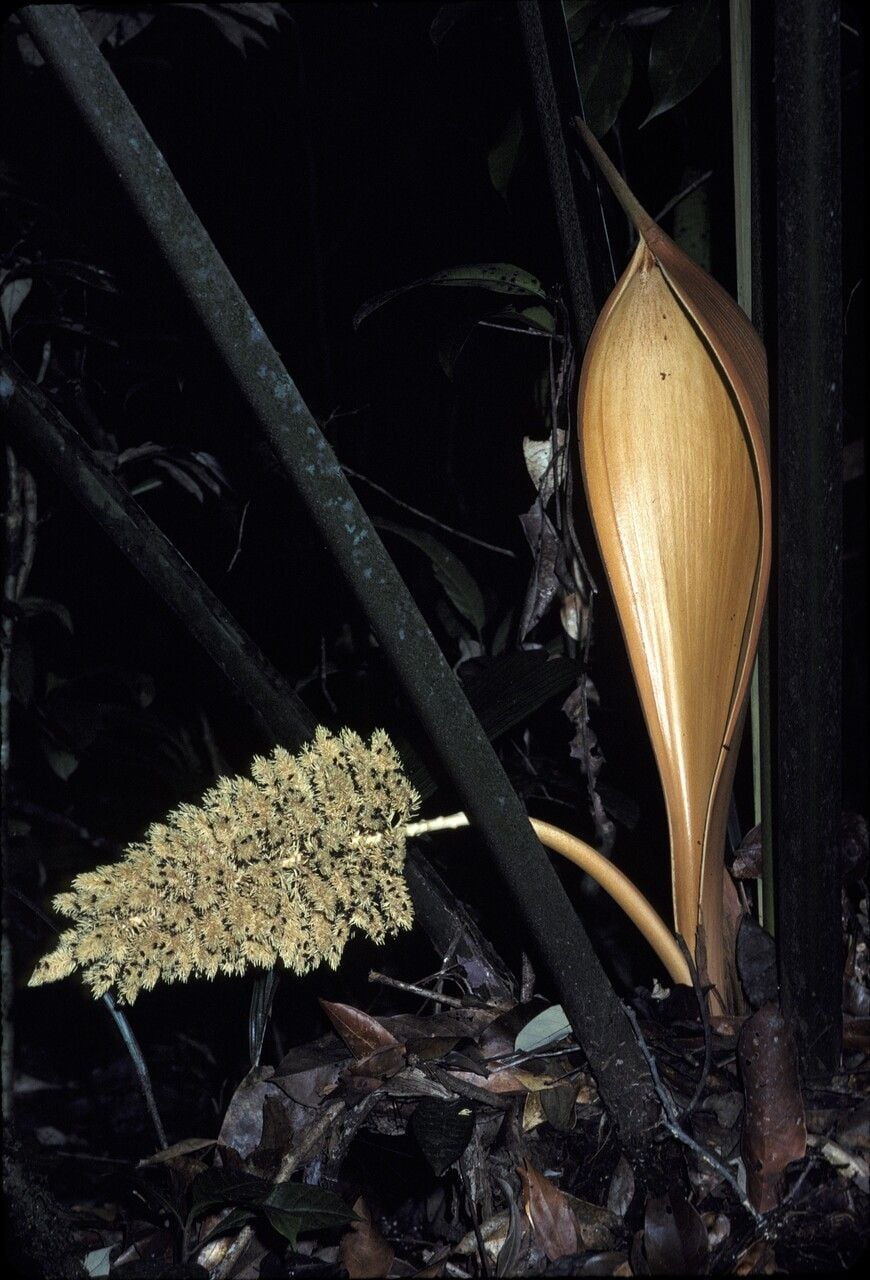
A fan palm. It has a slender trunk. It grows 9-15 m tall and spreads 2.5-3 m wide. The leaves are fan shaped. The leaves are mid green and 1 m long by 1 m wide. They are pleated and split at the ends. This gives a jagged tooth-like appearance. The leaf stalks are sharply toothed and 1 m long. These arch out from the top of an upright stem. The trunk is covered with the remains of the dead leaves. Male and female flowers are on separate trees. The flowers are small and yellow. They occur in large dense clusters that can be 60 cm long. The fruit are small and blue-black and date-like. They are 1 cm long and kidney shaped.
Edible Uses
Young flower buds are cooked and used much like bamboo shoots. The fresh flowers and terminal bud are also apparently consumed.
Traditional Uses
The flowers are edible. The young flower buds are eaten like bamboo shoots. They are also marinated in honey and vinegar. The terminal bud is eaten. A tea drink made from the seeds is used to make blood pressure normal.
Medicinal Uses
The flowers and seed are astringent and haemostatic. The root or fruit is decocted for use as a contraceptive. Ashes from the plant's silky hairs are also haemostatic — mixed with boiling water, they are used to treat haemoptysis, nosebleeds, haematemesis, blood in stools, metrorrhagia, gonorrhoea, and other venereal diseases.
Distribution
It is a warm temperate plant. It is native to C. & S. China. It can tolerate cold. They can tolerate temperatures as low as -15°C. It is very difficult to grow in the tropics. It suits hardiness zones 8-11. Arboretum Tasmania. Hobart Botanical Gardens. Melbourne Botanical Gardens. In Yunnan.
Where It Grows
Antigua and Barbuda, Argentina, Asia, Australia, Bhutan, Britain, China*, Europe, Germany, Himalayas, India, Indochina, Indonesia, Japan*, Mediterranean, Myanmar, Nepal, Pakistan, SE Asia, Slovenia, Tasmania, Turkey, Türkiye, Vietnam,
Cultivation
Plants are grown from seed. Seed germinate easily. Plants grow alone rarely produce seed.
Propagation
Scarify or pre-soak seed for 24 hours in warm water, then sow in a cold frame in mid to late winter. Move into the greenhouse about 4–6 weeks later; seed should germinate in roughly 4–8 weeks at 25°C. Prick seedlings into individual pots as soon as they are large enough to handle, and grow on in the greenhouse for at least their first winter. Plant out into permanent positions in late spring or early summer after the last expected frosts, and consider providing cold protection during their first winter outdoors. Pot up suckers in late spring and plant out into permanent positions 12 months later.
Other Uses
The fibres cloaking the trunk are used to make ropes and cloth, while fibres from within the leafstalk are used for brushes, ropes, and coarse cloth. A matting is made from the bark mixed with some stem fibres. The leaves are woven into hats, rough coats, and fans.
Notes
There are 6-8 Trachycarpus species.
Synonyms
Also Known As
Chusan Palm, Palem kincir angin, Visoka žumara
References (33)
- Ambasta, S.P. (Ed.), 2000, The Useful Plants of India. CSIR India. p 642
- Balick, M.J. and Beck, H.T., (Ed.), 1990, Useful palms of the World. A Synoptic Bibliography. Colombia p 121, 370 (As Chamaerops excelsa),
- Blamey, M and Grey-Wilson, C., 2005, Wild flowers of the Mediterranean. A & C Black London. p 502
- Blomberry, A. & Rodd, T., 1982, Palms. An informative practical guide. Angus & Robertson. p 172
- Bodkin, F., 1991, Encyclopedia Botanica. Cornstalk publishing, p 989
Show all 33 references Hide references
- Brickell, C. (Ed.), 1999, The Royal Horticultural Society A-Z Encyclopedia of Garden Plants. Convent Garden Books. p 1018
- Coombes, A.J., 2000, Trees. Dorling Kindersley Handbooks. p 232
- Cundall, P., (ed.), 2004, Gardening Australia: flora: the gardener's bible. ABC Books. p 1426
- Ertug, F., 2004, Wild Edible Plants of the Bodrum Area. (Mugla, Turkey). Turk. J. Bot. 28 (2004): 161-174
- Essig, F. B. and Dong, Y., 1987, The Many Uses of Trachycarpus fortunei (Arecaceae) in China. Economic Botany 41(3): 411-417
- Facciola, S., 1998, Cornucopia 2: a Source Book of Edible Plants. Kampong Publications, p 31
- Flora of Pakistan. www.eFloras.org
- Gay, Bull. Soc. Bot. France 8:429. 1863 ("1861")
- Gibbons, M., 1993, Palms. Compact study Guide and Identifier. Sandstone. p 73
- Gibbons, M., 2003, A pocket guide to Palms. Chartwell Books. p 208
- Harris, E & J., 1983, Field Guide to the Trees and Shrubs of Britain. Reader's Digest. p 182
- Haynes, J., & McLaughlin, J., 2000, Edible palms and Their Uses. University of Florida Fact sheet MCDE-00-50-1 p 13
- Hedrick, U.P., 1919, (Ed.), Sturtevant's edible plants of the world. p 651
- Hibbert, M., 2002, The Aussie Plant Finder 2002, Florilegium. p 301
- http://www.botanic-gardens-ljubljana.com/en/plants
- Hu, Shiu-ying, 2005, Food Plants of China. The Chinese University Press. p 304
- Johnson, D.V., 1998, Tropical palms. Non-wood Forest products 10. FAO Rome. p 48
- Jones, D.L., 1994, Palms throughout the World. Smithtonian Institution, Washington. p 367
- Joyce, D., 1998, The Garden Plant Selector. Ryland, Peters and Small. p 120
- Liu, Yi-tao, & Long, Chun-Lin, 2002, Studies on Edible Flowers Consumed by Ethnic Groups in Yunnan. Acta Botanica Yunnanica. 24(1):41-56
- Lord, E.E., & Willis, J.H., 1999, Shrubs and Trees for Australian gardens. Lothian. p 100
- Riffle, R.L. & Craft, P., 2003, An Encyclopedia of Cultivated Palms. Timber Press. p 465
- Ryan, S., 2008, Dicksonia. Rare Plants Manual. Hyland House. p 59
- Schuler, S., (Ed.), 1977, Simon & Schuster's Guide to Trees. Simon & Schuster. No. 67
- Sukarya, D. G., (Ed.) 2013, 3,500 Plant Species of the Botanic Gardens of Indonesia. LIPI p 821
- Valder, P., 1999, The Garden Plants of China. Florilegium. p 335
- World Checklist of Useful Plant Species 2020. Royal Botanic Gardens, Kew
- Xu, You-Kai, et al, 2004, Wild Vegetable Resources and Market Survey in Xishuangbanna, Southwest China. Economic Botany. 58(4): 647-667.