Bidens pilosa
L.
Cobbler’s pegs, Spanish needles
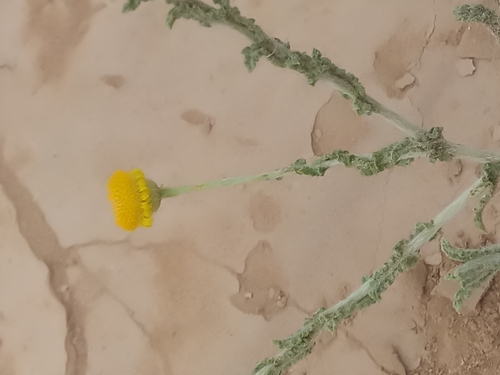
iNaturalist· cc-by-nc
(c) gg_copen, some rights reserved (CC BY-NC)
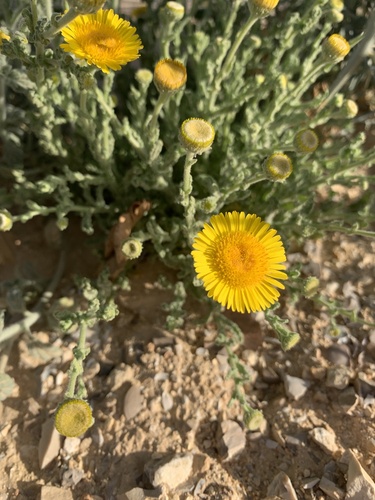
iNaturalist· cc-by-nc
(c) 博甫, some rights reserved (CC BY-NC), uploaded by 博甫
iNaturalist· cc-by-nc
(c) Sarah Wang, some rights reserved (CC BY-NC), uploaded by Sarah Wang
Summary
Source: WikipediaBidens pilosa is an annual species of herbaceous flowering plant in the daisy family Asteraceae. Its many common names include hitch hikers, black-jack, beggarticks, farmer's friends and Spanish needle, but most commonly referred to as cobblers pegs. It is native to the Americas but is widely distributed as an introduced species in other regions including Eurasia, Africa, Australia, South America and the Pacific Islands, and is classified as an invasive species in some regions of the world.
Description
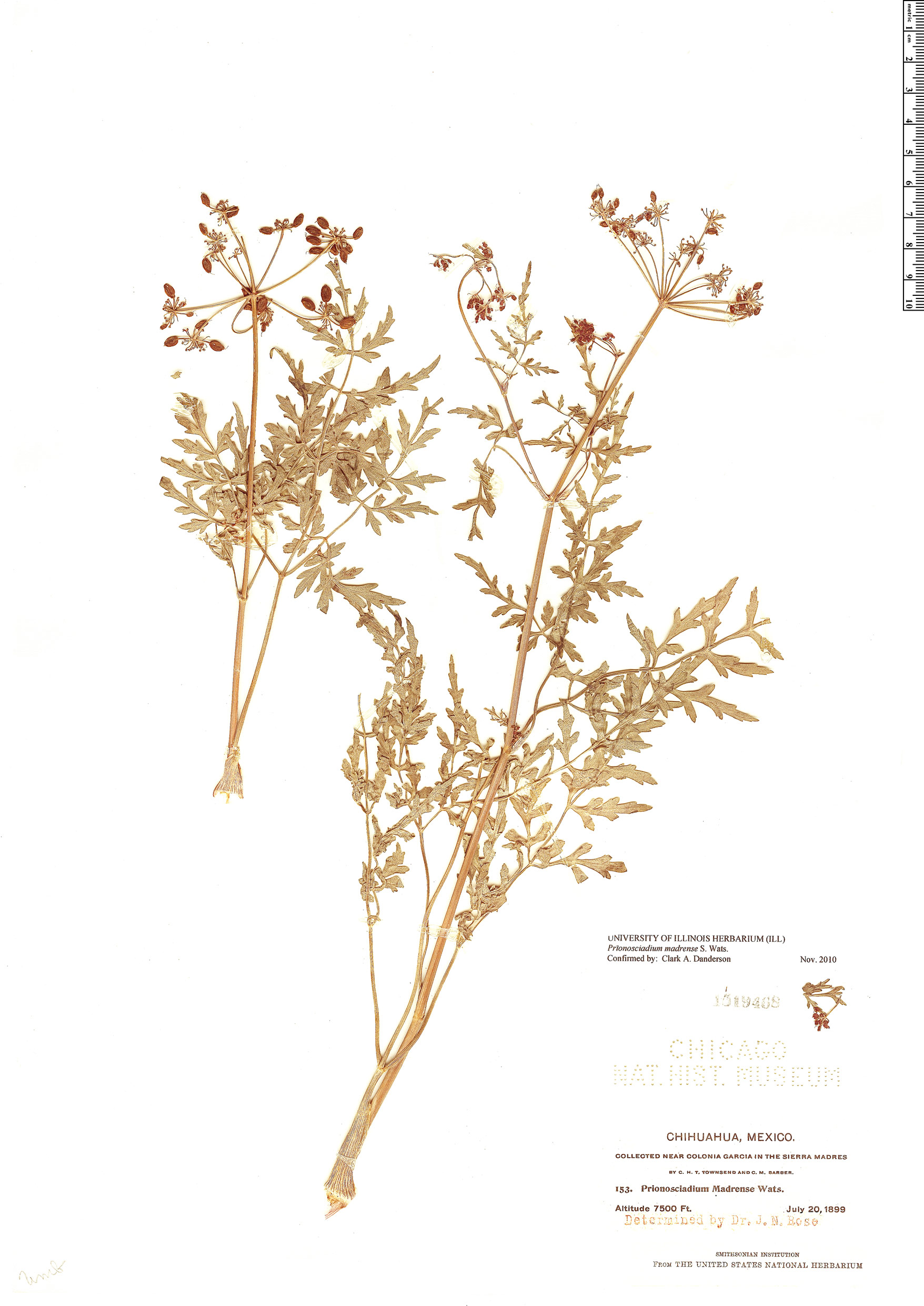
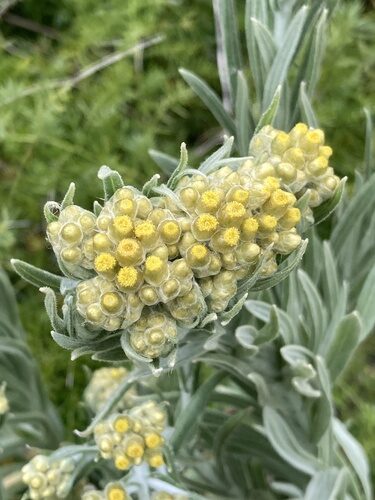
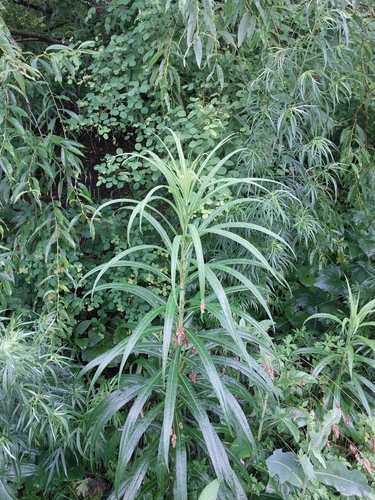
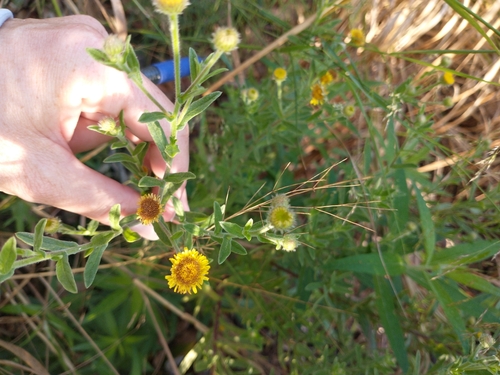
A small annual upright herb with small black seeds in heads. It is an erect branched herb 0.2 to 1.5 m tall. The branches or stems have parallel lines or ridges. The stems are four angled. The leaves are up to 15 cm long with the upper ones much smaller. The leaves are divided into 3-5 leaflets. The end leaflet is usually larger (3 cm x 9 cm). The edges of the leaves are toothed. The flowers occur at the end of branches. They are on long stalks. The flowers are brown or yellow. The seeds are black with 2-4 projections at the top. (The seeds often stick to clothes.)
Edible Uses
Edible Parts: Leaves Shoots Edible Uses: Tea Leaves - raw or cooked. A resinous flavour. Added to salads or steamed and added to soups and stews, they can also be dried for later use.A good source of iodine. A nutritional analysis is available. Young shoot tips are used to make a tea. Edible Uses & Rating Leaves edible fresh or cooked, flowers for tea. Seeds inedible due to barbs [2-3]. Edibility rating: (4/5). Taste, Processing & Kitchen Notes: Flavor similar to lettuce with marine, resinous nuance that softens when boiled. Boiling removes bitterness; resulting greens mild, tender, and bright green. Excellent in soups, stir-fries, or with fish dishes. Tea from leaves or flowers is reddish-brown, pleasant, and earthy. Cypselae can technically yield a beverage after toasting, pounding, boiling, and filtering, though collection and processing are impractical and hazardous. Seasonality (Phenology): Grows spring to frost; flowers summer–autumn; leaves tender until late bloom [2-3]. Harvest & Processing Workflow: Harvest tender shoots and young leaves pre-flowering; boil briefly, or dry for tea. Avoid mature seeding plants [2-3]. Cultivar/Selection Notes: No formal cultivars; landraces vary regionally. Look-Alikes & Confusion Risks: Similar to B. alba and B. odorata; identified by white rays and black, four-awned seeds. Traditional / Indigenous Use Summary: Used across the tropics for wound healing, malaria, stomach upset, and inflammation. Consumed as a staple leafy vegetable in Africa, Southeast Asia, and Latin America. Overall Plant Summary: A global wild vegetable and medicinal herb, resilient, nutritious, and ecologically beneficial—proof that a “weed” can be valuable food. References More on Edible Uses Composition Figures in grams (g) or miligrams (mg) per 100g of food. Leaves (Dry weight) 295 Calories per 100g Water : 0% Protein: 24.5g; Fat: 4g; Carbohydrate: 56.4g; Fibre: 12.1g; Ash: 15.1g; Minerals - Calcium: 1721mg; Phosphorus: 273mg; Iron: 0mg; Magnesium: 0mg; Sodium: 11mg; Potassium: 267mg; Zinc: 0mg; Vitamins - A: 12mg; Thiamine (B1): 0mg; Riboflavin (B2): 0mg; Niacin: 0mg; B6: 0mg; C: 0mg; Reference: Notes:
Traditional Uses
The seeds are used in making an Igorot rice wine called "sinitsit" in the Philippines. The seeds are eaten, particularly by children (e.g. in Enga) in Papua New Guinea. The young leaves are edible cooked. They should be cooked due to saponins. The leaves are cooked in soups and stews. The young leaves can be dried for later use. Fresh they can only be stored for 3-4 days. The flowers are also used as a substitute for tea.
Medicinal Uses
Alterative Antifungal Antiinflammatory Antirheumatic Styptic A juice made from the leaves is used to dress wounds and ulcers. A decoction of the leaves is anti-inflammatory, styptic and alterative. The whole plant is antirheumatic, it is also used in enemas to treat intestinal ailments. Substances isolated from the leaves are bactericidal and fungicidal, they are used in the treatment of thrush and candida.
Known Hazards
The roots, leaves and flowers are strongly phototoxic, the achenes weakly so. Substances isolated from the leaves can kill human skin in the presence of sunlight at concentrations as low as 10ppm. Avoid ingestion of cypselae; awns cause choking risk. Leaves safe cooked. Avoid contaminated urban sites.
Distribution
It grows in tropical rainforest areas. It grows on many different soil types. It grows from near sea level to over 2000 m altitude. It suits humid locations. It needs plenty of moisture and is not drought tolerant. Very common and widely distributed from northern Luzon to southern Mindanao in the Philippines. It occurs and is widely used throughout Malawi. It can grow in arid places. In Sichuan and Yunnan.
Where It Grows
Africa, America, American Samoa, Angola, Argentina, Asia, Australia, Azores, Bahamas, Belgium, Belize, Benin, Bermuda, Bhutan, Bolivia, Botswana, Brazil, Britain, British Indian Ocean Terr., BIOT, Burkina Faso, Burundi, Cameroon, Canada, Canary Island, Cape Verde, Caribbean, Central Africa, Central African Republic, CAR, Central America, Chad, Chile, China, Colombia, Comoros, Congo DR, Costa Rica, Côte d'Ivoire, Cuba, Dominica, Dominican Republic, East Africa, East Timor, Easter Island, Ecuador, Egypt, Equatorial-Guinea, Eritrea, Eswatini, Ethiopia, Europe, Fiji, Gabon, Gambia, Germany, Ghana, Guadeloupe, Guatemala, Guiana, Guianas, Guinea, Guinée, Guinea-Bissau, Guyana, Haiti, Hawaii, Himalayas, Honduras, India, Indochina, Indonesia, Ivory Coast, Jamaica, Japan, Kenya, Kiribati, Korea, Laos, Lesotho, Liberia, Libya, Madagascar, Malawi, Malaysia, Maldives, Mali, Marquesas, Martinique, Mauritania, Mauritius, Mexico, Middle East, Mozambique, Myanmar, Namibia, Nauru, Nepal, New Zealand, Nicaragua, Niger, Nigeria, Niue, Norfolk Island, North Africa, North America, Northeastern India, Oman, Pacific, Panama, Papua New Guinea, PNG, Paraguay, Peru, Philippines, Puerto Rico, Rotuma, Rwanda, Sahel, Sao Tome and Principe, Sao Tome and Principe, SE Asia, Senegal, Seychelles, Sierra Leone, Sikkim, Socotra, Somalia, South Africa, Southern Africa, South America, Spain, Sri Lanka, St Helena, St Lucia, Sudan, Suriname, Swaziland, Taiwan, Tanzania, Thailand, Tibet, Timor-Leste, Togo, Tonga, Trinidad-Tobago, Uganda, Uruguay, USA, Venezuela, Vietnam, West Africa, West Indies, Yemen, Zambia, Zimbabwe,
Cultivation
We have very little information on this species and do not know if it will succeed outdoors in Britain, though it should be possible to grow it as a spring-sown annual. The following notes are based on the general needs of the genus. Succeeds in any moderately fertile moisture-retentive soil in full sun. Identification & Habit: Annual to 110 cm, stems angled and hairy. Leaves opposite, simple or pinnate, with 3–5 lanceolate toothed leaflets. Heads radiate, 6–15 mm rays (white or yellow), disks yellow. Involucres 5–8 mm, cup-shaped. Fruits 4-angled cypselae, straight or slightly curved, with 2–4 barbed awns. Blooms July–October. Growing Conditions: Adapted to moist, rich loam, tolerates disturbance; full sun to part shade. Zones 8–12. Habitat & Range: Originally American; now naturalized worldwide in tropical/subtropical fields, gardens, and roadsides. Size & Landscape Performance: Height 0.3–1.1 m, width ~0.5 m; quick-growing, self-seeding. Cultivation (Horticulture): Sow directly; thrives in warm, wet climates. Harvest young shoots for best flavor. Pests & Problems: Generally trouble-free; occasional leaf spots in humid areas.
Propagation
Seed - sow early spring in a greenhouse and only just cover the seed. When they are large enough to handle, prick the seedlings out into individual pots and plant them out in May. Alternatively, a sowing in situ in mid to late spring can be tried.
Other Uses
Pesticide. Ecology & Wildlife: Important nectar source for bees; seed food for small birds; soil stabilizer. Special Uses
Production
It grows quickly. First leaves can be harvested 6 weeks after planting. Plants can be harvested for leaves 4-6 times over a 5-7 week period. Seed are produced 8-10 weeks after planting. Yields of leaves of 2 kg per metre square are possible.
Other Information
It is a commercially cultivated vegetable. This plant is a troublesome weed in many places. It is only a very minor food in Papua New Guinea. It is both grown and eaten in Africa. It is widely used throughout Malawi and Zimbabwe. It is sold in local markets.
Notes
This plant has been used in medicine and recent studies have shown these treatments are due to chemicals effective in controlling bacteria (gram positive types) and assisting liver function. Leaves are a good source of iodine. There are about 200 Bidens species. Most are in North America.
Nutrition
| Part | Moisture | kJ | kcal | Protein | Vit A | Vit C | Iron | Zinc |
|---|---|---|---|---|---|---|---|---|
| Leaves | 82 | 239 | 57 | 4.1 | — | 50 | — | — |
| Seeds | — | — | — | — | — | — | — | — |
Synonyms
Also Known As
Abulesega, Aceitilla, Aceitillo, Amor seco, Anantsinahibavy, Anyegomo, Ayegomon, Beggar's ticks, Bilodra, Black jack, Boboyo, Botongatonga, Burr marigold, Cadvolo, Chananguno, Chanonga, Chinomba, Chiseyo, Chisokono, Chisosoci, Choheke, Chuchuza, Daomeoai, Daun roten, Deumeubai, Djamwounkpi, Dong ma zhan, 'enwad, Enbureymaa, Enyikibon, Hei ni zuo ge mo, Hirikulha, Ilenjane, Inongwe, Itongatonga, Jarongan, Jerambing, Jongae, Jongee, Junqqu, Kabata, Kaella, Kakala, Kaliputi, Kalo kuro, Kamalara, Kanzota, Kapuninga, Karay, Kashisha, Katarey kuro, Keroten, Ketul, Kimana-ngasi, Kofetoga, Koheriki, Kuro, Lopalopa, Lungelima, Maina sag, Mayna arxa, Mbelembele, Mbwembwe, Mhuu, Mokolonyane, Monyana, Moonyane, Mozote, Mukkutthi, Mukongolo, Mushidzhi, Namulepo, Nat bar, Nihasha, Nsolokoto, Nyabarashana, Nyangudi, Nyanyiek-mon, Obukurra, Philungekuro, Picao-preto, Picon, Puriket, Rhobashing, Rumput juala, Saetilla, Sere, Sheng-niangbaicuo, Sine, Solokoto, Ta-sae-ut, Tanggom oying, Teretani, Thole, Trakavola, Tsetsega, Tsine, Tukchong-muk, Tungunira, Ucucuza, Umahogo, Umhlabangubo, Uqadolo, X'tiyu, Ya dong long, Za qie mo, Zouqie
References (153)
- Abbiw, D.K., 1990, Useful Plants of Ghana. West African uses of wild and cultivated plants. Intermediate Technology Publications and the Royal Botanic Gardens, Kew. p 41
- Achigan-Dako, E, et al (Eds), 2009, Catalogue of Traditional Vegetables in Benin. International Foundation for Science.
- Agea, J. G., et al 2011, Wild and Semi-wild Food Plants of Bunyoro-Kitara Kingdom of Uganda: etc. Environmental Research Journal 5(2) 74-86
- Altschul, S.V.R., 1973, Drugs and Foods from Little-known Plants. Notes in Harvard University Herbaria. Harvard Univ. Press. Massachusetts. no. 4871 (As Bidens pilosa var. bimucronata f odorata)
- Anywar, G., et al, 2014, Wild Plants Used as Nutraceuticals from Nebbi District, Uganda. European Journal of medicinal Plants. 4(6):641-660
Show all 153 references Hide references
- Asfaw, Z. and Tadesse, M., 2001, Prospects for Sustainable Use and Development of Wild Food Plants in Ethiopia. Economic Botany, Vol. 55, No. 1, pp. 47-62
- Ambasta S.P. (Ed.), 2000, The Useful Plants of India. CSIR India. p 73
- Awas, T., 1997, A Study on the Ecology and Ethnobotany of Non-cultivated Food Plants and Wild Relatives of Cultivated crops in Gambella Region, Southwestern Ethiopia. Addis Ababa University. p 41
- Baro, D., Baruah, S. and Borthukar, S. K. 2015, Documentation on wild vegetables of Baksa district, BTAD (Assam). Scholars Research Library. Archives of Applied Science Research, 2015, 7 (9):19-27
- Berihun, T. & Molla, E., 2017, Study on the Diversity and Use of Wild Edible Plants in Bullen District Northwest Ethiopia. Hindawi Journal of Botany. Article ID 8383468
- Bircher, A. G. & Bircher, W. H., 2000, Encyclopedia of Fruit Trees and Edible Flowering Plants in Egypt and the Subtropics. AUC Press. p 59
- Bodkin, F., 1991, Encyclopedia Botanica. Cornstalk publishing, p 146
- Bodner, C. C. and Gereau, R. E., 1988, A Contribution to Bontoc Ethnobotany. Economic Botany, 43(2): 307-369
- Borrell, O.W., 1989, An Annotated Checklist of the Flora of Kairiru Island, New Guinea. Marcellin College, Victoria Australia. p 62, 180
- Brown, W.H., 1920, Wild Food Plants of the Philippines. Bureau of Forestry Bulletin No. 21 Manila. p 152
- Burkill, H. M., 1985, The useful plants of west tropical Africa, Vol. 1. Kew.
- Burkill, I.H., 1966, A Dictionary of the Economic Products of the Malay Peninsula. Ministry of Agriculture and Cooperatives, Kuala Lumpur, Malaysia. Vol 1 (A-H) p 326
- Bvenura, C. and Afolayan, A. J., 2017, Tackling food and nutrition insecurity using leafy wild vegetables: The nutritional compositions of some selected species.
- Cao, Y., et al, 2020, Ethnobotanical study on wild edible plants used by three trans-boundary ethnic groups in Jiangcheng County, Pu’er, Southwest China. Journal of Ethnobiology and Ethnomedicine (2020) 16:66
- Carretero, A. L., 2005, Useful Plants and traditional knowledge in the Tucumano-Boliviano Forest. M. Sc. Thesis Institute of Biological Science University of Aarhus, Denmark p 52
- Cheng, Z., et al, 2022, Ethnobotanical study on wild edible plants used by Dulong people in northwestern Yunnan, China. Journal of Ethnobiology and Ethnomedicine (2022) 18:3
- Codjia, J. T. C., et al, 2003, Diversity and local valorisation of vegetal edible products in Benin. Cahiers Agricultures 12:1-12
- Cooper, W. and Cooper, W., 2004, Fruits of the Australian Tropical Rainforest. Nokomis Editions, Victoria, Australia. p 79
- Cribb, A.B. & J.W., 1976, Wild Food in Australia, Fontana. p 116
- Crowe, A., 1997, A Field Guide to the Native Edible Plants of New Zealand. Penguin. p 156
- Dangol, D. R. et al, 2017, Wild Edible Plants in Nepal. Proceedings of 2nd National Workshop on CUAOGR, 2017.
- Dansi, A., et al, 2008, Traditional leafy vegetables and their use in the Benin Republic. Genet Resour Crop Evol (2008) 55:1239–1256
- Dansi, A., et al, 2012, Diversity of the Neglected and Underutilized Crop Species of Importance in Benin. The Scientific World Journal. Volume 2012, Article ID 932947, 19 pages
- Diaz-Betancourt, M., et al, 1999, Weeds as a future source for human consumption. Rev. Biol. Trop. 47(3):329-338 (As Bidens odorata)
- Dutta, U., 2012, Wild Vegetables collected by the local communities from the Churang reserve of BTD, Assam. International Journal of Science and Advanced Technology. Vol. 2(4) p 119
- Ekman Herbarium records Haiti
- Epenhuijsen C.W. van., 1974, Growing Native vegetables in Nigeria. FAO Rome, p 38
- Facciola, S., 1998, Cornucopia 2: a Source Book of Edible Plants. Kampong Publications, p 34
- FAO, 1988, Traditional Food Plants, FAO Food and Nutrition Paper 42. FAO Rome p 104
- Flora of Australia Volume 49, Oceanic Islands 1, Australian Government Publishing Service, Canberra. (1994) p 399
- Fowler, D. G., 2007, Zambian Plants: Their Vernacular Names and Uses. Kew. p 12
- Fox, F. W. & Young, M. E. N., 1982, Food from the Veld. Delta Books. p 120
- Franklin, J., Keppel, G., & Whistler, W., 2008, The vegetation and flora of Lakeba, Nayau and Aiwa Islands, Central Lau Group, Fiji. Micronesica 40(1/2): 169–225, 2008
- French, B.R., 1986, Food Plants of Papua New Guinea, A Compendium. Asia Pacific Science Foundation p 317
- Gautam, R. S., et al, 2022, Ethnobotanical Review of Wild Edible Plants of Nepal. Journal of Natural History Museum Volume 32, 2021-22 p 106
- Ghorbani, A., et al, 2012, A comparison of the wild food plant use knowledge of ethnic minorities in Naban River Watershed Nature Reserve, Yunnan, SW China. Journal of Ethnobiology and Ethnomedicine; 8:17
- Godfrey, J. et al, 2013, Harvesting, preparationand preservation of commonly consumed wild and semi-wild food plants in Bunyoro-Kitara Kingdom, Uganda. Int. J. Med. Arom. Plants. Vol.3 No.2 pp 262-282
- Goode, P., 1989, Edible Plants of Uganda. FAO p 39
- Goode, P., 1989, Edible Plants of Uganda. FAO p 26
- Goode, P., 1989, Edible Plants of Uganda. FAO p 41
- Grubben, G. J. H. and Denton, O. A. (eds), 2004, Plant Resources of Tropical Africa 2. Vegetables. PROTA, Wageningen, Netherlands. p 114
- Guil-Guerrero, J. L., et al, 2001, Edible Wild Plants. in Recent Progress in Medicinal Plants Vol. 8 Sci. Tech publishing, Texas
- Haberle, S., 2005, Ethnobotany of the Tari basin, Southern Highlands Province, Papua New Guinea. Palaeoworks Technical Paper 6.
- Hani Medicine of Xishuangbanna, 1999, p 187
- Hariyadi, B., 2008, The Entwined Tree: Traditional Natural Resource Management of Serampas, Jambi, Indonesia. Ph. D thesis. Univ. or Hawaii. p 401
- Harkonen, M. & Vainio-Mattila, K., 1998, Some examples of Natural Products in the Eastern Arc Mountains. Journal of East African Natural History 87:265-278
- Henty, E.E., & Pritchard, G.S., 1973, Weeds of New Guinea and their control. Botany Bulletin No 7, Division of Botany, Lae, PNG. p 67
- Hussey, B.M.J., Keighery, G.J., Cousens, R.D., Dodd, J., Lloyd, S.G., 1997, Western Weeds. A guide to the weeds of Western Australia. Plant Protection Society of Western Australia. p 90
- Jardin, C., 1970, List of Foods Used In Africa, FAO Nutrition Information Document Series No 2.p 59 (Also as Bidens leucantha)
- Johns, T., and Kokwaro, J.O., 1991, Food Plants of the Luo of Siayo District, Kenya. Economic Botany 45(1), pp 103-113
- Joshi, N., et al, 2007, Traditional neglected vegetables of Nepal: Their sustainable utilization for meeting human needs. Tropentag 2007. Conference on International Agricultural Research for Development.
- Joshi, N. & Siwakoti, M., 2012, Wild Vegetables Used by Local Community of Makawanpur District and Their Contribution to Food Security and Income Generation. Nepal Journal of Science and Technology Vol. 13, No. 1 (2012) 59-66
- Kays, S. J., and Dias, J. C. S., 1995, Common Names of Commercially Cultivated Vegetables of the World in 15 languages. Economic Botany, Vol. 49, No. 2, pp. 115-152
- Kebebew, M. & Leta, G., 2016, Wild Edible Plant Bio-diversity and Utilization System in Nech Sar National Park, Ethiopia. International Journal of Bio-resource and Stress Management 2016, 7(4):885-896
- Kepe, T., 2008, Social Dynamics of the Value of Wild Edible Leaves (Imifino) in a South African Rural Area. Ecology of Food and Nutrition, 47:531-558
- Kinupp, V. F., 2007, Plantas alimenticias nao-convencionais da regiao metropolitana de Porto Alegre, RS, Brazil p 65
- Kinupp, V. F. & Bergman, I., 2008, Protein and minerals of native species, potential vegetables and fruits. Cienc.Tecnol. Aliment. Vol. 28 No. 4 Campinas Oct/Dec.
- Krishna, B., & Singh, S., 1987, Ethnobotanical Observations in Sikkim. J. Econ. Tax. Bot. Vol. 9 No. 1 pp 1-7
- Lamp, C & Collet F., 1989, Field Guide to Weeds in Australia. Inkata Press. p 36
- Latham, P., 2004, Useful Plants of Bas-Congo province. Latham & DFID p 50
- Latham, P. & Mbuta, A. K., 2014, Useful Plants of Bas-Congo Province, Democratic Republic of Congo. Volume 1. Salvation Army. p 76
- Lautenschläger, T., et al, 2018, First large-scale ethnobotanical survey in the province of Uíge, northern Angola. Journal of Ethnobiology and Ethnomedicine (2018) 14:51
- Lazarides, M. & Hince, B., 1993, Handbook of Economic Plants of Australia, CSIRO. p 33
- Leon-Lobos, P., et al, 2022, Patterns of Traditional and Modern Uses of Wild Edible Native Plants of Chile: Challenges and Future Perspectives. Plants (Basel) v 11 (6) Table S1
- Li, D. et al, 2017, Ethnobotanical survey of herbal tea plants from the traditional markets in Chaoshan, China. Journal of Ethnopharmacology. 205 (2017) 195-206
- Long, C., 2005, Swaziland's Flora - siSwati names and Uses http://www.sntc.org.sz/flora/
- Luo, B., et al, 2019, Wild edible plants collected by Hani from terraced rice paddy agroecosystem in Honghe Prefecture, Yunnan, China. Journal of Ethnobiology and Ethnomedicine 15:56
- Low, T., 1991, Wild Herbs of Australia and New Zealand. Angus & Robertson. p 72 (Drawing)
- Low, T., 1992, Bush Tucker. Australia’s Wild Food Harvest. Angus & Robertson. p 154
- Lulekal, E., et al, 2011, Wild edible plants in Ethiopia: a review on their potential to combat food insecurity. Afrika Focus - Vol. 24, No 2. pp 71-121
- Lyimo, M., et al, 2003, Identification and nutrient composition of indigenous vegetables of Tanzania. Plant Foods for Human Nutrition. 58: 85-92
- Magwede, K., van Wyk, B.-E., & van Wyk, A. E., 2019, An inventory of Vhavenḓa useful plants. South African Journal of Botany 122 (2019) 57–89
- Mahklouf, M. H., 2019, Ethnobotanical Study of Edible Wild Plants in Libya. European Journal of Ecology. 5(2): 30-40
- Malaisse, F., 1997, Se nourrir en floret claire africaine. Approche ecologique et nutritionnelle. CTA., p 59
- Malezas Comestibles del Cono Sur, INTA, 2009, Buernos Aires
- Manandhar, N.P., 2002, Plants and People of Nepal. Timber Press. Portland, Oregon. p 111
- Manzanero-Medina, G. I., et al, 2020, Ethnobotany of food plants (quelites) sold in two traditional markets of Oaxaca, Mexico. South African Journal of Botany. 130 (2020) 215-223
- Marandi, R. R. & Britto, S. J., 2015, Medicinal Properties of Edible Weeds of Crop Fields and Wild plants Eaten by Oraon Tribals of Latehar District, Jharkhand. International Journal of Life Science and Pharma Research. Vo. 5. (2) April 2015
- Martin, F.W. & Ruberte, R.M., 1979, Edible Leaves of the Tropics. Antillian College Press, Mayaguez, Puerto Rico. p 62, 106, 184 (Also as Bidens leucantha)
- Masoodi, H. U. R. & Sundriyal, R. C., 2020, Richness of non-timber forest products in Himalayan communities—diversity, distribution, use pattern and conservation status. Journal of Ethnobiology and Ethnomedicine 16:56
- Masters, T., 2021, Traditional food plants of the upper Aswa River catchment of northern Uganda—a cultural crossroads. Journal of Ethnobiology and Ethnomedicine (2021) 17:24
- Maundu, P. et al, 1999, Traditional Food Plants of Kenya. National Museum of Kenya. 288p
- Melzer, R. & Plumb, J., 2011, Plants of Capricornia. Belgamba, Rockhampton. p 546
- Molla, A., Ethiopian Plant Names. http://www.ethiopic.com/aplants.htm
- Maroyi, A., 2011, The Gathering and Consumption of Wild Edible Plants in Nhema Communal Area, Midlands Province, Zimbabwe. Ecology of Food and Nutrition 50:6, 506-525
- Maroyi, A., 2013, Use of weeds as traditional vegetables in Shurugwi District, Zimbabwe. Journal of Ethnobiology and Ethnomedicine 9:60
- Msola, D. K., 2007, The role of Wild Foods in Household Income and Food Security in Mufundi District, Tanzania. Morogoro, Tanzania. p 46
- Mot So Rau Dai an Duoc O Vietnam. Wild edible Vegetables. Ha Noi 1994, p 76
- Msuya, T. S., et al, 2010, Availability, Preference and Consumption of Indigenous Foods in the Eastern Arc Mountains, Tanzania, Ecology of Food and Nutrition, 49:3, 208-227
- Mukhia, P.K., et al, 2013, Wild plants as Non Wood Forest Products used by the rural community of Dagana, a southern foothill district of Bhutan, SAARC Journal, 27 pages
- Mutie, F. M., et al, 2023, Important Medicinal and Food Taxa (Orders and Families) in Kenya, Based on Three Quantitative Approaches. Plants 2023, 12, 1145
- Mvere, B., 2004. Bidens pilosa L. [Internet] Record from Protabase. Grubben, G.J.H. & Denton, O.A. (Editors). PROTA (Plant Resources of Tropical Africa / Ressources végétales de l’Afrique tropicale), Wageningen, Netherlands. < http://database.prota.org/search.htm>. Accessed 14 October 2009.
- Narzary, H., et al, 2013, Wild Edible Vegetables Consumed by Bodo tribe of Kokrajhar District (Assam), North-East India. Archives of Applied Science Research, 5(5): 182-190
- Ochse, J.J. et al, 1931, Vegetables of the Dutch East Indies. Asher reprint. p 119
- Ogle, B. M. & Grivetti, L. E., 1984, Legacy of the Chameleon: Edible Wild Plants in the Kingdom of Swaziland, Southern Africa. A Cultural, Nutritional Study. Part 4 - Nutritional Analysis and Conclusions. Ecology of Food and Nutrition. Vol 17, pp 431-64
- Ojelel, S. & Kakudidi E. K., 2015, Wild edible plant species utilized by a subsistence farming community in the Obalanga sub-county, Amuria district, Uganda. Journal of Ethnobiology and Ethnomedicine. 11:7
- Okigbo, B.N., Vegetables in Tropical Africa, in Opena, R.T. & Kyomo, M.L., 1990, Vegetable Research and development in SADCC countries. Asian Vegetable Research and development Centre. Taiwan. p 38
- Patiri, B. & Borah, A., 2007, Wild Edible Plants of Assam. Geethaki Publishers. p 70
- Peekel, P.G., 1984, (Translation E.E.Henty), Flora of the Bismarck Archipelago for Naturalists, Division of Botany, Lae, PNG. p 565, 564
- Pena, F. B., et al, 1998, Los quelites de la Sierra Norte de Puebla, Mexico: Inventory Y Formas de Preparacion. Bol. Soc. Bot. Mexico 62:49-62 (As Bidens odorata)
- Peters, C. R., O'Brien, E. M., and Drummond, R.B., 1992, Edible Wild plants of Sub-saharan Africa. Kew. p 88
- Pickering, H., & Roe, E., 2009, Wild Flowers of the Victoria Falls Area. Helen Pickering, London. p 33
- Plants for a Future database, The Field, Penpol, Lostwithiel, Cornwall, PL22 0NG, UK. http://www.scs.leeds.ac.uk/pfaf/
- Plants of Haiti Smithsonian Institute http://botany.si.edu
- Plowes, N. J. & Taylor, F. W., 1997, The Processing of Indigenous Fruits and other Wildfoods of Southern Africa. in Smartt, L. & Haq. (Eds) Domestication, Production and Utilization of New Crops. ICUC p 186
- Polinag, M. A., 2003, Food from the Wilderness. Department of Environment and Natural Resources. Laguna.
- Porcher, V., et al, 2022, Growing up in the Betsileo landscape: Children’s wild edible plants knowledge in Madagascar. PLoS ONE 17(2): e0264147.
- Ramachandran,V. S., & Udhayavani, C., 2013, Knowledge and uses of wild edible plants by Paniyas and Kurumbas of Western Nilgiris, Tamil Nadu. Indian Journal of Natural Products and Resources. 4(4) December 2013, pp 412-418
- Raponda-Walker, A & Sillans, R., 1961, Les Plantes Utiles du Gabon. Editions Paul Lechevalier, Paris. p 126
- Razanameharizaka, J., et al, 2022, Catalogue Legumes Traditionnels de Madagascar. Université d’Antananarivo, Antananarivo (101), Madagascar. Vol. 1. p 23
- Recher, P, 2001, Fruit Spirit Botanical Gardens Plant Index. www.nrg.com.au/~recher/ seedlist.html p 1
- Roodt, V., 1998, Common Wild Flowers of the Okavango Delta. Medicinal Uses and Nutritional value. The Shell Field Guide Series: Part 2. Shell Botswana. p 39
- Royal Botanic Gardens, Kew (1999). Survey of Economic Plants for Arid and Semi-Arid Lands (SEPASAL) database. Published on the Internet; http://www.rbgkew.org.uk/ceb/sepasal/internet [Accessed 11th April 2011]
- Rubaihayo, E. B., Conservation and use of traditional vegetables in Uganda. Bioversity International.
- Ruffo, C. K., Birnie, A. & Tengnas, B., 2002, Edible Wild Plants of Tanzania. RELMA p 162
- Ruiters-Welcome, A. K., 2019, Food plants of southern Africa. Ph.D. thesis. Univ. of Johannesburg p 33
- Sarma, H., et al, 2010, Updated Estimates of Wild Edible and Threatened Plants of Assam: A Meta-analysis. International Journal of Botany 6(4): 414-423
- Savita, et al, 2006, Studies on wild edible plants of ethnic people in east Sikkim. Asian J. of Bio Sci. (2006) Vol. 1 No. 2 : 117-125
- Senbeta, F. et al, 2013, Diversity of Useful Plants in the Coffee Forests of Ethiopia. Ethnobotany Research & Applications 11:049-069
- Shava, S., 2000, The Use of Indigenous Plants as Food by a Rural Community in the Eastern Cape: an Educational Exploration. Masters Thesis Rhodes University. p 63
- Shackleton, S. E., et al, 1998, Use and Trading of Wild Edible Herbs in the Central Lowveld Savanna Region, South Africa. Economic Botany, Vol. 52, No. 3, pp. 251-259
- Shava, S., et al, 2009, Traditional food crops as a source of community resilience in Zimbabwe. International Journal of the African Renaissance 4(1)
- Sp. pl. 2:832. 1753
- Sujanapal, P., & Sankaran, K. V., 2016, Common Plants of Maldives. FAO & Kerala FRI, p 55
- Swaziland's Flora Database http://www.sntc.org.sz/flora
- Tanaka, Y. & Van Ke, N., 2007, Edible Wild Plants of Vietnam: The bountiful garden. Orchid books. p 38
- Taram, M., et al, 2018, Wild Food Plant Resources of Komkar Adi Tribe of Upper Siang District in Arunachal Pradesh, India. Bulletin of Arunachal Forest Research, Vol. 33(2), 27-35
- Terashima, H., et al, 1992, Ethnobotany of the Lega in the Tropical Rainforest of Eastern Zaire (Congo): Part Two, Zone de Walikale, African Study Monographs, Suppl. 19:1-60
- Termote, C., et al, 2011, Eating from the wild: Turumbu, Mbole and Bali traditional knowledge of non-cultivated edible plants, District Tshopo, DRCongo, Gen Resourc Crop Evol. 58:585-618
- Terra, G.J.A., 1973, Tropical Vegetables. Communication 54e Royal Tropical Institute, Amsterdam, p 29 (Also as Bidens leucantha)
- Thoa, P. T. K., et al, 2013, Biodiversity indices and utilization of edible wild plants a case study of the Cham Island in Quang Nam Province, Vietnam. Journal of research in Environmental Science and Toxicology Vol. 2(9): 167-174
- Topp, J. M. W., 1988, An Annotated Check List of the Flora of Diego Garcia, British Ocean Territory. Atoll Research Bulletin No. 313
- Tredgold, M.H., 1986, Food Plants of Zimbabwe. Mambo Press. p 37
- Tsering, J., et al, 2017, Ethnobotanical appraisal on wild edible plants used by the Monpa community of Arunchal Pradesh. Indian Journal of Traditional Knowledge. Vol 16(4), October 2017, pp 626-637
- Vainio-Mattila, K., 2000, Wild vegetables used by the Sambaa in the Usumbara Mountains, NE Tanzania. Ann. Bot. Fennici 37:57-67
- van Wyk, Be., & Gericke, N., 2007, People's plants. A Guide to Useful Plants of Southern Africa. Briza. p 68
- Vernon, R., 1983, Field Guide to Important Arable Weeds of Zambia. Dept of Agriculture, Chilanga, Zambia. p 82
- Wehmeyer, A. S, 1986, Edible Wild Plants of Southern Africa. Data on the Nutrient Contents of over 300 species.
- Welcome, A. K. & Van Wyk, B.-E., 2019, An inventory and analysis of the food plants of southern Africa. South African Journal of Botany 122 (2019) 136–179
- Wheeler, J.R.(ed.), 1992, Flora of the Kimberley Region. CALM, Western Australian Herbarium, p 934
- Wiersema, J. H. & Leon, B., 2013, World Economic Plants. A Standard Reference CRC Press. 2nd Ed. p 102
- Williamson, J., 2005, Useful Plants of Malawi. 3rd. Edition. Mdadzi Book Trust. p 36
- World Checklist of Useful Plant Species 2020. Royal Botanic Gardens, Kew
- www.zimbabweflora.co.zw 2011
- Xu, You-Kai, et al, 2004, Wild Vegetable Resources and Market Survey in Xishuangbanna, Southwest China. Economic Botany. 58(4): 647-667.
- Yuncker, T.G., 1959, Plants of Tonga, Bernice P. Bishop Museum, Hawaii, Bulletin 220. p 269
- Zizka, G., 1991, Flowering Plants of Easter Island. Palmarum Hortus Francofurtensis
- Zon, A.P.M. van der, Grubben, G.J.H., 1976, Les legumes-feuilles spontanes et cultives du Sud-Dahomey, Communication 65, Royal Tropical Institute, Amsterdam, p 36