Artemisia caruifolia
Buch.-Ham.
iNaturalist· cc-by-nc
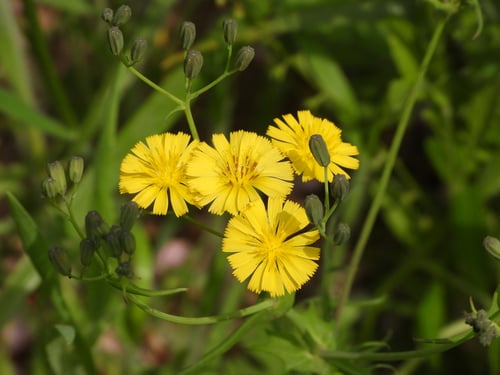
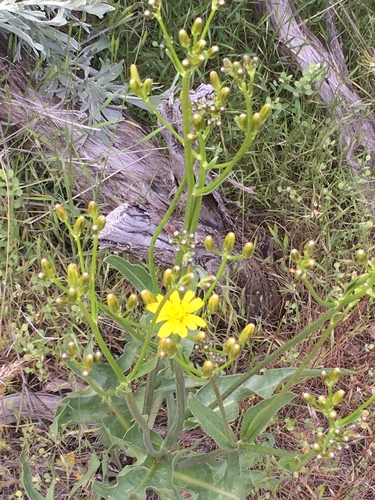
(c) Charles, some rights reserved (CC BY-NC), uploaded by Charles
Description
Artemisia caruifolia is a ANNUAL growing to 1 m (3ft 3in). It is in flower from June to September, and the seeds ripen from July to September. The species is hermaphrodite (has both male and female organs) and is pollinated by Wind. Suitable for: light (sandy) and medium (loamy) soils and prefers well-drained soil. Suitable pH: neutral and basic (mildly alkaline) soils. It can grow in semi-shade (light woodland) or no shade. It prefers dry or moist soil and can tolerate drought.
Edible Uses
Tea. Young plants - cooked in the spring. They are also used as a flavouring for tea.
Medicinal Uses
Antiasthmatic Antiphlogistic Depurative Febrifuge Malaria Skin Stomachic Tonic Vermifuge. The whole plant is depurative, febrifuge, stomachic, tonic and vermifuge. It contains abrotanine which is antiphlogistic and antifebrile. The plant is said to prevent malaria, or to drive away mosquitoes. It inhibits the maturation of malaria parasites in the body. It is also used in the treatment of low-grade fevers, tidal fever, summer heat stroke, chronic diarrhoea, phthisis, purulent scabies and intestinal troubles. A decction of the root is used in the treatment of asthma. This plant can be used interchangeably with Artemisia annua. The medicinal virtues of that plant are as follows:- Qing Ho, better known in the West as sweet wormwood, is a traditional Chinese herbal medicine. An aromatic anti-bacterial plant, recent research has shown that it destroys malarial parasites, lowers fevers and checks bleeding. It is often used in the Tropics as an affordable and effective anti-malarial. The leaves are antiperiodic, antiseptic, digestive, febrifuge. An infusion of the leaves is used internally to treat fevers, colds, diarrhoea etc. Externally, the leaves are poulticed onto nose bleeds, boils and abscesses. The leaves are harvested in the summer, before the plant comes into flower, and are dried for later use. The plant contains artemisinin, this substance has proved to be a dramatically effective anti-malarial. Clinical trials have shown it to be 90% effective and more successful than standard drugs. In a trial of 2000 patients, all were cured of the disease. The seeds are used in the treatment of flatulence, indigestion and night sweats.
Known Hazards
Although no reports of toxicity have been seen for this species, skin contact with some members of this genus can cause dermatitis or other allergic reactions in some people.
Distribution
E. Asia - China, Japan, Himalayas.
Where It Grows
TEMPERATE ASIA: China (Anhui Sheng, Zhejiang Sheng, Fujian Sheng, Henan Sheng, Hebei Sheng, Hunan Sheng, Hubei Sheng, Jiangxi Sheng, Jiangsu Sheng, Jilin Sheng, Guangdong Sheng, Guizhou Sheng, Liaoning Sheng, Shandong Sheng, Shaanxi Sheng, Sichuan Sheng, Yunnan Sheng, Guangxi Zhuangzu Zizhiqu), Korea TROPICAL ASIA: Bangladesh, India (Assam, West Bengal), Nepal, Myanmar, Vietnam
Cultivation
We have very little information on this species and do not know if it will be hardy in Britain, though judging by its native range it could succeed outdoors in many parts of this country. The following notes are based on the general needs of the genus. Easily grown in a well-drained circumneutral or slightly alkaline loamy soil, preferring a sunny position. Established plants are drought tolerant. Plants are longer lived, more hardy and more aromatic when they are grown in a poor dry soil. Members of this genus are rarely if ever troubled by browsing deer.
Propagation
Seed - surface sow from late winter to early summer in a greenhouse. When large enough to handle, prick the seedlings out into individual pots and plant them out in the summer. Cuttings of half-ripe wood, July/August in a frame. Division in spring or autumn.
Other Uses
Repellent. The plant is burnt to repel insects.