Artemisia capillaris
Thunb.
Fragrant wormwood
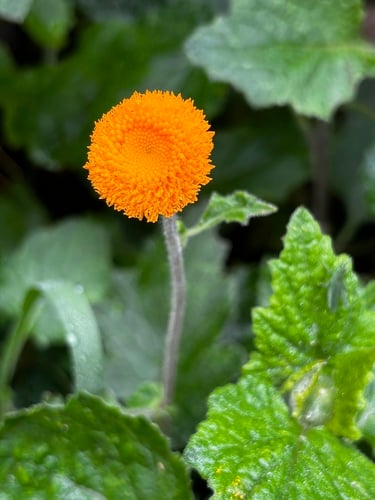
iNaturalist· cc0
no rights reserved, uploaded by 葉子
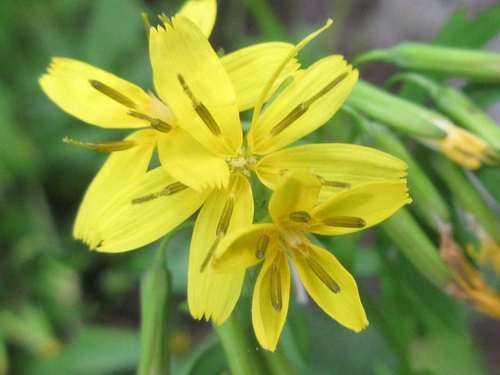
iNaturalist· cc0
no rights reserved, uploaded by 葉子
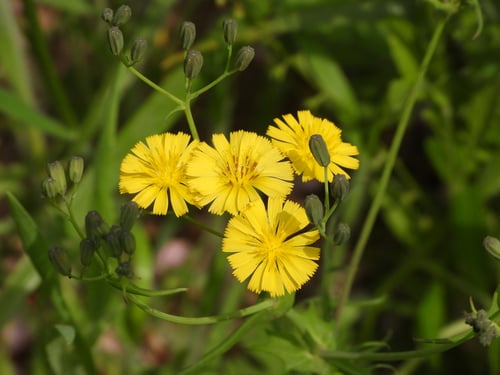
iNaturalist· cc-by-nc
(c) 謝米屋, some rights reserved (CC BY-NC), uploaded by 謝米屋
Summary
Source: WikipediaArtemisia capillaris, (Chinese: 茵陈蒿 yīn chén hāo), the capillary wormwood, is a species of flowering plant in the wormwood genus Artemisia, family Asteraceae. Artemisia capillaris is biennial or perennial herb, 30-80(100) cm tall with vertical, woody rootstock and usually a single to few, slender, erect, pale purplish or reddish brown, glabrous stems. Leaves are silky hairy, basal ones shortly petiolate, middle stem leaves almost sessile. Synflorescence is a narrow to wide panicle with many capitula composed of 8 to 12 yellow florets. Oblong-ovate, brown achenes are minuscule ca. 0.8 mm. It is native to Pakistan, the western Himalayas, Assam, all of China, Mongolia, the Korean Peninsula, Irkutsk Oblast and Primorsky Krai in Russia, the Ryukyus, and Japan, and has been widely introduced to Afghanistan, India, Nepal, Southeast Asia, all of Malesia, and Taiwan. It is used in traditional Chinese medicine.
Description
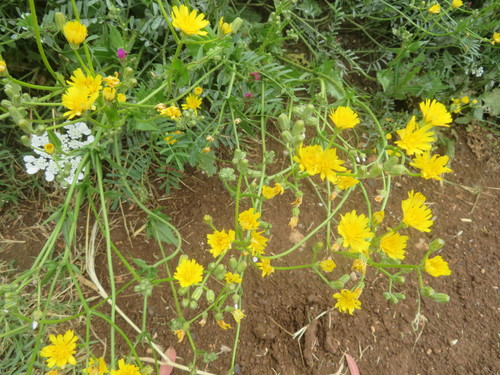
A small shrub. It grows 30-80 cm tall. It has many branches. The stems are purple. The leaves are finely divided and bright green. They are silky and have a strong aroma. The flowers are purple-brown.
Edible Uses
Edible Parts: Leaves Edible Uses: Leaves and stems - soaked and boiled.
Traditional Uses
The young leaves are used in rice cakes and soups. They are soaked and boiled.
This uses section is brief — help expand it
Medicinal Uses
Antibacterial Anticholesterolemic Antiviral Cholagogue Diuretic Febrifuge Hepatic Vasodilator Yin Chen Hao has been used in Chinese herbal medicine for over 2,000 years. It is considered to be a bitter and cooling herb, clearing "damp heat" from the liver and gall ducts and relieving fevers. It is an effective remedy for liver problems, being specifically helpful in treating hepatitis with jaundice. Modern research has confirmed that the plant has a tonic and strengthening effect upon the liver, gallbladder and digestive system. The leaves and young shoots are antibacterial, anticholesterolemic, antiviral, cholagogue, diuretic, febrifuge and vasodilator. An infusion is used internally in the treatment of jaundice, hepatitis, gall bladder complaints and feverish illnesses. Externally it has been applied in the form of a plaster for treating headaches. The plant is harvested in late spring and can be dried for later use. Yin Chen Hao is contraindicated for pregnant women.
Known Hazards
Although no reports of toxicity have been seen for this species, skin contact with some members of this genus can cause dermatitis or other allergic reactions in some people.
Distribution
A temperate plant. It grows well in moist soils and can tolerate salty conditions. In Pakistan it grows between 300-1,000 m above sea level. It grows in wetlands. It grows in Sichuan and Yunnan.
Where It Grows
Asia, Cambodia, China, Himalayas, Indochina, Indonesia, Japan, Korea, Malaysia, Manchuria, Mongolia, Nepal, Pakistan, Philippines, Russia, SE Asia, Taiwan, Vietnam,
Cultivation
An easily grown plant, succeeding in a well-drained circumneutral or slightly alkaline loamy soil, preferring a sunny position. Established plants are drought tolerant. Plants are longer lived, more hardy and more aromatic when they are grown in a poor dry soil. This species is probably not hardy in all parts of Britain, it tolerates temperatures down to at least -5°c. Plants in this genus are notably resistant to honey fungus. Members of this genus are rarely if ever troubled by browsing deer.
Propagation
Seed - surface sow from late winter to early summer in a greenhouse. When large enough to handle, prick the seedlings out into individual pots and plant them out in the summer. Cuttings of half-ripe wood, July/August in a frame. Division in spring or autumn.
Other Uses
None known Special Uses Scented Plants
Notes
There are about 300 Artemisia species. It is used in medicine for fevers.
Also Known As
Sacheolssuk, Yin Chen Hao
References (16)
- Burkill, I.H., 1966, A Dictionary of the Economic Products of the Malay Peninsula. Ministry of Agriculture and Cooperatives, Kuala Lumpur, Malaysia. Vol 1 (A-H) p 247
- Brown, D., 2002, The Royal Horticultural Society encyclopedia of Herbs and their uses. DK Books. p 132
- Flora of Pakistan.
- Hwang, H., et al, 2013, A Study on the Flora of 15 Islands in the Western Sea of Jeollanamdo Province, Korea. Journal of Asia-Pacific Biodiversity Vol. 6, No. 2 281-310
- Hwang, HS, et al, 2014, Distribution characteristics of plant in the Ungseokbong Mountain, Gyeongsangnam-do, Korea. Journal of Asia-Pacific Biodiversity. 7(2014) e164-e178
Show all 16 references Hide references
- Kang, Y., et al, 2012, Wild food plants and wild edible fungi in two valleys on the Qinling Mountains (Shaanxi, central China) Journal of Ethnobiology and Ethnomedicine; 9:26
- Kim, H. & Song, M., 2013, Ethnobotanical analysis for traditional knowledge of wild edible plants in North Jeolla Province (Korea). Genetic. Resour. Crop Evol. (2013) 60:1571-1585
- Niwano, Y. et al., 2009, Extensive Screening for Plant Foodstuffs in Okinawa, Japan with Anti-Obese Activity on Adipocytes, in vitro. Plant Foods in Human Nutrition 64:6-10
- Nova Acta Regiae Soc. Sci. Upsal. 3:206. 1780
- Plants for a Future database, The Field, Penpol, Lostwithiel, Cornwall, PL22 0NG, UK. http://www.scs.leeds.ac.uk/pfaf/
- Trendafilova, A., et al, 2020, Research Advances on Health Effects of Edible Artemisia Species and Some Sesquiterpene Lactones Constituents. Foods 2021, 10, 65. p 4
- Urgamal, M., Oyuntsetseg, B., Nyambayar, D. & Dulamsuren, Ch. 2014. Conspectus of the vascular plants of Mongolia. (Editors: Sanchir, Ch. & Jamsran, Ts.). Ulaanbaatar, Mongolia. “Admon“ Press. 334pp. (p. 199-230).
- Wang, J. et al, 2013, A Study on the Utilization of Wild Plants for Food in Liangshan Yi Autonomous Prefecture. Plant Diversity and Resources. 35(4): 416-471
- Wang, J., et al, 2020, An ethnobotanical survey of wild edible plants used by the Yi people of Liangshan Prefecture, Sichuan Province, China. Journal of Ethnobiology and Ethnomedicine 16:10 p 7
- Zeven, A. C. & de West, J. M. J., 1982, Dictionary of cultivated plants and their regions of diversity. Wageningen. p 34
- Zhang, Y., et al, 2014, Diversity of wetland plants used traditionally in China: a literature review. Journal of Ethnobiology and Ethnomedicine. 10:72