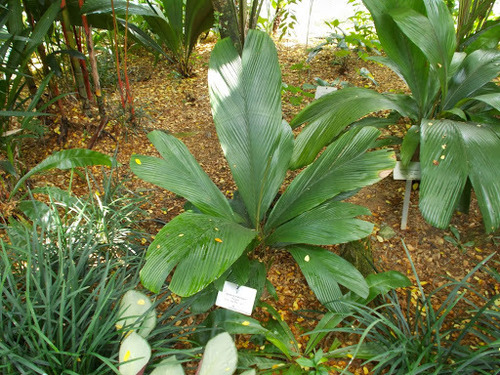
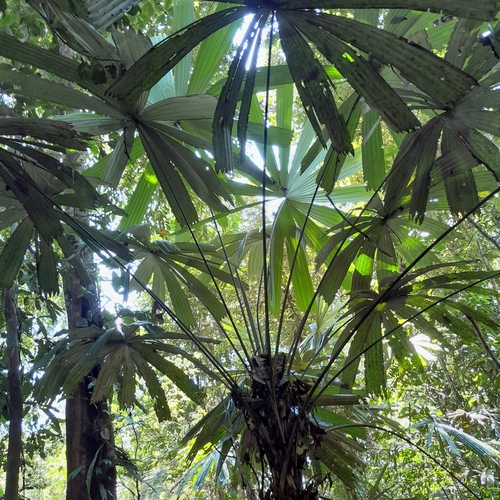
Aphandra natalia
(Balslev. & Henderson) Barfod
Piassaba, Tagua
iNaturalist· cc-by
(c) Alan Rockefeller, some rights reserved (CC BY), uploaded by Alan Rockefeller
iNaturalist· cc-by-sa
(c) Ignacio Moreira-Corral, some rights reserved (CC BY-SA)
Description
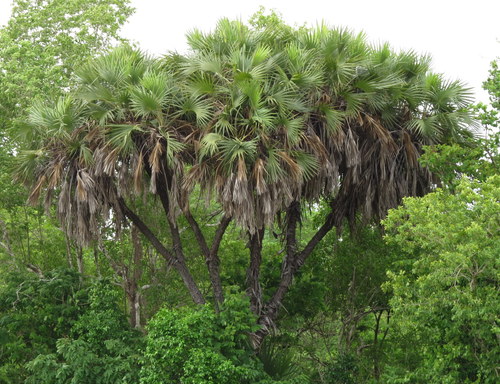
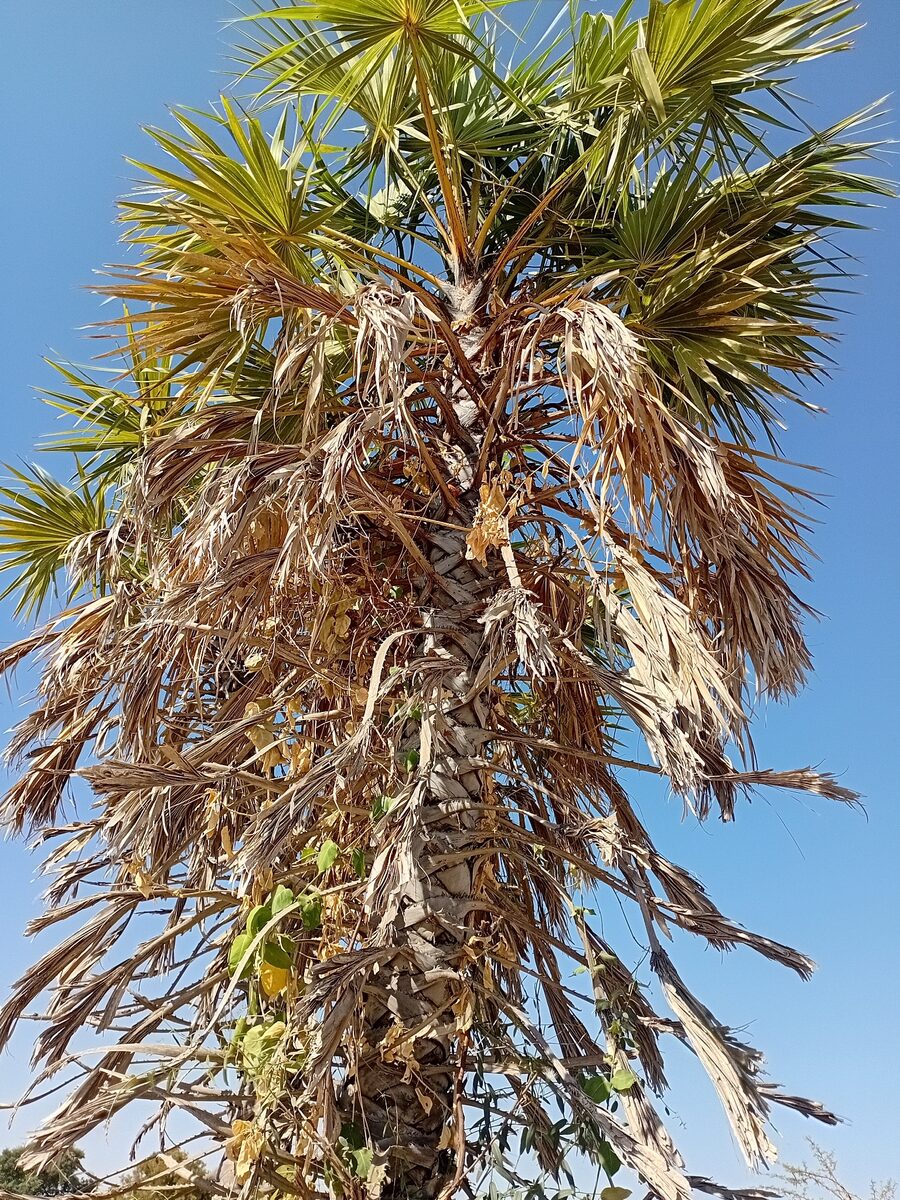
A solitary palm. It grows 3-11 m tall. The trunks are 20-22 cm across. There are 10-20 leaves. They can be 8 m long. The leaf stalk is 3-3.5 m long. It is scaly. There are 90-120 leaflets on each side. The leaflets are arranged regularly and are in the same plane. The male flowering stalk is 2 m long. The flowers are in stalked clusters of 4. There are 5 fruiting heads per palm. They are 30-45 cm across. There are 30-45 fruits per head. There are 6 seeds per fruit.
Edible Uses
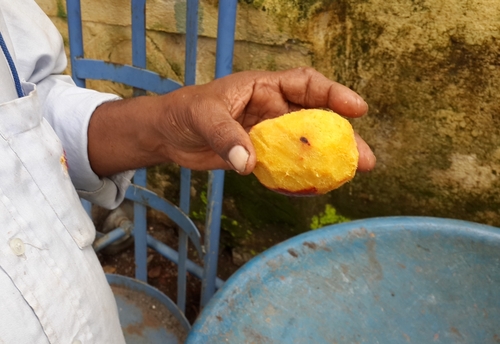
The immature fruit is used as a drink. The fruit is eaten. The seeds, palm heart, cabbage, and oil are also edible portions.
Traditional Uses
The immature fruit is used as a drink. The fruit is eaten.
This uses section is brief — help expand it
Distribution
A tropical plant. It grows in lowland or low mountain rainforest. It grows on non flooded soils. It grows from sea level to 800 m altitude. In the Andes it grows between 200-1,500 m above sea level.
Where It Grows
Amazon, Andes, Brazil, Colombia, Ecuador, Peru, South America,
Cultivation
See references in Henderson, A., Galeano, G and Bernal, R., 1995, Field Guide to the Palms of the Americas. Princeton. p 237
Other Uses
A fibre is obtained from the leaf sheaths. It is used for making brooms. The leaves are used for thatching.
Synonyms
Also Known As
Chilimoyo, Wamowe
References (10)
- Castillo, R. O., 1995, Plant Genetic Resources in the Andes: Impact, Conservation, and Management. Crop Science 35:355-360
- Grandtner, M. M. & Chevrette, J., 2013, Dictionary of Trees, Volume 2: South America: Nomenclature, Taxonomy and Ecology. Academic Press p 41
- Haynes, J., & McLaughlin, J., 2000, Edible palms and Their Uses. University of Florida Fact sheet MCDE-00-50-1 p 2
- Henderson, A., Galeano, G and Bernal, R., 1995, Field Guide to the Palms of the Americas. Princeton. p 237
- Kermath, B. M., et al, 2014, Food Plants in the Americas: A survey of the domesticated, cultivated and wild plants used for Human food in North, Central and South America and the Caribbean. On line draft. p 77
Show all 10 references Hide references
- Marcia, M. J., et al, 2011, Palm Uses in Northwestern South America: A Quantitative Review. Bot. Rev. (2011) 77:462-570
- Opera Bot. 105:44. 1991
- Torre, de la L., et al, 2008, Enciclopedia de las Plantas Útiles del Ecuador. Herbario QCA. Pontificia Universidad Católica del Ecuador. p 194
- Wiersema, J. H. & Leon, B., 2013, World Economic Plants. A Standard Reference CRC Press. 2nd Ed. p 59
- World Checklist of Useful Plant Species 2020. Royal Botanic Gardens, Kew