Astrocaryum gynacanthum
Mart.
Mumbaca palm, Cubarro palm
iNaturalist· cc-by-nc
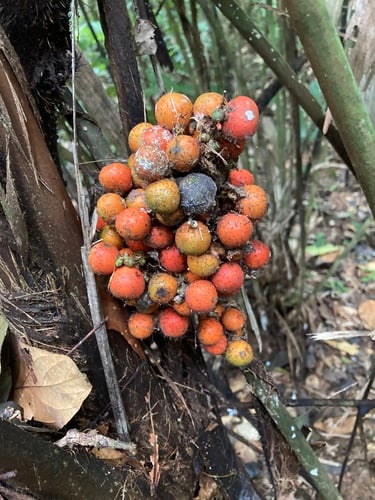
(c) oliveiralima, some rights reserved (CC BY-NC)
iNaturalist· cc-by-nc
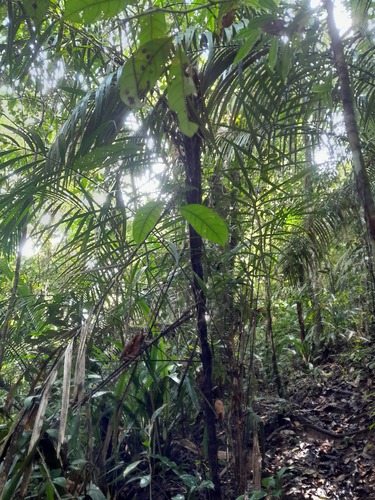
(c) Nils Servientis - Bivouac Naturaliste, some rights reserved (CC BY-NC)
iNaturalist· cc-by-nc
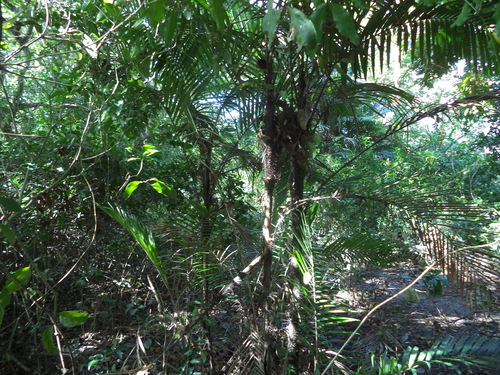
(c) Nils Servientis - Bivouac Naturaliste, some rights reserved (CC BY-NC)
Description
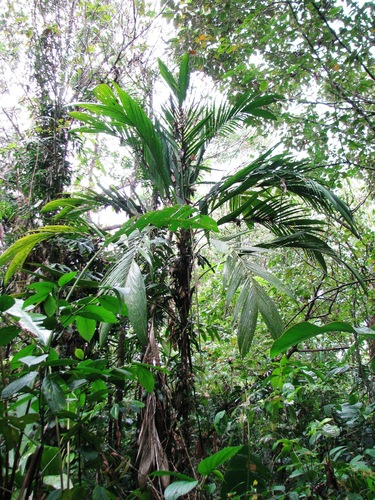
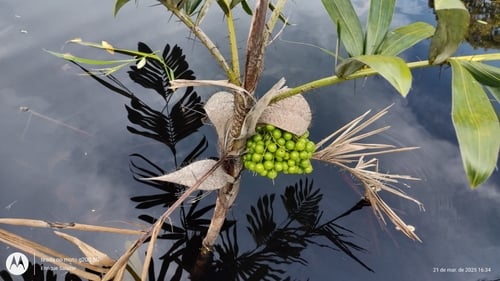
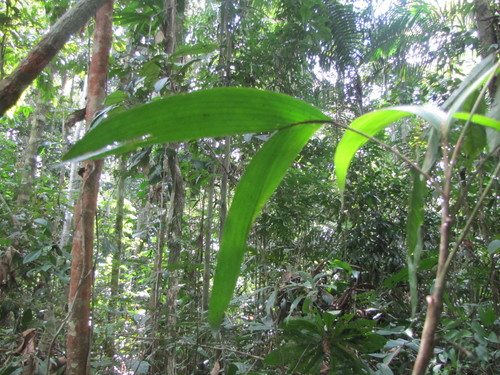
A palm with a cluster of stems. They are 2-6 m high. They can be 12 m high. The stems are 3-6 cm across. They can be 10 cm across. The stems are covered with flattened spines. These are 15 cm long. There are 6-13 leaves. They spread out horizontally. They are about 3 m long. There are 21-41 leaflets on each side. They are arranged regularly and spread in the same plane. The leaflets at the tip are fused. The flowering stalk hangs down. The fruit are oval and 2.5-3 cm long by 1.2-1.5 cm across. They are smooth. They are crowded together and bright orange.
Edible Uses
The pulp of the fruit is eaten. The palm heart is burnt to produce vegetable salt.
Traditional Uses
The pulp of the fruit is eaten. The palm heart is burnt for vegetable salt.
This uses section is brief — help expand it
Distribution
A tropical plant. It grows in the understorey in lowland rainforest. It grows on non flooded soils below about 650 m elevation.
Where It Grows
Amazon, Asia, Bolivia, Brazil, Colombia, French Guiana, Guianas, Guyana, Indonesia, SE Asia, South America*, Suriname, Venezuela,
Cultivation
Plants can be grown from seeds and suckers.
Other Information
The fruit are enjoyed.
Notes
There are about 40-50 Astrocaryum species.
Synonyms
Also Known As
Coco de puerco, Hi arau, Macana, Mapuhuri, Masoa plimpla, Palem kubaro, Palma de serrillo, Plimpla palm, Ti-warra, Urishi, Widi, Wiri
References (10)
- Altschul, S.V.R., 1973, Drugs and Foods from Little-known Plants. Notes in Harvard University Herbaria. Harvard Univ. Press. Massachusetts. no. 93 (As Astrocaryum munbaca)
- Henderson, A., Galeano, G and Bernal, R., 1995, Field Guide to the Palms of the Americas. Princeton. p 204
- Janick, J. & Paul, R. E. (Eds.), 2008, The Encyclopedia of Fruit & Nuts. CABI p 89
- Kermath, B. M., et al, 2014, Food Plants in the Americas: A survey of the domesticated, cultivated and wild plants used for Human food in North, Central and South America and the Caribbean. On line draft. p 91
- Lopez-Diago, D. & Garcia, N., 2021, Wild edible fruits of Colombia. Biota ColomBiana 22 (2) p 30
Show all 10 references Hide references
- Maas, P.J. M., Non-timber forest products of the North-West District of Guyana. Part 1. Nationaal Herbarium Nederland, Universiteit Utrecht. p 100
- Maas, P.J. M., Non-Timber Forest Products of the North-West District of Guyana Part 2. The 85 most important NTFP species. p 23
- Marcia, M. J., et al, 2011, Palm Uses in Northwestern South America: A Quantitative Review. Bot. Rev. (2011) 77:462-570
- Roa, J. A. G. & Boada, D. S. G., 2018, Fundación para el Fortalecimiento de la Fruticultura y Plantas Alimenticias no Convencionales en Colombia.
- Sukarya, D. G., (Ed.) 2013, 3,500 Plant Species of the Botanic Gardens of Indonesia. LIPI p 755