Betula occidentalis
Hook.
Water birch, White birch
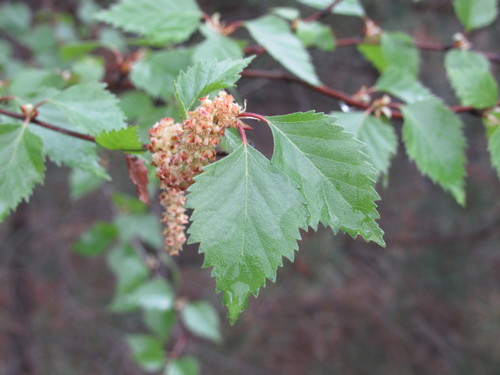
iNaturalist· cc-by-nc
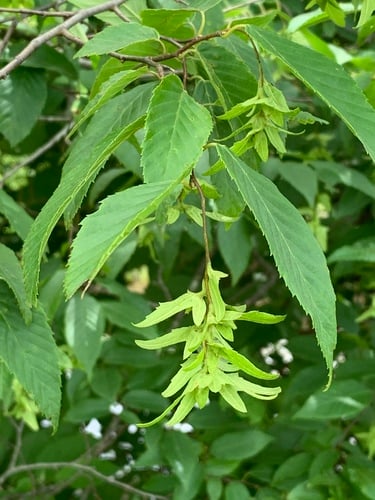
(c) FreckLes, some rights reserved (CC BY-NC), uploaded by FreckLes
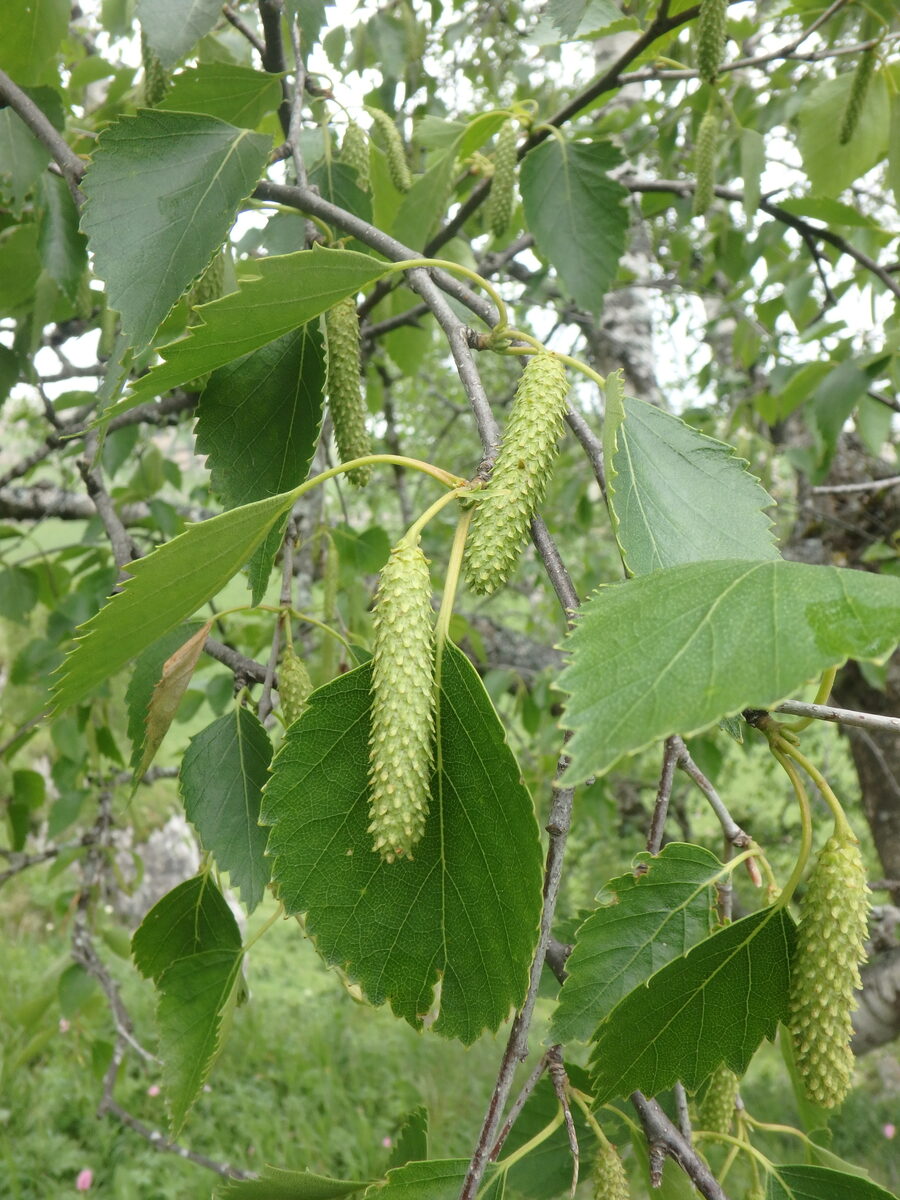
iNaturalist· cc-by-nc
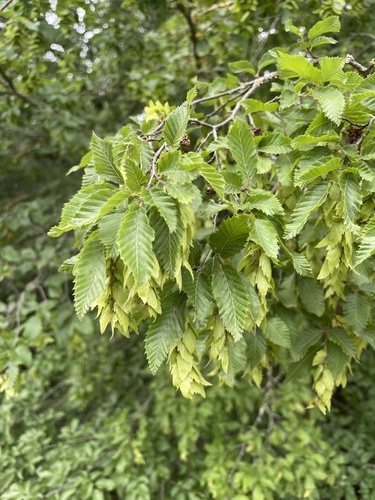
(c) Annette Le Faive, some rights reserved (CC BY-NC), uploaded by Annette Le Faive
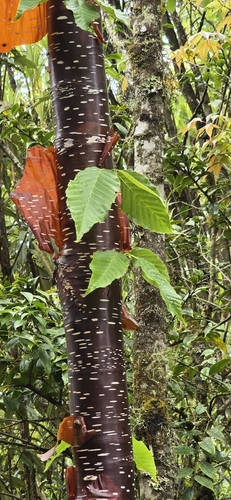
iNaturalist· cc-by-nc
(c) NADIA MAY, some rights reserved (CC BY-NC), uploaded by NADIA MAY
Summary
Source: WikipediaBetula occidentalis, the water birch or red birch, is a species of birch native to western North America, in Canada from Yukon east to Northwestern Ontario and southwards, and in the United States from eastern Washington east to western North Dakota, and south to eastern California, northern Arizona and northern New Mexico, and southwestern Alaska. It typically occurs along streams in mountainous regions, sometimes at elevations of 2,100 metres (6,900 feet) and in drier areas than paper birch. It is a deciduous shrub or small tree growing to 14 m (46 ft) high, up to 25 centimetres (10 inches) thick. It tends toward epicormic growth, with many small limbs sprouting from the trunk and causing the wood to be full of small knots. The bark is dark red-brown to blackish, and smooth but not exfoliating. The twigs are glabrous or thinly hairy, and odorless when scraped. The leaves are alternate, ovate to rhombic, 1–7 cm (1⁄2–2+3⁄4 in) long and 1–4.5 cm (1⁄2–1+3⁄4 in) broad, with a serrated margin and two to six pairs of veins, and a short petiole up to 1.5 cm (1⁄2 in) long. The flowers are wind-pollinated catkins 2–4 cm (3⁄4–1+1⁄2 in) long, the male catkins pendulous, the female catkins erect. The fruit is 2–3 cm (3⁄4–1+1⁄4 in) long and 8–15 millimetres (1⁄4–1⁄2 in) broad, composed of numerous tiny winged seeds packed between the catkin bracts. The identity of similar birches in Alaska is disputed; some include them in B. occidentalis, while others regard them as hybrids between Betula neoalaskana and Betula glandulosa. A 2023 study sequenced chloroplast genomes of species from the genus Betula for phylogenetic analysis. Of the Betula species, B. occidentalis was most closely related to B. pendula purple rain and B. platyphylla. The foliage is browsed by sheep, goats, and birds; some small birds also consume the seeds. Some Plateau Indian tribes used water birch to treat pimples and sores. It is also a riverside tree found in western USA that reacts to water stress by becoming isohydric.
Description
A small shrubby tree. It grows to 12 m high. It has a leaning crooked trunk. The trunk can be 30 cm across. The bark is reddish-brown and peels off. The leaves are small and oval. They are widest below the middle. They are 2-5 cm long. The upper surface is shiny and deep yellowish-green. It is lighter underneath. The male and female flower catkins are separate. The mature seed catkins are 2.5-4 cm long and hang down.
Edible Uses
Edible Parts: Flowers Inner bark Leaves Sap Edible Uses: Condiment Young leaves and catkins - raw. The buds and twigs are used as a flavouring in stews. Inner bark - raw or cooked. Best in the spring. Inner bark can be dried, ground into a meal and used as a thickener in soups, or be added to flour when making bread, biscuits etc. Inner bark is generally only seen as a famine food, used when other forms of starch are not available or are in short supply. Sap - raw or cooked. The sap can be used as a refreshing drink or beer, it can also be concentrated into a syrup by boiling off much of the water. Harvested in spring, the flow is best on a sunny day following a frost. An old English recipe for the beer is as follows:- "To every Gallon of Birch-water put a quart of Honey, well stirr'd together; then boil it almost an hour with a few Cloves, and a little Limon-peel, keeping it well scumm'd. When it is sufficiently boil'd, and become cold, add to it three or four Spoonfuls of good Ale to make it work...and when the Test begins to settle, bottle it up . . . it is gentle, and very harmless in operation within the body, and exceedingly sharpens the Appetite, being drunk ante pastum.". Primary food use is the sap, boiled to a richly caramel birch syrup or reduced to a sweet beverage; leaf/bud/twig teas are pleasant; male catkins are mild and chewable; inner bark can be dried and ground to flour in emergencies. Edibility rating: (3/5) — sap and tea are genuinely worthwhile; catkins are decent; inner bark is survival food only. Taste, Processing & Kitchen Notes: Sap is ~1% sugar (˜99% water) and very clean-tasting. Reduce ~1/70 to achieve syrup; reduce ~1/4 for a lightly sweet, mineral-rich “birch drink.” Finished syrup tastes of light caramel/toffee without resinous or medicinal overtones. Collect in glass, ceramic, wood or food-grade plastic—avoid metal (off-flavors) [2-3]. Catkins (male) are mild, nutty-vegetal, fully chewable, and better than leaves for a quick trail nibble. Leaf/bud/twig tea is green-herbal with a soft woodland note, free of bitterness or soapiness; twigs deepen the cup. Inner bark (phloem) dries to a coarse, fibrous flour with mild taste but low digestibility; if used, blend into porridges rather than breads[2-3]. Seasonality (Phenology): Sap flow begins late winter to early spring, often a 2–4 week window that wanes with leaf-out. Male catkins form late summer, overwinter, and pollen-shed just before or with leaf expansion (March–May). Fruits ripen early summer and shatter soon after. Foliage colors yellow in autumn; stems are showy in winter. Harvest & Processing Workflow: Sap: Tap late winter before budbreak. Use a sanitized 9–10 mm (? in) bit at a slight upward angle, 3–4 cm (1¼ in) into sapwood; one tap per stem =20–25 cm (8–10 in) DBH. Hang food-safe line to a covered non-metal container. Expect ~1–3 L per day in good flow. Filter, refrigerate immediately, and boil outdoors (vigorous steam) to avoid indoor humidity. Reduce to 66° Brix for finished syrup; store cold. Catkins: Collect male catkins as they elongate pre-pollen for eating, or post-shed for drying/tea. Tea: Clip a small handful of young leaves/buds/twigs; steep hot, not boiling water 5–10 minutes; strain. Inner bark: If ever used, take from windfall or prunings only; peel thin phloem strips, dry, and powder; fold into porridges. Look-Alikes & Confusion Risks: Alders (Alnus spp.) are the classic confusion: alders retain woody cone-like strobili year-round and fix nitrogen; birch fruiting catkins are papery and fall apart. Ornamentals like river birch (B. nigra) exfoliate dramatically; paper birch (B. papyrifera) has white peeling bark—both unlike most B. occidentalis stands. Scraping a twig: no strong wintergreen scent here (contrasts with B. lenta back East). Traditional / Indigenous Use Summary: Across northern woodlands and into the Rockies, birches supplied sap beverages/syrups, bark for containers and fire-starting, and medicinal teas from twigs and leaves. In the Intermountain West, water birch thickets also served as construction and weaving material, browse, and streambank medicine—cooling shade, clean water, and habitat. Foodwise, sap was the valued seasonal sugar; inner bark was famine food.
Medicinal Uses
Abortifacient Antirheumatic Antiseborrheic Astringent Lithontripic Salve Sedative Urinary The bark is antirheumatic, astringent, lithontripic, salve and sedative. A decoction of the flowers and leaves has been used as an abortifacient. The German Commission E Monographs, a therapeutic guide to herbal medicine, approve Betula species for infections of the urinary tract, kidney and bladder stones, rheumatism (see for critics of commission E).
Known Hazards
The aromatic and aliphatic hydrocarbons in birch tar are irritating to the skin. Do not use in patients with oedema or with poor kidney or heart functions
Distribution
Temperate. It grows on moist soils along streams. It suits hardiness zones 4-9.
Where It Grows
Canada, North America, USA,
Cultivation
Succeeds in a well-drained loamy soil in a sunny position. Tolerates most soils including poor soils and heavy clays. Fairly wind tolerant. A fast-growing but short-lived tree. A very ornamental plant, it hybridizes freely with other members of this genus. It hybridizes in the wild with B. papyrifera. A good plant to grow near the compost heap, aiding the fermentation process. Trees are notably susceptible to honey fungus. Identification & Habit: A deciduous, monoecious shrub or small tree to roughly 6–11 m (20–36 ft) tall, often multi-stemmed from the base, forming dense, arching colonies. Bark is red to coppery brown or gray, smooth and shiny with pale horizontal lenticels, typically not exfoliating in papery sheets. Young twigs are hairless to slightly pubescent, dotted with visible resin glands, and (unlike some eastern birches) lack a wintergreen scent when scratched. Leaves are alternate, 2–5 cm long, broadly oval to diamond-shaped, with coarsely double-serrated margins and a fresh mid-green surface that turns clear yellow in fall. Flowers are unisexual catkins: male catkins pendulous, 2–9 cm; female catkins shorter (to ~4 cm), erect to spreading; both appear just before or with leaf-out. Fruits are small winged samaras packed in fragile, cone-like infructescences that crumbled at maturity (contrast alders). Growing Conditions: Thrives on cold, running water: streambanks, seeps, spring lines, lake margins. Prefers full sun to bright open shade, moist to wet, well-drained alluvium (sandy-gravelly to loamy), and slightly acidic to neutral reaction; tolerates calcareous cobble bars if moisture is constant. Intolerant of prolonged drought or stagnant, anoxic soils. USDA Hardiness: Zones 3–7 (very hardy once rooted). Habitat & Range: Native to mountainous riparian corridors from northern New Mexico across Utah, Nevada, and much of the Intermountain West into the northern Rockies and parts of the Pacific Northwest; usually 900–2,700 m (3,000–9,000 ft). Almost always within arm’s reach of water. Size & Landscape Performance: Typically 4–8 m (13–26 ft) tall and 3–6 m (10–20 ft) wide in gardens; larger in ideal canyon bottoms. Fastest growth where roots can sip moving water. Excellent for bank binding, screening, snow catch, and cooling microclimates. Multi-stem habit reads naturalistic; coppices well if cut to stool. Cultivation (Horticulture): Site with reliable sub-surface moisture (swales, bioswales, daylighted creeks). Mulch with coarse wood chips to keep the rhizosphere cool. Irrigate deeply the first 1–2 summers; established plants can subsist on groundwater. Minimal pruning—remove crossing/deadwood after sap season. In urban settings it’s a durable substitute for eastern river birch where summer nights are cooler and water is clean. Pests & Problems: Generally tougher than ornamental birches. Possible issues include aphids (honeydew), leaf miners, sawflies, rusts/leaf spots, and occasional cankers if drought-stressed. Bronze birch borer is far less problematic at altitude and in cool sites than on stressed urban birches. Rodent and beaver girdling can occur—use guards where necessary. Safety & Cautions (Food Use): Birch pollen is allergenic for some; teas or syrups may aggravate aspirin/salicylate sensitivity (trace salicylates occur in birches, even though this species lacks strong wintergreen aroma). Avoid heavy consumption of leaf tea in pregnancy, kidney disease, or with diuretics/anticoagulants. Collect away from roads, mine tailings, or contaminated water—sap and tissues can reflect site quality. Do not over-tap small stems. Cultivar/Selection Notes: This species is usually sold true-to-type (“Water Birch,” “Red Birch”). It is sometimes confused in the trade with river birch (Betula nigra) cultivars (‘Heritage’, ‘Dura-Heat’), which have exfoliating bark and different moisture/heat tolerances. B. occidentalis is the better ecological fit for mountain West stream projects.
Propagation
Seed - best sown as soon as it is ripe in a light position in a cold frame. Only just cover the seed and place the pot in a sunny position. Spring sown seed should be surface sown in a sunny position in a cold frame. If the germination is poor, raising the temperature by covering the seed with glass can help. When they are large enough to handle, prick the seedlings out into individual pots and grow them on in a cold frame for at least their first winter. Plant them out into their permanent positions in late spring or early summer, after the last expected frosts. If you have sufficient seed, it can be sown in an outdoor seedbed, either as soon as it is ripe or in the early spring - do not cover the spring sown seed. Grow the plants on in the seedbed for 2 years before planting them out into their permanent positions in the winter.
Other Uses
Containers Hair Waterproofing An infusion of the plant is used as a hair conditioner and dandruff treatment. The thin outer bark is waterproof and has been used as the cladding on canoes and dwellings, and also to make containers. A brown dye is obtained from the inner bark. Wood - close-grained, soft but strong. Trees do not grow large enough to be of use for lumber, but the wood is used locally for fence posts and is also a good fuel. The bark can be used as a kindling. Ecology & Wildlife: A cornerstone riparian stabilizer: dense roots bind banks, slow flood energy, and trap sediment. Beaver harvest stems and use it for browse and dam facing; elk/deer browse lightly. Sapsuckers tap for phloem; songbirds glean insects from catkins and foliage; finches and small mammals take seed. The canopy cools water for macroinvertebrates and trout; leaf litter fuels stream food webs. Special Uses Dynamic accumulator
Notes
There are about 60 Betula species. They grow in cool north temperate climates.
Synonyms
Also Known As
Western, mountain, river, water, red, or copper birch (Betula occidentalis Hook. = Betula beeniana A. Nelson = Betula fontinalis Sarg.).
References (6)
- Etherington, K., & Imwold, D., (Eds), 2001, Botanica's Trees & Shrubs. The illustrated A-Z of over 8500 trees and shrubs. Random House, Australia. p 130
- Farrar, J.L., 1995, Trees of the Northern United States and Canada. Iowa State University press/Ames p 290
- Fl. bor.-amer. 2:155. 1838
- Little, E.L., 1980, National Audubon Society Field Guide to North American Trees. Alfred A. Knopf. p 367
- Plants for a Future database, The Field, Penpol, Lostwithiel, Cornwall, PL22 0NG, UK. http://www.scs.leeds.ac.uk/pfaf/
Show all 6 references Hide references
- Porsild, A.E., 1974, Rocky Mountain Wild Flowers. Natural History Series No. 2 National Museums of Canada. p 134