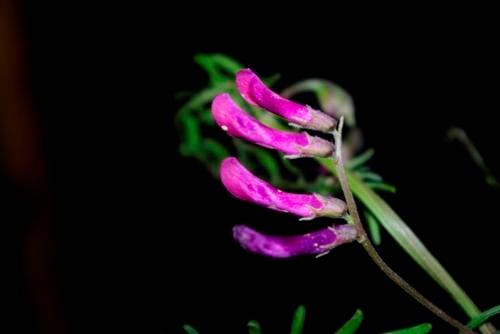
Rhynchosia volubilis
Lour.
Rat-eyes
iNaturalist· cc-by
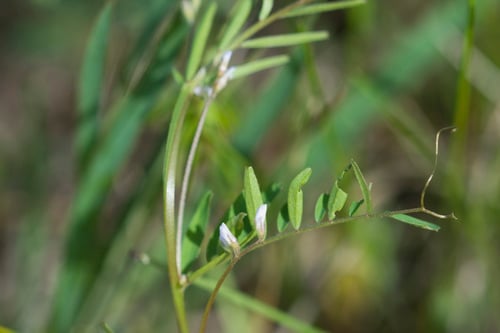
(c) 岸本年郎, some rights reserved (CC BY), uploaded by 岸本年郎
iNaturalist· cc-by-nc
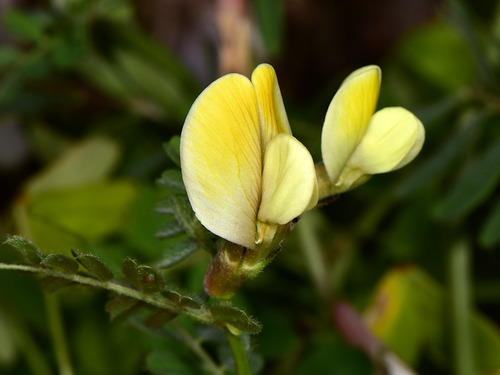
(c) Antón Vázquez, some rights reserved (CC BY-NC), uploaded by Antón Vázquez
iNaturalist· cc-by-nc
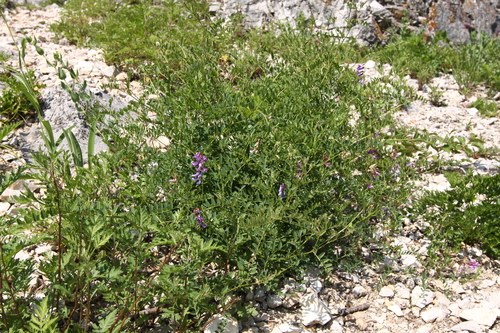
(c) ssnp208, some rights reserved (CC BY-NC)
Summary
Source: WikipediaRhynchosia volubilis is a species of flowering plant in the family Fabaceae. It is native to Southeast China, Hainan, Japan, Korea, Nansei-shoto, Taiwan, and Vietnam. Tergallic acid dilactone can be found in R. volubilis seeds.
Description
A climbing herb that keeps growing from year to year. The branches are thin and wire like. The leaves have 3 leaflets. The end leaflets is diamond shaped and the side leaflets are oblique. They are 2-6 cm long by 2-5 cm wide. The flowers are small and yellow. The pods have 2 seeds. The pods are 1-1.5 cm long by 7-8 mm wide. The seeds are usually black and shiny.
Edible Uses
Seeds - cooked. In trials. up to 30% by weight of this beans were incorporated into tofu made from soya beans (Glycine max). Colour characteristics were changed, but no other significant different was recorded other than the tofu had a longer shelf-life.
Medicinal Uses
The seed is used in the treatment of abdominal pain and backache in women; headaches, poisoning and the scrofulous glands. The seeds have traditionally been used to cure or prevent various diseases such as neuralgia, kidney disease, senile dementia, and postmenopausal osteoporosis. The plant is antimicrobial, contraceptive, depurative and diuretic. It is used in the treatment of intestinal inflammation. An n-butanol extract of the plant has been shown to have a dose-dependant spermicidal activity. A dose of 90mg/mL terminated all progressive sperm motility within 2 minutes, and had only a slight inhibitory effect on Lactobacillus acidophilus, suggesting it was an effective and safe dose for contraception use.
Distribution
It is a subtropical plant. In southern China it grows between 200-1,000 m above sea level.
Where It Grows
Asia, China, Indochina, Japan, Korea, SE Asia, Taiwan, Vietnam,
Propagation
Like many species within the family Fabaceae, once they have ripened and dried the seeds of this species may benefit from scarification before sowing in order to speed up and improve germination. This can usually be done by pouring a small amount of nearly boiling water on the seeds (being careful not to cook them!) and then soaking them for 12 - 24 hours in warm water. By this time they should have imbibed moisture and swollen - if they have not, then carefully make a nick in the seedcoat (being careful not to damage the embryo) and soak for a further 12 hours before sowing.
Other Uses
We have seen no specific entry for this species, but all members of this genus have at least some merit for use as a ground cover and in local soil conservation projects.
Also Known As
Dau-mo leo
References (3)
- Fl. cochinch. 2:460. 1790
- Hedrick, U.P., 1919, (Ed.), Sturtevant's edible plants of the world. p 561
- Hu, Shiu-ying, 2005, Food Plants of China. The Chinese University Press. p 483