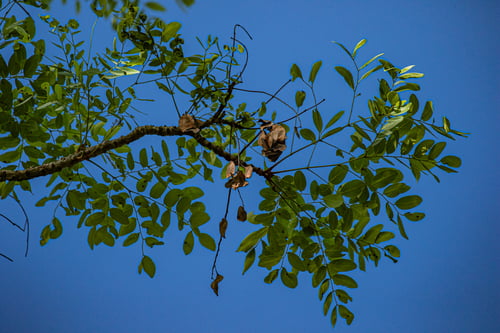
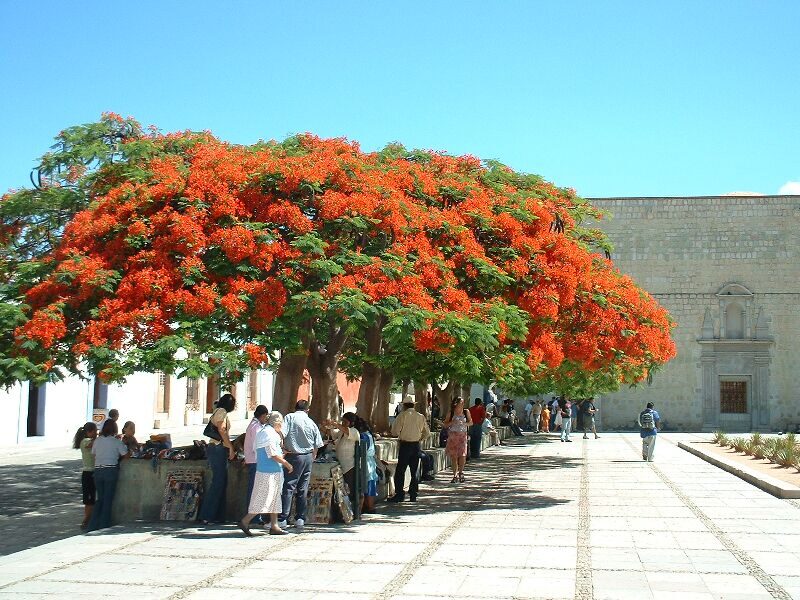
Pterocarpus santalinoides
L'Her ex DC.
Sandalwood padauk
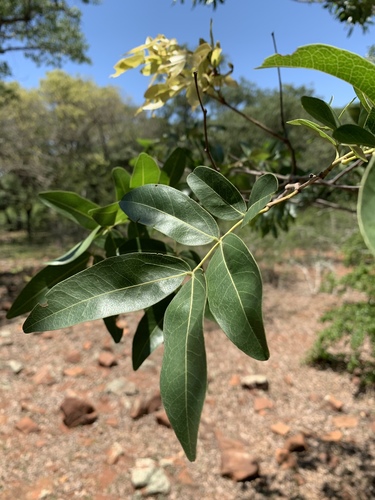
iNaturalist· cc-by-nc-sa
(c) Marco Schmidt, some rights reserved (CC BY-NC-SA)
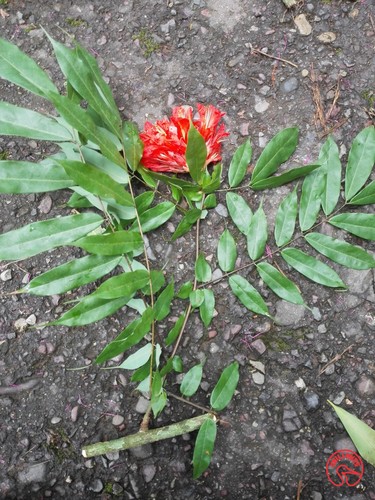
iNaturalist· cc-by-nc
(c) marie-angel, some rights reserved (CC BY-NC)
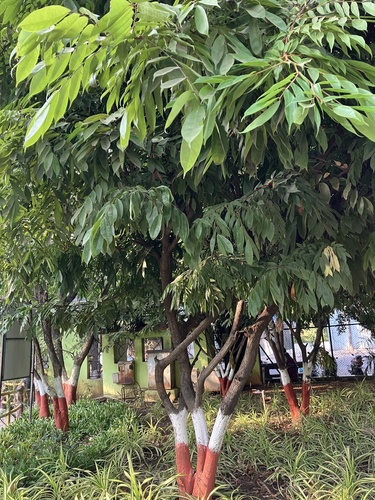
iNaturalist· cc-by-nc
(c) christiaandevries, some rights reserved (CC BY-NC)
Summary
Source: WikipediaPterocarpus santalinoides is a tree species in the legume family (biology) (Fabaceae); it is locally known as mututi. It has a remarkable bi-continental distribution, native to tropical western Africa (Benin, Burkina Faso, Cameroon, Gambia, Ghana, Guinea, Guinea-Bissau, Ivory Coast, Liberia, Mali, Nigeria, Senegal, Sierra Leone, Togo) and also to South America (Brazil, Colombia, French Guiana, Guyana, Paraguay, Peru, Suriname, Trinidad and Tobago, and Venezuela). It grows to 9–12 m tall, with a trunk up to 1 m in diameter and flaky bark. The leaves are pinnate, 10–20 cm long, with 5–9 leaflets. The flowers are orange-yellow, produced in panicles. The fruit is a pod 3.5–6 cm long, with a wing extending three-quarters around the margin.
Description
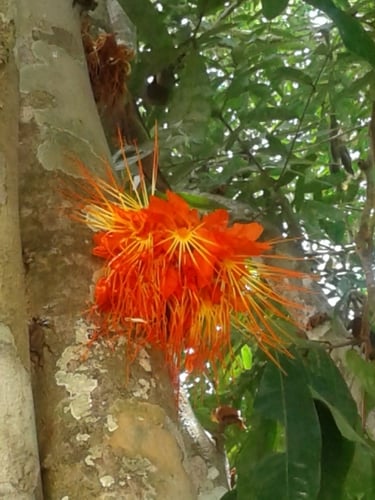
A small evergreen tree. It grows 15 m tall. The trunk can be straight or twisted. It is 50 cm across. The bark is brown and scaly and flakes off in patches. When cut it exudes red gum. The crown is dense and the branches droop. The leaves are alternate and compound. There are 5-9 leaflets with a leaflet at the end. The leaflets are narrowly oval and 7-12 cm long by 3-6 cm wide. The base is rounded and they taper to a short tip. The flowers are in a group 6-14 cm long at the ends of branches. The flowers contain both sexes. They are dark yellow. The fruit is an almost round and flattened pod. It is 3-5 cm across. It is wrinkled. It has a keel like wing. There is one seed. The seed is kidney shaped and 2 cm long by 1 cm wide. It is dark brown.
Edible Uses
Young leaves are cooked and added to soups. The fruits are eaten raw. Roasted seeds are eaten, though raw seeds are toxic.
Traditional Uses
Roasted seeds are eaten. Caution: Raw seeds are toxic. Young leaves are cooked and eaten. They are added to soup. The fruit are eaten raw.
This uses section is brief — help expand it
Medicinal Uses
The bark, roots and leaves are commonly used in medicinal preparations. They are taken internally to treat bronchial complaints, amoebic dysentery, stomach-ache and sleeping sickness; to prevent abortion and ease childbirth, and as a tonic. Decoctions are administered externally to wounds to promote healing, and to treat haemorrhoids and fever. Stem extracts showed slight antimalarial activity against Plasmodium falciparum strains. Tannin is present in the bark and the wood.
Known Hazards
Raw seeds are toxic and must be roasted before consumption.
Distribution
A tropical plant. It grows in evergreen forests and near lakes and river banks in West Africa.
Where It Grows
Asia, Africa, Argentina, Benin, Bolivia, Brazil, Burkina Faso, Cameroon, Caribbean, Central Africa, Central African Republic, CAR, Colombia, Congo, Côte d'Ivoire, French Guiana, Gambia, Ghana, Guinea, Guinée, Guinea-Bissau, Guyana, India, Ivory Coast, Liberia, Mali, Nigeria, Paraguay, Peru, Senegal, Sierra Leone, South America, Suriname, Togo, Venezuela, West Africa,
Cultivation
It can be grown from seed, stem cuttings or root cuttings. Seeds should be soaked in water before planting. Seeds germinate in 7-14 days. Trees can be pruned or cut back and allowed to re-grow. Plants can be budded.
Propagation
Seed - it has a hard seedcoat and may benefit from scarification before sowing in order to speed up and improve germination. This can usually be done by pouring a small amount of nearly boiling water on the seeds (being careful not to cook them!) and then soaking them for 12 - 24 hours in warm water. By this time they should have imbibed moisture and swollen - if they have not, then carefully make a nick in the seedcoat (being careful not to damage the embryo) and soak for a further 12 hours before sowing. Germination starts after 7 - 14 days, with around 70% of the seed sprouting. Dry seeds can be stored for longer periods. Stem cuttings. Root cuttings.
Other Uses
Tannin is present in the bark and the wood. The bark is locally used for dyeing textiles brownish. The bark exudate is occasionally used to give textiles a reddish colour. The heartwood is creamy white to yellowish and indistinctly demarcated from the sapwood. The texture is moderately fine. The wood is moderately ligh in tweight, moderately soft and easy to work. It is not durable and is liable to attacks by fungi and borers. The wood is locally used for temporary construction, carpentry, sculpturing, fences and boxboard. The wood is used as fuel. The tree is occasionally planted to provide shade for crops and to improve the soil by fixing nitrogen and providing organic matter. The litter production if this tree, however, is relatively low - in tests in southern Nigeria it was only 7.3 - 8.1 tonnes per hectare. The leaf litter slowly releases N as it decomposes and significantly increases soil exchangeable Ca and Mg in the soil. The tree also makes a good windbreak, and is an important species for soil conservation in water catchment areas. Tests in Nigeria and Cameroon showed that this species has significant potential for alley cropping. Hedgerows were established using 2-month-old seedlings planted at 4 metres between the rows and 0.25 metres within the rows. The hedgerows were cut back to 50cm after one year and, in subsequent years, were cut cack twich a year. They were interplanted with maize.
Production
It is fast growing. Fruit matures 2-3 months after flowering. There is a flush of edible leaves during the dry season.
Other Information
It is a commonly used fruit in West Africa. Leaves are sold in local markets.
Synonyms
Also Known As
Antante, Benganta, D'jega, D'jego, Dessa, Dessaha, Dexa, Djecudjecumadje, Djego, Ebontonton, Hote, Kereke, Kilaka, Kpesna, Mangantem, Mangantum, Mututi, N'tisebi, Nitichiba, Nturukpa, Siba, Sughun
References (35)
- Abbiw, D.K., 1990, Useful Plants of Ghana. West African uses of wild and cultivated plants. Intermediate Technology Publications and the Royal Botanic Gardens, Kew. p 49
- Agbahoungba, S., et al, 2016, Ecological diversity and conservation of wild edible fruit trees species in the Lama Forest Reserve in Benin. Bois et Forets des Tropiques 2016, No. 329(3)
- Altschul, S.V.R., 1973, Drugs and Foods from Little-known Plants. Notes in Harvard University Herbaria. Harvard Univ. Press. Massachusetts. no. 1787 (As Pterocarpus esculentus)
- Alyegba, S. S. et al, 2013, Ethnobotanical Survey of Edible Wild Plants in Tiv Communities of Benue State, Nigeria. Journal of Natural Sciences Research. Vol.3, No.7
- Ambe, G., 2001, Les fruits sauvages comestibles des savanes guinéennes de Côte-d’Ivoire : état de la connaissance par une population locale, les Malinké. Biotechnol. Agron. Soc. Environ. 5(1), 43-48
Show all 35 references Hide references
- Asase, A. & Oteng-Yeboah, A. A., 2012, Plants used in Wechiau Community Hippotamus Sanctuary in Northwest Ghana. Ethnobotany research & Applications 10:605-618
- Assogbadjo, A. E. et al, 2013, Specific Richness and Cultural Importance of Wild Edible Trees in Benin. Acta Hort. 979, ISHS 2013
- Atato, A., et al, 2010, Diversity of Edible Wild Fruit Tree Species of Togo. Global Science Books.
- Batawila, K., et al, 2007, Diversite et gestion des legumes de cueillete au Togo. African Journal of Food, Agriculture, Nutrition and Development 7( 3& 4): 66
- Belem, M., et al, 2017, Strategy of Conservation and Protection of Wild Edible Plants Diversity in Burkina Faso. ANADOLU 27 (2) 2017, 82- 90
- Bosch, C.H., 2004. Pterocarpus mildbraedii Harms. [Internet] Record from Protabase. Grubben, G.J.H. & Denton, O.A. (Editors). PROTA (Plant Resources of Tropical Africa), Wageningen, Netherlands. < http://database.prota.org/search.htm>. Accessed 22 October 2009.
- Burkill, H. M., 1985, The useful plants of west tropical Africa, Vol. 3. Kew.
- Busson, 1965,
- Catarino, L., et al, 2016, Ecological data in support of an analysis of Guinea-Bissau's medicinal flora. Data in Brief 7 (2016):1078-1097
- Codjia, J. T. C., et al, 2003, Diversity and local valorisation of vegetal edible products in Benin. Cahiers Agricultures 12:1-12
- Dalziel, J. M., 1937, The Useful plants of west tropical Africa. Crown Agents for the Colonies London.
- Dansi, A., et al, 2008, Traditional leafy vegetables and their use in the Benin Republic. Genet Resour Crop Evol (2008) 55:1239–1256
- Gallagher, D. E., 2010, Farming beyond the escarpment: Society, Environment, and Mobility in Precolonial Southeastern Burkina Faso. PhD University of Michigan
- Grandtner, M. M. & Chevrette, J., 2013, Dictionary of Trees, Volume 2: South America: Nomenclature, Taxonomy and Ecology. Academic Press p 554
- Grubben, G. J. H. and Denton, O. A. (eds), 2004, Plant Resources of Tropical Africa 2. Vegetables. PROTA, Wageningen, Netherlands. p 564
- Gueye, M., et al, 2014, Wild Fruits Traditionally Gathered by the Malinke Ethnic Group in the Edge of Niokolo Koba Park (Senegal). American Journal of Plant Sciences 5, 1306-1317
- ILDIS Legumes of the World http:www:ildis.org/Legume/Web
- Jardin, C., 1970, List of Foods Used In Africa, FAO Nutrition Information Document Series No 2.p 29, 97
- Lemmens, R.H.M.J., 2008. Pterocarpus santalinoides DC. [Internet] Record from Protabase. Louppe, D., Oteng-Amoako, A.A. & Brink, M. (Editors). PROTA (Plant Resources of Tropical Africa), Wageningen, Netherlands. < http://database.prota.org/search.htm>. Accessed 22 October 2009.
- Martin, F.W. & Ruberte, R.M., 1979, Edible Leaves of the Tropics. Antillian College Press, Mayaguez, Puerto Rico. p 200
- Menninger, E.A., 1977, Edible Nuts of the World. Horticultural Books. Florida p 100
- Okafor, J. C., 1978, Development of Forest Tree crops for Food Supplies in Nigeria. Forest Ecology and Management 1:235-247
- Okafor, J. C., Conservation and use of traditional vegetables from woody forest species in southeastern Nigeria. FAO
- Okigbo, B.N., Vegetables in Tropical Africa, in Opena, R.T. & Kyomo, M.L., 1990, Vegetable Research and development in SADCC countries. Asian Vegetable Research and development Centre. Taiwan. p 42
- Peters, C. R., O'Brien, E. M., and Drummond, R.B., 1992, Edible Wild plants of Sub-saharan Africa. Kew. p 136
- Prodr. 2:419. 1825
- Roa, J. A. G. & Boada, D. S. G., 2018, Fundación para el Fortalecimiento de la Fruticultura y Plantas Alimenticias no Convencionales en Colombia.
- Savill, P. S. & Fox, J. E. D., Trees of Sierra Leone. p 208
- Ubom, R. M., 2010, Ethnobotany and Diversity Conservatioon in the Niger Delta, Nigeria. International Journal of Botany. 6(3): 310-322
- www.worldagroforestrycentre.org/treedb/