Ayapana triplinervis
(Vahl) R. M. King & H. Rob.
Pool root, White snake root
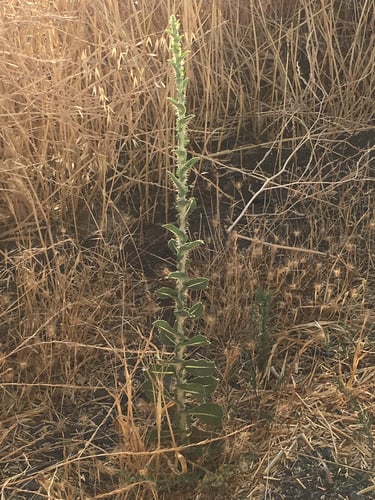
iNaturalist· cc-by-nc
(c) qomar, some rights reserved (CC BY-NC), uploaded by qomar
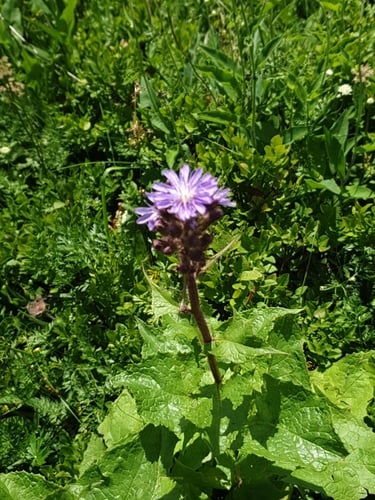
iNaturalist· cc-by-nc
(c) Guillaume Léotard, some rights reserved (CC BY-NC)
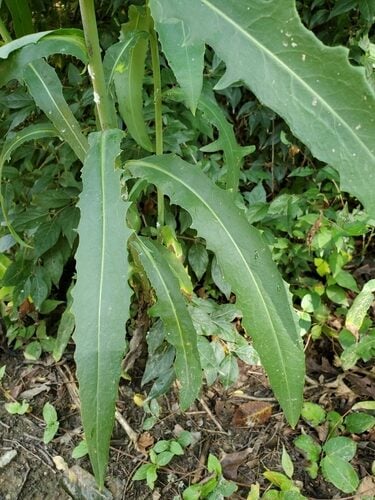
iNaturalist· cc-by-nc
(c) Guillaume Léotard, some rights reserved (CC BY-NC)
Summary
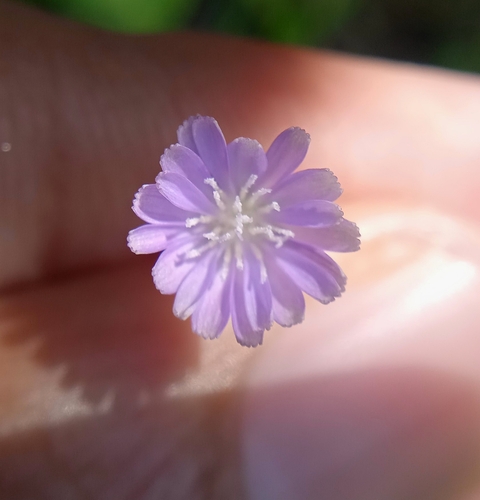
Source: WikipediaAyapana triplinervis (aya-pana, water hemp) is a tropical American shrub in the family Asteraceae. This plant has long slender leaves which are often used in traditional medicine. The flowers are pale pink and the thin, hairless stem is reddish in color.
Description
A tropical herb in the Asteraceae family with leaves used for culinary purposes.
This description is brief — help expand it
Edible Uses
The leaves are used for flavoring and can be made into tea.
Traditional Uses
The leaves are used for flavouring.
This uses section is brief — help expand it
Medicinal Uses
The plant smells strongly of coumarin, especially when crushed, and has a taste which is both bitter and aromatic. The leaves are antidote, febrifuge, haemostatic, stimulant, sudorific and tonic. They are laxative when taken in quantity. The leaves are widely used as a tea in the whole of the plant's distribution area, as a treatment against chronic diarrhoea, lung diseases, influenza, chest colds, pneumonia and constipation, and also as an antidote for snake bites. Because of its haemostatic properties the tea is used to regulate menstruation problems. It is also used as a cardiac stimulant, increasing the force of the heart beat but diminishing its frequency Externally, the leaves are used to treat badly infected wounds. A gargle prepared from the leaves is used to relieve thrush, scurvy and angina. The red-flowered variety of Ayapana triplinervis is medicinally most active. The leaves contain ayapanine (7-methoxycoumarin) which has a distinct coumarin-like odour, and ayapine (6,7-methylenedioxycoumarin). Both compounds have excellent haemostatic properties, applied locally, as a tea or subcutaneously. Ayapanine and ayapine are generally non-toxic when administered locally or taken orally; moreover, they have no effect on respiration or on blood pressure. Further known constituents of the leaves include the terpenes phellandrene, borneol, 'BETA'-selinene, the quinones thymoquinone and thymoquinone-dimethylether, carotene and vitamin C (0.025%). The essential oil isolated from the plant has been shown to inhibit the growth of certain fungi (Curvularia spp., Rhizopus spp., Aspergillus spp. And Penicillium spp.), but not that of Aspergillus fumigatus and Penicillium decumbens. Furthermore, the essential oil showed high activity against the bacteria Escherichia coli and Proteus vulgaris, and moderate activity against Bacillus anthracis, Staphylococcus aureus and some Salmonella spp.
Distribution
A tropical plant.
Where It Grows
Africa, Amazon, Asia, Brazil, Central America, India, Indonesia, Madagascar, Mauritius, SE Asia,
Cultivation
Tolerant of heavy shade.
Propagation
Seed - Cuttings Suckers are an easy method.
Other Uses
A pale green essential oil is obtained by distilling the leaves. It is used in perfumery. An extract of the whole plant is used as an ingredient in commercial cosmetic preparations as a skin conditioner. A laboratory study showed strong feeding rejection by caterpillars of Diacrisia obliqua, Philosamia ricini, Trabala vishnou and Pshissama transiens on Ricinus communis leaves which had been sprayed with 7-methoxycoumarin (obtained from the leaves of this plant). Also, a methanol extract of the plant, used as an insecticide against the paddy brown plant hopper (Nilaparvata lugens), caused about 42% mortality of adult female grass hoppers Grown as a soil binder for the stabilization of slopes. Suitable as a ground cover in tea and rubber plantations. It is occasionally planted for this purpose, but more often it occurs spontaneously and is maintained by selective weeding. The plant has excellent ground-covering and soil retaining properties.
Notes
There are about 400 Eupatorium species. Many are now put into Ageratina and Barlettina, leaving about 40 Eupatorium species.
Synonyms
Also Known As
Ahiapana, Ayapana, Ayapani
References (7)
- Ambasta, S.P. (Ed.), 2000, The Useful Plants of India. CSIR India. p 212 (As Eupatorium ayapana)
- Hedrick, U.P., 1919, (Ed.), Sturtevant's edible plants of the world. p 303 (As Eupatorium triplinervis)
- Hermandez Bermejo, J.E., and Leon, J. (Eds.), 1994, Neglected Crops. 1492 from a different perspective. FAO Plant Production and Protection Series No 26. FAO, Rome. p 12 (As Eupatorium ayapana)
- Jard. Malmaison 1: ad t. 3. 1803 (As Eupatorium ayapana)
- Seidemann J., 2005, World Spice Plants. Economic Usage, Botany, Taxonomy. Springer. p 152 (As Eupatorium triplinervis)
Show all 7 references Hide references
- Symb. bot. 3:97. 1794
- World Checklist of Useful Plant Species 2020. Royal Botanic Gardens, Kew