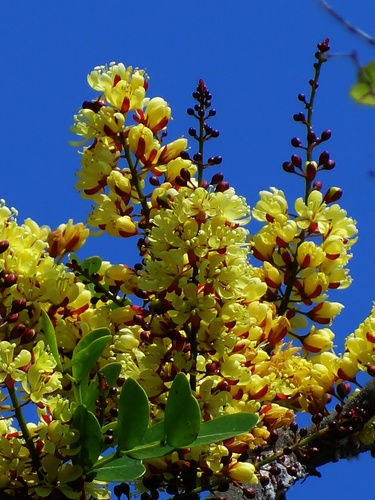
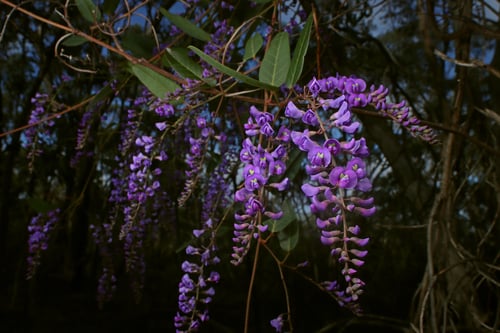
Crotalaria laburnifolia
Linn.
Rattle-box, Bird-flower, Rattle-pod
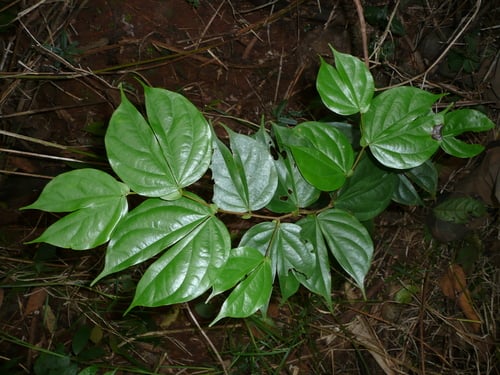
iNaturalist· cc-by-nc
(c) Kate Braun, some rights reserved (CC BY-NC), uploaded by Kate Braun
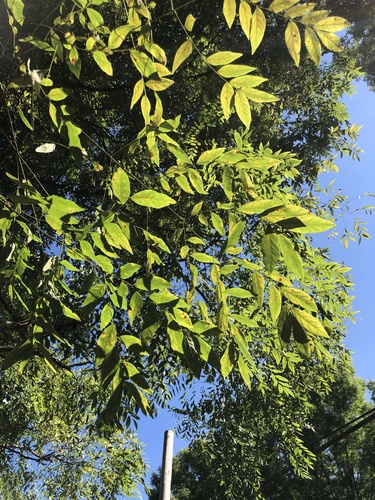
iNaturalist· cc-by-nc
(c) Kate Braun, some rights reserved (CC BY-NC), uploaded by Kate Braun
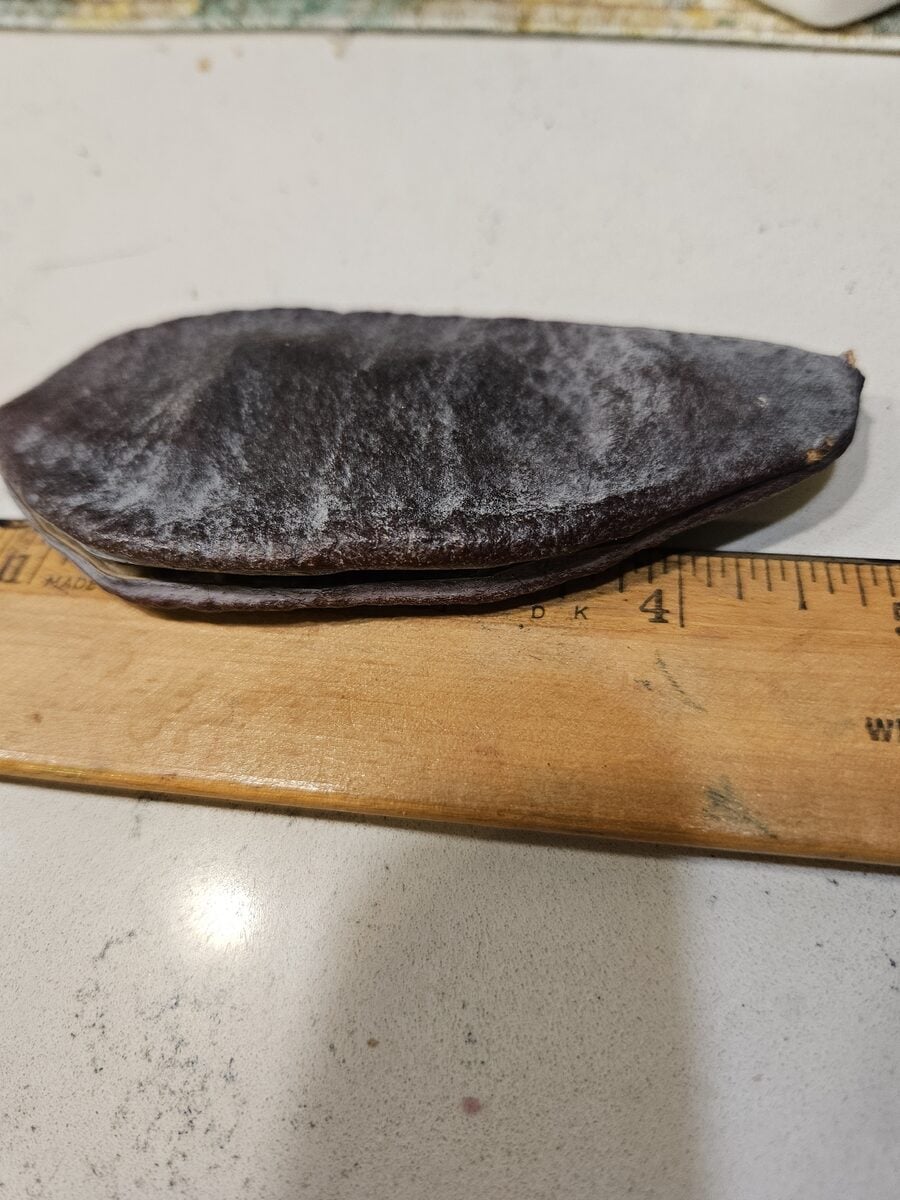
iNaturalist· cc-by-nc
(c) Kate Braun, some rights reserved (CC BY-NC), uploaded by Kate Braun
Summary
Source: WikipediaCrotalaria laburnifolia, called the rattle pod, is a highly variable species of flowering plant in the genus Crotalaria, widely distributed in central, eastern and southern Africa, the Seychelles, the Indian Subcontinent, Thailand, the Lesser Sunda Islands, Java, and Queensland in Australia. It has been introduced into Western Australia. It has gained the Royal Horticultural Society's Award of Garden Merit.
Description
An upright perennial plant. It is an evergreen shrub. It grows about 2 m tall. The leaves are yellowish-green. They have 3 leaflets. The leaflets are 3-5 cm long. The flowers are pea like with a light green keel and yellow standard. The fruit are yellow-brown pods. They are 3-15 cm long by 1 cm wide. There are 10-42 seeds that are orange-brown. They are 3-7 mm long.
Edible Uses
The pods and leaves are eaten.
Medicinal Uses
An infusion of the whole plant is used as a gargle to treat sore throats and mouth inflammations. Medicines prepared from the seed have a blood-purifying effect and are used to treat sore throats, skin diseases and as an emmenagogue. Pyrolizidine alkaloids such as anacrotine and madurensine have been extracted from the seeds in South Africa, the former being antispasmodic and possibly hepatotoxic. The seed also contains flavanone glycosides.
Known Hazards
Pyrolizidine alkaloids, such as anacrotine and madurensine, have been extracted from the seeds in South Africa, the former being antispasmodic and possibly hepatotoxic. Many members of this genus are known to contain pyrrolizidine alkaloids, the most potent of which in this genus are monocrotaline, retrorsine and retronecine. These alkaloids have a cumulative effect upon the body and, unless concentrations in a plant are high, occasional consumption is generally completely safe. Pyrrolizidine alkaloids are derived from amino acids including ornithine. Many of these alkaloids have pronounced hepatic toxicity, but the lungs and other organs may be affected as well. Mutagenic and carcinogenic activities of pyrrolizidine alkaloids have also been reported. The seed also contains flavanone glycosides.
Distribution
A tropical plant. It grows in the tropics. It can grow in areas which have moderate moisture or are dry. It needs an average, well-drained soil. It needs full sun. In tropical Queensland it grows from sea level to 550 m altitude. It suits hardiness zones 9-12.
Where It Grows
Africa, Asia, Australia, Botswana, East Africa, Mozambique, North America, USA, Zambia, Zimbabwe,
Cultivation
Plants are grown from seeds. The seeds need treatment to break the hard seed coat. It can be grown from cuttings.
Propagation
Seed - stored seed has a hard seedcoat and can benefit from scarification before sowing in order to speed up and improve germination. This can usually be done by pouring a small amount of nearly boiling water on the seeds (being careful not to cook them!) and then soaking them for 12 - 24 hours in warm water. By this time they should have imbibed moisture and swollen - if they have not, then carefully make a nick in the seedcoat (being careful not to damage the embryo) and soak for a further 12 hours before sowing. Cuttings
Other Uses
A hemp-like fibre is obtained from the stem. A green manure crop used in plantations, especially of tea and coffee. It has good leaf production, but it suffers from pests and soon becomes woody - it is probably no longer used.
References (10)
- Bodkin, F., 1991, Encyclopedia Botanica. Cornstalk publishing, p 301
- Cooper, W. and Cooper, W., 2004, Fruits of the Australian Tropical Rainforest. Nokomis Editions, Victoria, Australia. p 206
- Fowler, D. G., 2007, Zambian Plants: Their Vernacular Names and Uses. Kew. p 80
- Hedrick, U.P., 1919, (Ed.), Sturtevant's edible plants of the world. p 229
- Llamas, K.A., 2003, Tropical Flowering Plants. Timber Press. p 217
Show all 10 references Hide references
- Newman. 1970,
- Paczkowska, G . & Chapman, A.R., 2000, The Western Australian Flora. A Descriptive Catalogue. Western Australian Herbarium. p 422
- Peters, C. R., O'Brien, E. M., and Drummond, R.B., 1992, Edible Wild plants of Sub-saharan Africa. Kew. p 132
- Pickering, H., & Roe, E., 2009, Wild Flowers of the Victoria Falls Area. Helen Pickering, London. p 72
- Sp. pl. 2:715. 1753