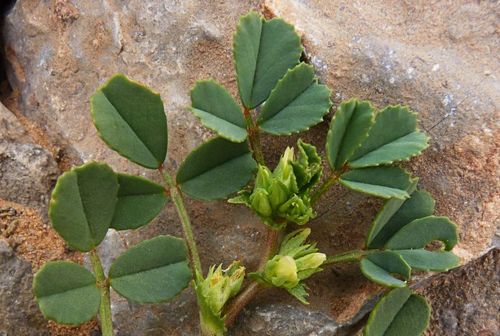
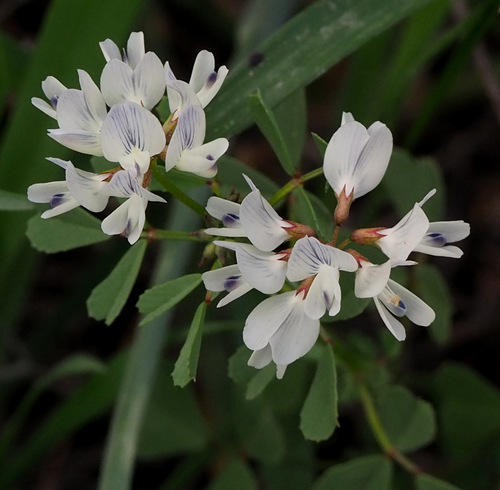
Pterocarpus marsupium
Roxb.
Malabar kino, Indian kino tree
iNaturalist· cc-by-nc
(c) Milind Girdhari, some rights reserved (CC BY-NC), uploaded by Milind Girdhari
iNaturalist· cc-by-nc
(c) Rujuta Vinod, some rights reserved (CC BY-NC), uploaded by Rujuta Vinod
iNaturalist· cc-by
(c) T R Shankar Raman, some rights reserved (CC BY), uploaded by T R Shankar Raman
Summary
Source: WikipediaPterocarpus marsupium, also known as Malabar kino or Indian kino, is a medium-to-large, deciduous tree that can grow up to 31 m (102 ft) tall. It is native to India (where it occurs in parts of the Western Ghats in the Karnataka-Kerala region and in the forests of Central India), Nepal, and Sri Lanka.
Description
A large tree. It loses its leaves during the year. It grows 15-20 m high. The trunk is straight with spreading branches. The bark is thick and yellowish-grey. It is corky with cracks along it. It peels off in large scaled revealing a rusty inner bark. The gum is blood red. The leaves are alternate. The leaflets have one at the end. There are 5-7 leaflets which are 8 cm long by 5 cm wide. They are shiny. The flowers are yellowish and have a scent. They occur in large loose clusters. These are 8-11 cm long. Flowers fall in the evening. The fruit is round but flat like a coin. They have a ring around it. They are 5 cm across. There are 1-2 seeds.
Edible Uses
The flowers and seeds are eaten. The exudate from the bark is used in some wines.
Traditional Uses
The exudate from the bark is used in some wines. The flowers and seeds are eaten.
This uses section is brief — help expand it
Medicinal Uses
Pterocarpus marsupium contains 2,3,6-trimethyl-1,4-naphthoquinone (also called 2,3,6-trimethylnaphthalene-1,4-dione or TM-NQ), which, in vitro, is a reversible monoamine oxidase inhibitor occurring in tobacco leaf, and may cause skin, eye and respiratory irritation.
Distribution
A tropical plant. It grows in forests all over India. It needs well drained slopes.
Where It Grows
Asia, Bangladesh, Himalayas, India, Myanmar, Nepal, SE Asia, Sri Lanka,
Cultivation
A plant found mainly of lowland tropical areas, found at elevations from 200 - 500 metres, but exceptionally to 1,200 metres. It grows best in areas where the mean annual temperature falls within the range 22 - 34°c, but can tolerate 4 - 47°c. It is found in areas where there is a distinct dry season, preferring a mean annual rainfall of 1,000 - 1,500mm, but tolerating 750 - 2,000mm. Requires a sunny position in a well drained soil. Grows best in a deep, rich, light to medium soil. Prefers a pH in the range 6 - 7, but tolerates 5.5 - 7.5. This species is one of several that supply a red resin from their stem. This resin, often known as 'Dragon's Blood' is often used as an external application to treat a range of skin problems and injuries. Dragon's Blood can be obtained from several species in this genus, as well as from three other distinct genera - Dracaena species, Croton species and Daemonorops species This species has a symbiotic relationship with certain soil bacteria, these bacteria form nodules on the roots and fix atmospheric nitrogen. Some of this nitrogen is utilized by the growing plant but some can also be used by other plants growing nearby.
Other Uses
The tree yields a red gum known as 'kino'. It is obtained from wounds made in the bark - the red liquid which exudes copiously from the wound quickly hardens upon exposure to the air. The gum, which contains 75% kinotannic acid, has medicinal uses and is also used as a source of tannins and for dyeing. The heartwood, which is saturated with the gum, may be used to give a yellow dye.. Extracts of the wood and bark are used as skin and hair conditioners in commercial cosmetic preparations. An extractsof the leaves is used as a skin conditioner in commercial cosmetic preparations. The heartwood is yellowish brown with darker streaks. The wood is strong, tough, very hard, durable, fine-grained, takes a fine polish and seasons well. A good quality wood, it is used for various purposes including musical instruments, door and window frames, posts, agricultural implements, boat building, carts, railway carriages, railway ties etc. Grown as shade tree for coffee plantations, and often cultivated as a multipurpose tree in home gardens and as component of agroforestry systems in India and Sri Lanka. It provides a good bulk of leaves for green manure and also fixes atmospheric nitrogen. The tree can also be used as a pioneer for revegetating the land and improving the soil.
Notes
It is indigenous to India. The gum is used for dyeing. The wood, bark and leaf extracts are used to treat diabetes.
Also Known As
Asan, Bange, Beeja, Bibla, Bija, Bijasal, Bijay saal, Biyo, Byasa, Dhorbenla, Gammalu, Hiradakhan, Honne, Kempu honne, Padauk, Peddagi, Pitasara, Pitshal, Venga, Vengai, Yegi
References (11)
- Ambasta S.P. (Ed.), 2000, The Useful Plants of India. CSIR India. p 501
- Bole, P.V., & Yaghani, Y., 1985, Field Guide to the Common Trees of India. OUP p 55
- Burkill, I.H., 1966, A Dictionary of the Economic Products of the Malay Peninsula. Ministry of Agriculture and Cooperatives, Kuala Lumpur, Malaysia. Vol 2 (I-Z) p 1864
- Pl. Coromandel 2:9, t. 116. 1799
- Facciola, S., 1998, Cornucopia 2: a Source Book of Edible Plants. Kampong Publications, p 110
Show all 11 references Hide references
- Menninger, E.A., 1977, Edible Nuts of the World. Horticultural Books. Florida p 100
- Pandy, R. K. & Saini, S. K., 2007, Edible plants of tropical forests among tribal communities of Madhya Pradesh. Indian Journal of Traditional Knowledge. 6(1), pp 185-190
- Sahni, K.C., 2000, The Book of Indian Trees. Bombay Natural History Society. Oxford. p 89
- Singh, H.B., Arora R.K.,1978, Wild edible Plants of India. Indian Council of Agricultural Research, New Delhi. p 84
- WATT,
- Yadav, D. K., 2011, Study on Biodiversity and Edible Bioresources of Betla National Park, Palamu, Jharkhand (India). The 2011 Las Vegas International Academic Conference.