Buchanania lanceolata
Wight
wikimedia· pd
Wikimedia Commons (via Wikimedia Commons)
gbif· cc-by
French Institute of Pondicherry
Summary
Source: WikipediaBuchanania lanceolata is a species of plant in the family Anacardiaceae. It is endemic to India.
Description
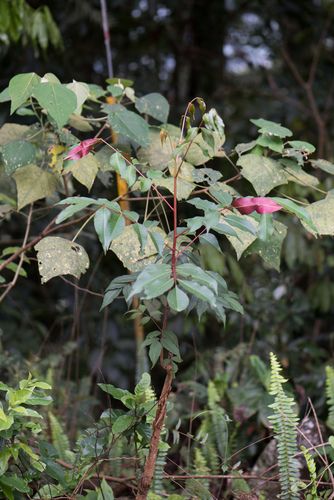
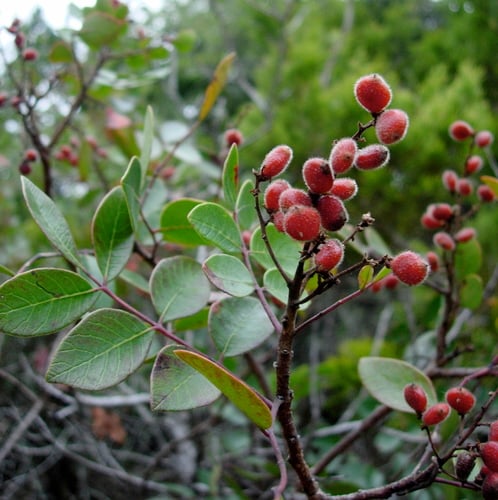
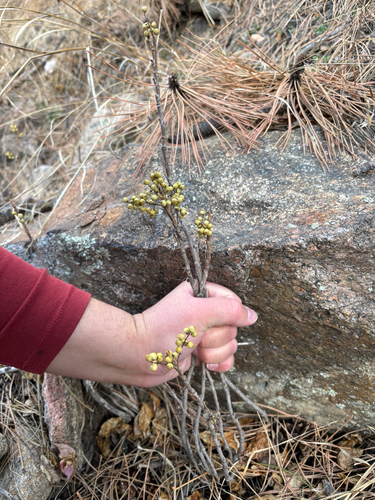
A tree. The leaves are simple and alternate. They are crowded near the ends of the branches. The leaf stalks are 1-2 cm long. The leaf blade is 5-12 cm long by 2-4 cm wide. They are sword shaped and wedge shaped at the base and taper to the tip. The flowers are in groups at the ends of branches or in the axils of leaves. These groups are 5-7 cm long. They have a rusty coating. The flowers are yellow. The fruit is fleshy and 1.5 cm across. There is one seed.
Edible Uses
The nuts and kernels are eaten.
Known Hazards
This is an at-risk species.
Distribution
A tropical plant. It grows in lowland forests. It is an understorey tree.
Where It Grows
Asia, India, Indochina, Laos, Myanmar, SE Asia,
Notes
There are about 25 Buchanania species. It is an at risk species.
Synonyms
Also Known As
Katuma, Koshamrom, Mala-mavu
References (4)
- Ambasta S.P. (Ed.), 2000, The Useful Plants of India. CSIR India. p 90
- Arora, R. K., 2014, Diversity in Underutilized Plant Species - An Asia-Pacific Perspective. Bioversity International. p 90
- Chandrashekara, U. M., 2009, Tree species yielding edible fruit in the coffee-based homegardens of Kerala, India: their diversity, uses and management. Food Sec. 1:361-370
- Dobriyal, M. J. R. & Dobriyal, R., 2014, Non Wood Forest Produce an Option for Ethnic Food and Nutritional Security in India. Int. J. of Usuf. Mngt. 15(1):17-37