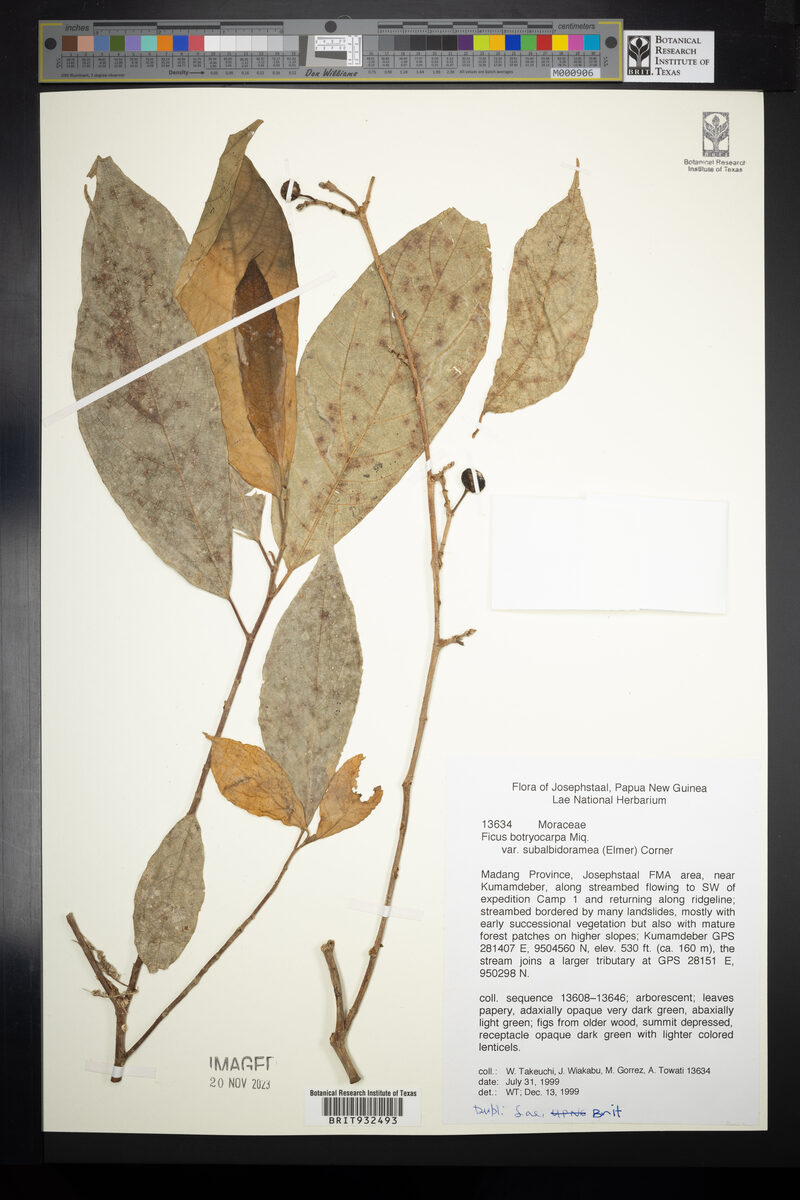
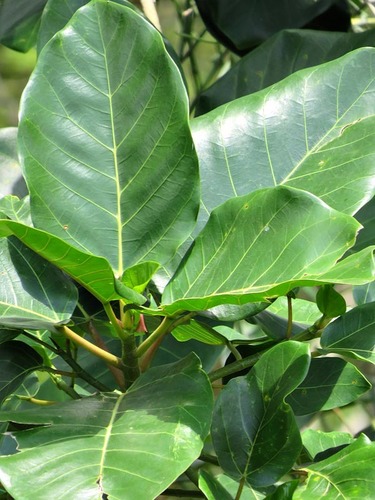
Ficus amplissima
Sm.
Pipri
iNaturalist· cc-by-nc
(c) PARTH PARIKH_BIRDER, some rights reserved (CC BY-NC), uploaded by PARTH PARIKH_BIRDER
iNaturalist· cc-by-nc
(c) Shiwalee Samant, some rights reserved (CC BY-NC), uploaded by Shiwalee Samant
iNaturalist· cc-by-nc
(c) Radha Veach, some rights reserved (CC BY-NC), uploaded by Radha Veach
Summary
Source: WikipediaFicus amplissima, also known as the Indian bat tree, Indian bat fig, Pimpri, Pipri (Piparee), Pipali or Bilibasari mara (in the Kannada language) is a tree species of flowering plants that belongs to Moraceae, the fig or mulberry family. It is native to Central and southern Peninsular India, Sri Lanka and Maldives, having a significant distribution throughout Western Ghats of India. It is most commonly planted to provide shade in coffee plantations due to its dense and wide foliage. The ripened figs attract many birds, especially during the spring.
Description
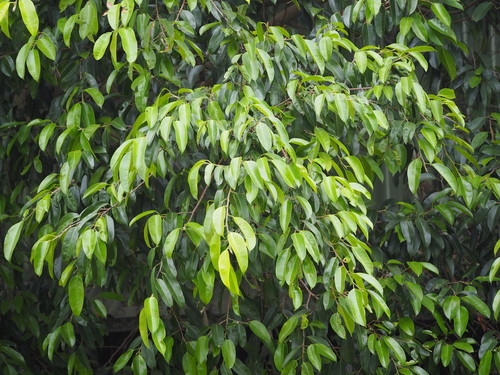
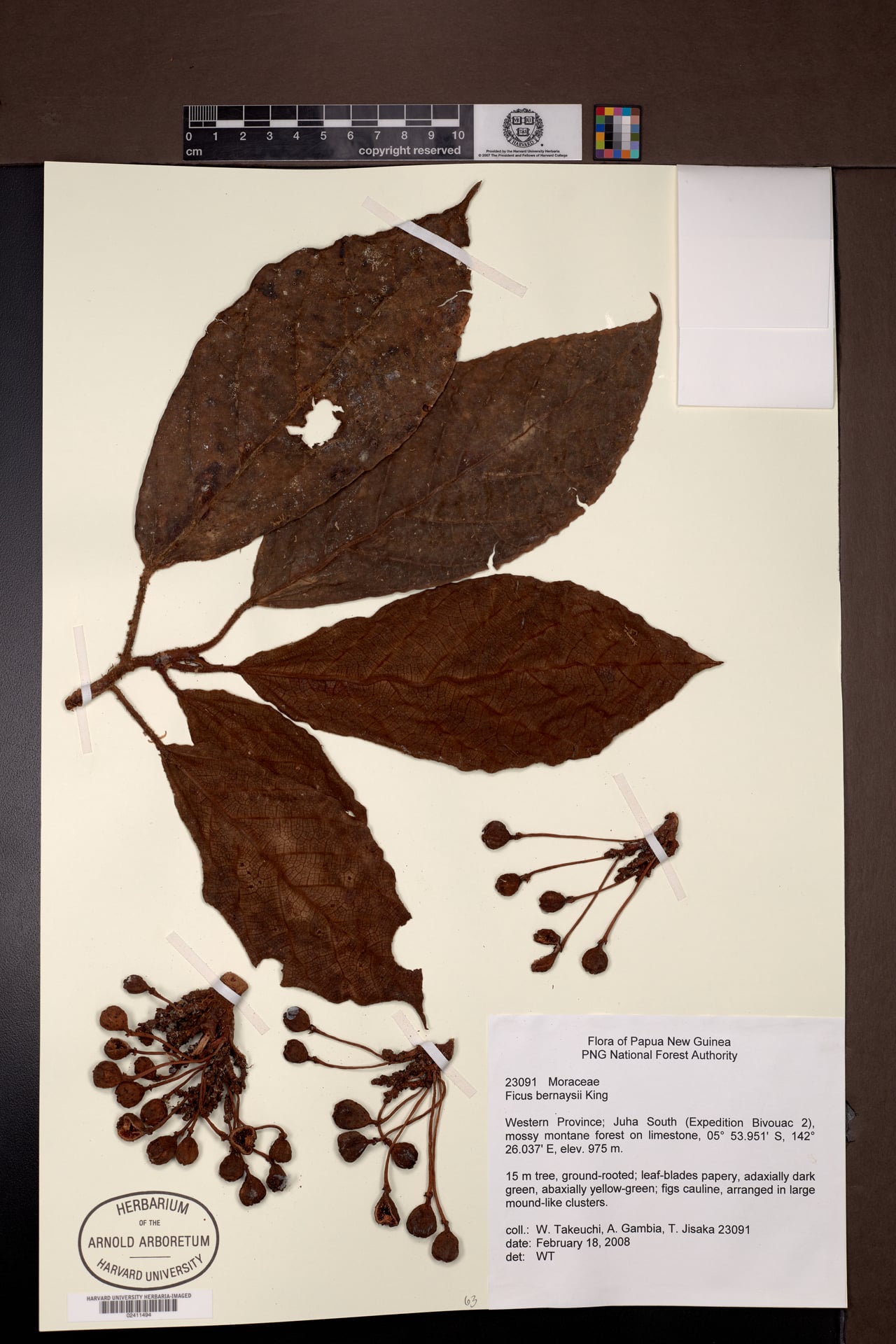
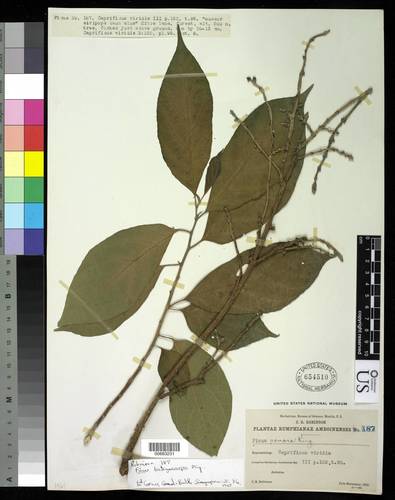
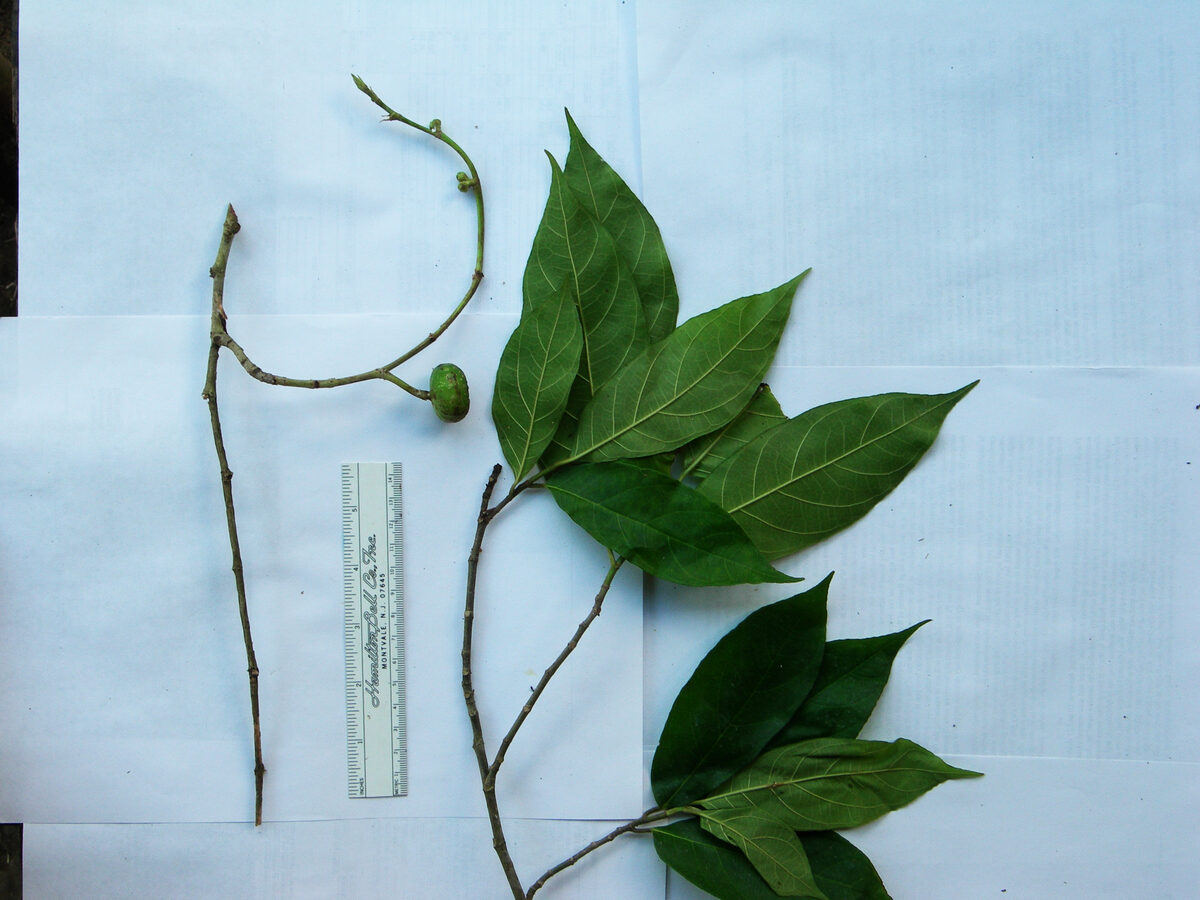
A fig. It is a large tree. It loses its leaves during the year. It grows 18 m tall. The branches are spreading. It usually has aerial roots. The bark is greenish-grey. The young shoots have a white covering. The leaf stalks are 23-28 cm long and have a gland near the end. The leaf blades are rough and oval or narrow and 5-10 cm long by 3-6 cm wide. The fruit receptacles are in pairs in the axils of leaves or where leaves have fallen off. They are 2 cm across. They are pink or purple.
Edible Uses
The fruit are eaten cooked as a vegetable.
Traditional Uses
The fruit are eaten. They are cooked as a vegetable.
This uses section is brief — help expand it
Medicinal Uses
Ficus amplissima has been traditionally used in Ayurveda, Siddha, and Unani medicine for the treatment of diabetes. The bark of the tree is a natural anti-diabetic and anti-oxidant medicine, reducing blood glucose levels. The phenol in leaves gives the foliage anti-inflammatory and wound healing properties. In native medicine, leaf juice is applied on chronic wounds and the latex is applied on fresh wounds. The figs are chewed and their juice is sucked to treat mouth ulcers. The leaves and branches of F. amplissima are used as fodder for cows, goats, and sheep. The wood is ideal for burning, and thus is widely used as a fuelwood in rural areas. The raw or ripened fruits are used to make pickles. The trunk produces hard and high quality timber that is used to build furniture. It is also used by rural farmers to make agricultural tools. The bark provides strong fibres which are used to make ropes and bags. It is also planted as polewood in farms.
Distribution
A tropical plant.
Where It Grows
Asia, India, Maldives, Northeastern India, Pakistan, Sri Lanka,
Cultivation
Fig trees have a unique form of fertilization, each species relying on a single, highly specialized species of wasp that is itself totaly dependant upon that fig species in order to breed. The trees produce three types of flower; male, a long-styled female and a short-styled female flower, often called the gall flower. All three types of flower are contained within the structure we usually think of as the fruit. The female fig wasp enters a fig and lays its eggs on the short styled female flowers while pollinating the long styled female flowers. Wingless male fig wasps emerge first, inseminate the emerging females and then bore exit tunnels out of the fig for the winged females. Females emerge, collect pollen from the male flowers and fly off in search of figs whose female flowers are receptive. In order to support a population of its pollinator, individuals of a Ficus spp. must flower asynchronously. A population must exceed a critical minimum size to ensure that at any time of the year at least some plants have overlap of emmission and reception of fig wasps. Without this temporal overlap the short-lived pollinator wasps will go locally extinct.
Other Uses
The dark brownish-coloured wood has a tinge of green in it. The wood has a hard, straight grain, like a Sapeli mahogany, but with a smoother surface. It is an attractive wood for good quality decorative woodwork, the transverse grain marked by wide patches of dark-coloured concentric layers. The tree is used to provide shade in coffee plantations.
Notes
There are about 800-1000 Ficus species. They are mostly in the tropics. There are 120 Ficus species in tropical America.
Synonyms
Also Known As
Laami, Laamiaa, Payar, Pimparan, Pimpari
References (7)
- A. Rees, Cycl. 14: Ficus no. 1. 1810
- Flora of Pakistan. www.eFloras.org
- Kuvar, S. D. & Shinde, R. D., 2019, Wild Edible Plants used by Kokni Tribe of Nasik District, Maharashtra. Journal of Global Biosciences. Volume 8, Number 2, 2019, pp. 5936-5945
- Prachi, K., et al, 2012, Underutilized wild fruits of North Maharashtra. Journal of Research in Plant Sciences. (2012) 1:071-076
- Selvam, V., 2007, Trees and shrubs of the Maldives. RAP Publication No. 2007/12 p 96
Show all 7 references Hide references
- Sharma, B.D., & Lakshminarasimhan, P., 1986, Ethnobotanical Studies on the Tribals of Nasik District (Maharashtra). J. Econ. Tax. Bot. Vol. 8 No. 2 pp 439-446 (As Ficus amprissima)
- Sujanapal, P., & Sankaran, K. V., 2016, Common Plants of Maldives. FAO & Kerala FRI, p 131