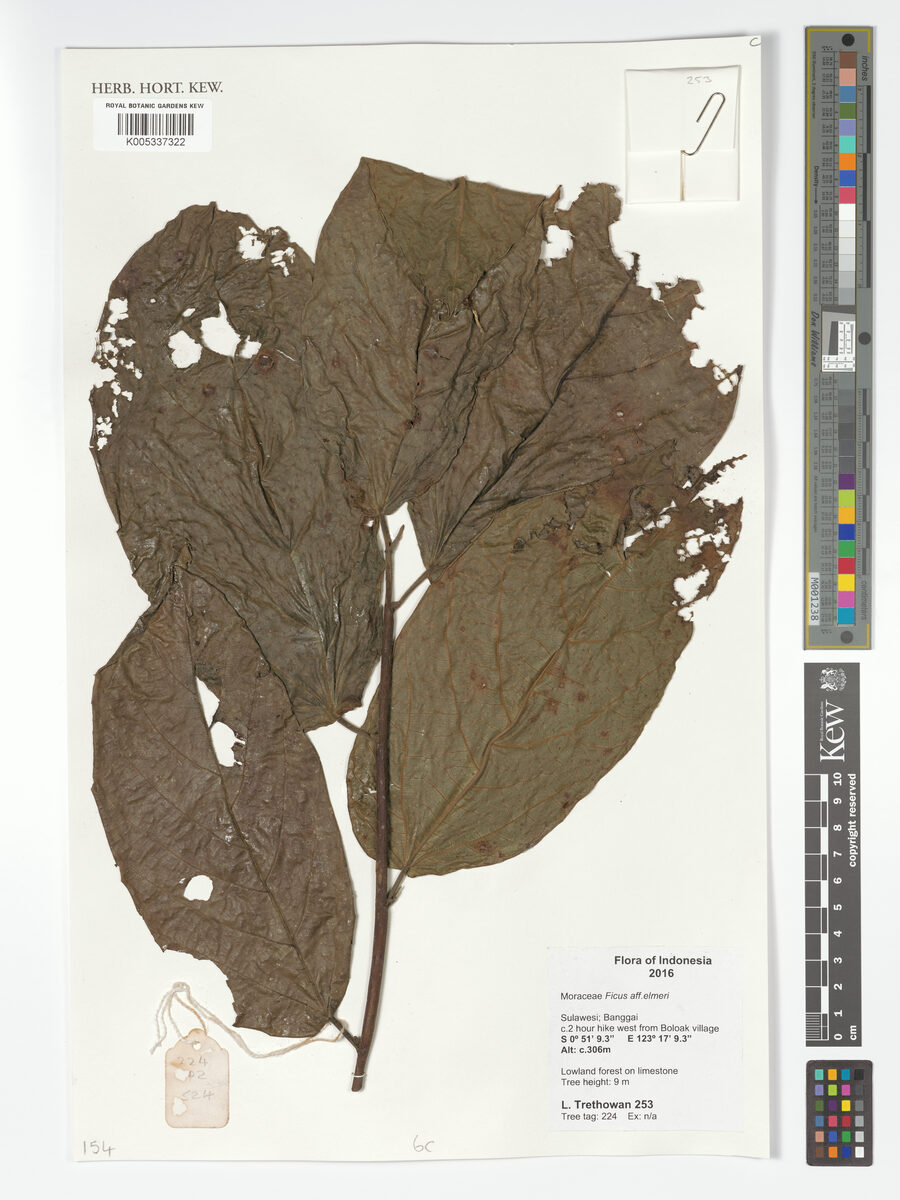
Ficus uncinata
(King) Becc.
iNaturalist· cc-by-nc
(c) Kaitlyn, some rights reserved (CC BY-NC), uploaded by Kaitlyn
iNaturalist· cc-by-nc
(c) Hani Ristiawan, some rights reserved (CC BY-NC)
Summary
Source: WikipediaFicus uncinata, also known as earth fig in English and as ara entimau in Iban, is a species of flowering plant, a fruit tree in the fig family, that is native to Southeast Asia.
Description
A fig. It is a small tree. It is spindly and grows 2-8 meters high. It has white smooth bark. The trunk is 5-8 cm across. Several branches of one tree growing out of the ground. The leaves are alternate and simple. The leaves are rough and fuzzy. They are unequal on the sides and have teeth along the edge. The stems on the ground have fruit, which have red fuzz and green spikes. The fruit are 17 mm across. The fruit are eaten.
Edible Uses
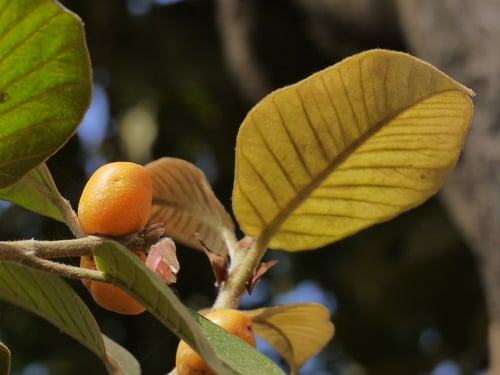
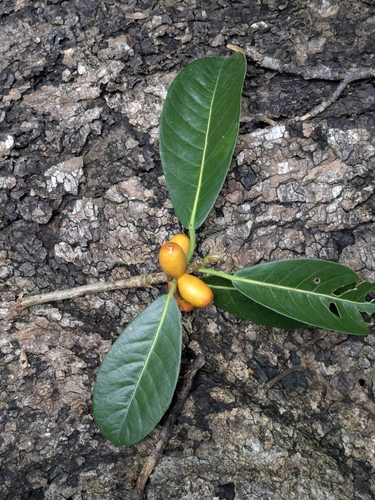
Fruit. A sweet flavour. The pink-red-purple, globose fruits are around 17mm in diameter. The fruits are produced along branches that trail on the forest floor.
Distribution
A tropical plant. It grows on forests up to 1,800 m above sea level. It can be on sandy or clay soils. It grows in Borneo.
Where It Grows
Asia, Brunei, Indonesia, Malaysia, Sarawak, SE Asia,
Cultivation
Found in the wild in a variety of soils from sandy to clay. Fig trees have a unique form of fertilization, each species relying on a single, highly specialized species of wasp that is itself totaly dependant upon that fig species in order to breed. The trees produce three types of flower; male, a long-styled female and a short-styled female flower, often called the gall flower. All three types of flower are contained within the structure we usually think of as the fruit. The female fig wasp enters a fig and lays its eggs on the short styled female flowers while pollinating the long styled female flowers. Wingless male fig wasps emerge first, inseminate the emerging females and then bore exit tunnels out of the fig for the winged females. Females emerge, collect pollen from the male flowers and fly off in search of figs whose female flowers are receptive. In order to support a population of its pollinator, individuals of a Ficus spp. must flower asynchronously. A population must exceed a critical minimum size to ensure that at any time of the year at least some plants have overlap of emmission and reception of fig wasps. Without this temporal overlap the short-lived pollinator wasps will go locally extinct.
Notes
There are about 800-1000 Ficus species. They are mostly in the tropics. There are 120 Ficus species in tropical America.
Synonyms
Also Known As
Entimau, Imo, Maning
References (3)
- Chai, P. P. K. (Ed), et al, 2000, A checklist of Flora, Fauna, Food and Medicinal Plants. Lanjak Entimau Wildlife Sanctuary, Sarawak. Forestry Malaysia & ITTO. p 169
- Hoare, A., 2003, Food use of the Lundayeh SW Sabah. Borneo Research Council.
- Slik, F., www.asianplant.net