Ficus ulmifolia
Lamarck
Elm-leaved fig
iNaturalist· cc-by-nc
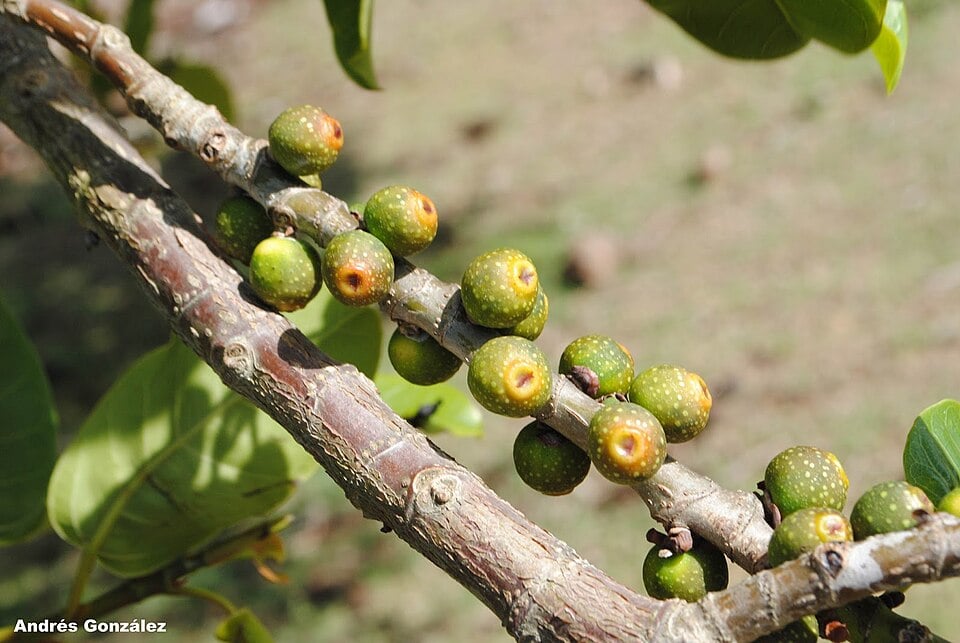
(c) jenni, some rights reserved (CC BY-NC), uploaded by jenni
iNaturalist· cc0
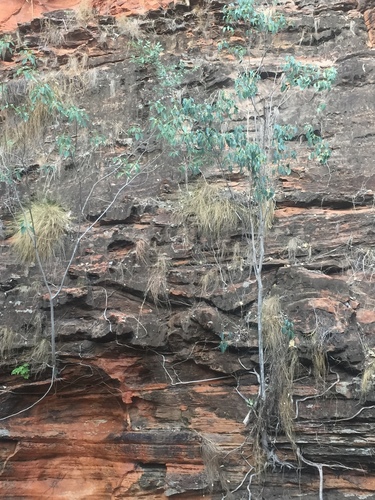
no rights reserved
Summary
Source: WikipediaFicus ulmifolia is a species of plant in the family Moraceae. It is endemic to the Philippines. It is threatened by habitat loss.
Description
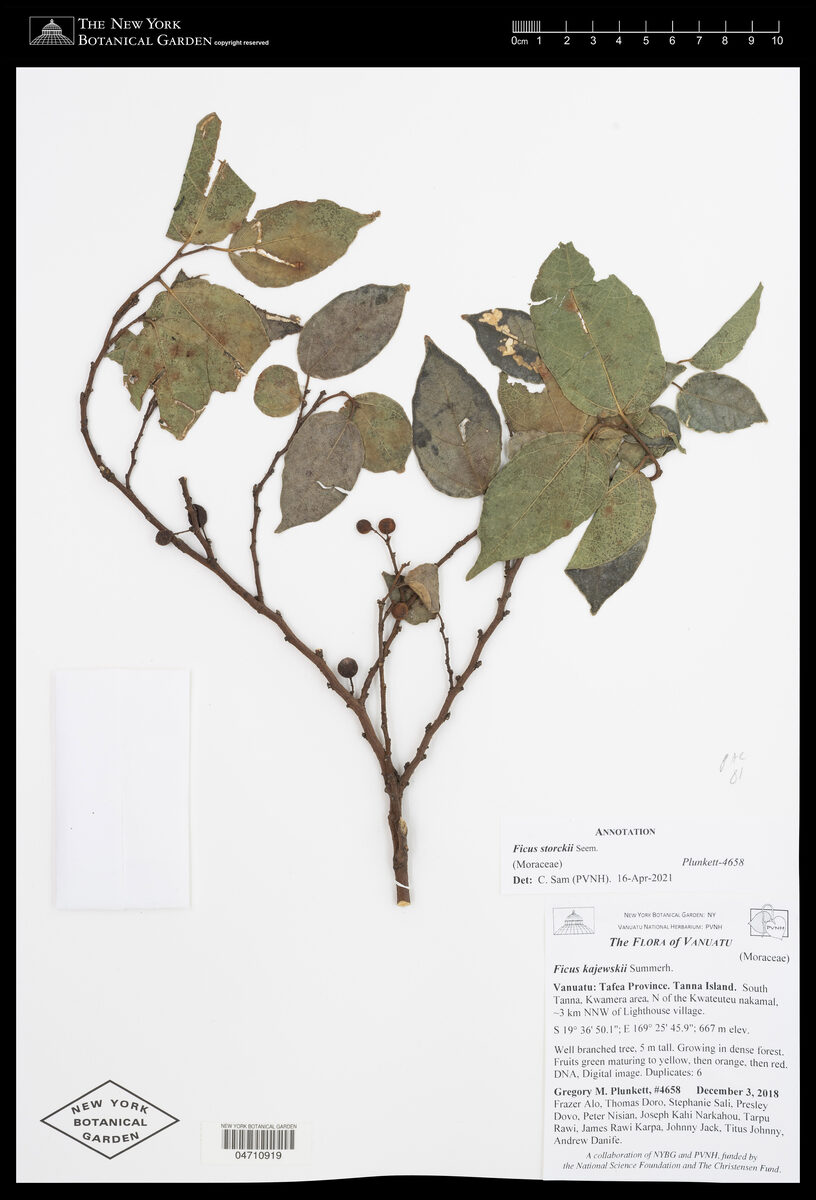
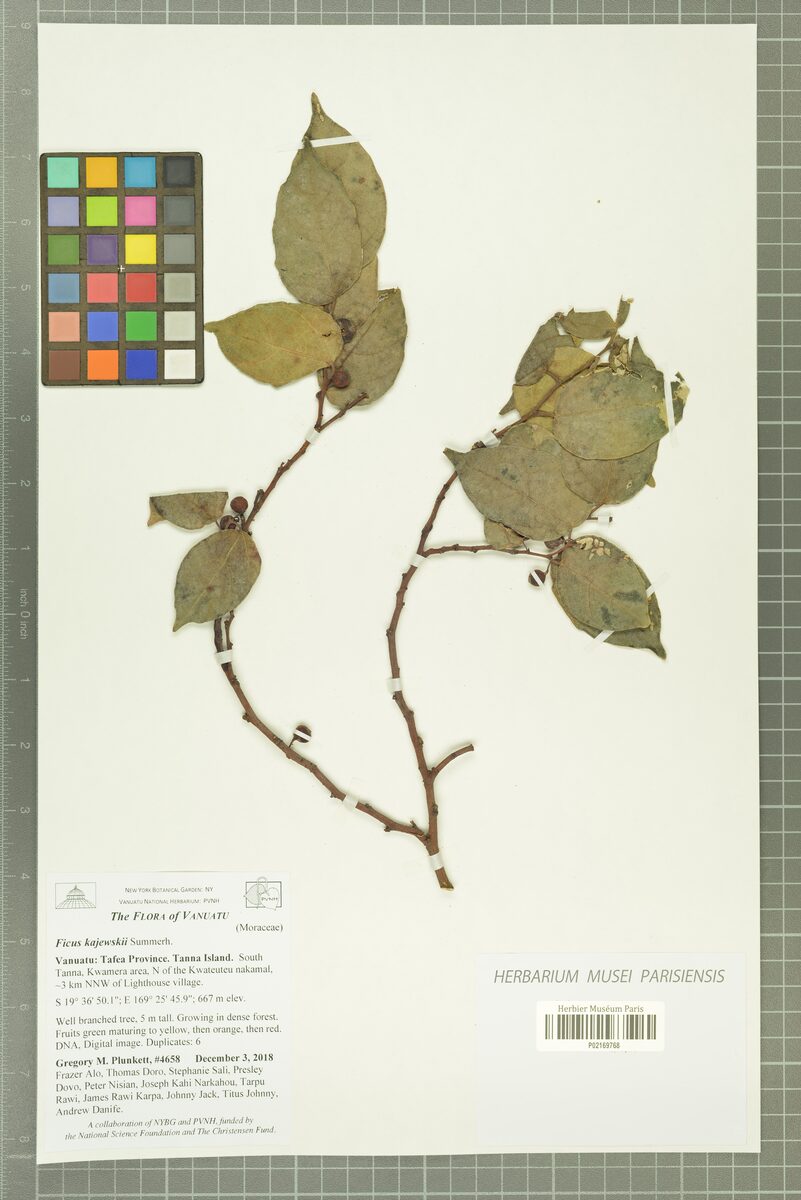
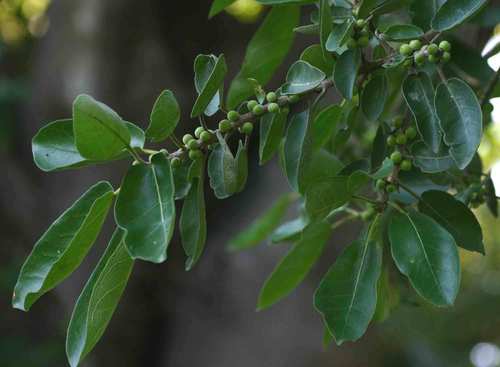
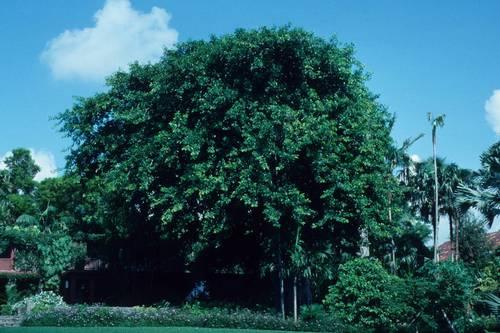
A fig. It is a shrub or small tree from 3 to 5 m high. The leaves are alternate and variable in shape. They have a wavy look and have lobes. The depth of the lobes varies. The leaves are coarsely toothed. The base of the leaves is rounded and with 3 nerves. The leaves are 9 to 17 cm long and 4 to 8 cm wide. The fruit are in the axils of leaves and there are one or two together. They are soft and fleshy when mature. They are orange red to purple and somewhat rounded and about 1.5 cm long.
Edible Uses
Fruit - raw. Well flavoured. Not much flavour, but sometimes eaten with sugar and cream. They are soft and fleshy when mature, orange red to purple, somewhat rounded, and about 1.5 centimeters long.
Traditional Uses
The ripe fruit are eaten raw.
This uses section is brief — help expand it
Medicinal Uses
The latex contains the proteolytic enzyme ficin - this has the property of destroying round-worms and, in some instances, hook-worms. The enzyme, however, is more or less injurious to the intestine.
Distribution
A tropical plant. They are common in areas of the Philippines in shrub and open places throughout the country. They are especially common around Laguna Bay regions. It grows up to 1,500 m above sea level.
Where It Grows
Asia, Hawaii, Pacific, Philippines*, SE Asia, USA,
Cultivation
Fig trees have a unique form of fertilization, each species relying on a single, highly specialized species of wasp that is itself totaly dependant upon that fig species in order to breed. The trees produce three types of flower; male, a long-styled female and a short-styled female flower, often called the gall flower. All three types of flower are contained within the structure we usually think of as the fruit. The female fig wasp enters a fig and lays its eggs on the short styled female flowers while pollinating the long styled female flowers. Wingless male fig wasps emerge first, inseminate the emerging females and then bore exit tunnels out of the fig for the winged females. Females emerge, collect pollen from the male flowers and fly off in search of figs whose female flowers are receptive. In order to support a population of its pollinator, individuals of a Ficus spp. must flower asynchronously. A population must exceed a critical minimum size to ensure that at any time of the year at least some plants have overlap of emmission and reception of fig wasps. Without this temporal overlap the short-lived pollinator wasps will go locally extinct.
Other Uses
The leaves of this species are very hard and rough, and are used for cleaning cooking utensils and scouring hardwood floors, stairs, windowsills, etc. ; and also in place of sandpaper in polishing wood, when sandpaper is not available.
Notes
There are about 800-1000 Ficus species. They are mostly in the tropics. There are 120 Ficus species in tropical America.
Also Known As
Aplas, Is-is
References (8)
- Brown, W.H., 1920, Wild Food Plants of the Philippines. Bureau of Forestry Bulletin No. 21 Manila. p 44
- Encycl. 2:499. 1788
- Lugod, G.C. and de Padua L.S., 1979, Wild Food Plants in the Philippines. Vol. 1. Univ. of Philippines Los Banos. p 56
- Monsalud, M.R., Tongacan, A.L., Lopez, F.R., & Lagrimas, M.Q., 1966, Edible Wild Plants in Philippine Forests. Philippine Journal of Science. p 499
- PROSEA (Plant Resources of South East Asia) handbook, Volume 2, 1991, Edible fruits and nuts.
Show all 8 references Hide references
- Reid, L. A. & Madulid, D., 1972, Some comments on Bontoc Ethnobotany. Philippine Journal of Linguistics
- Staples, G.W. and Herbst, D.R., 2005, A tropical Garden Flora. Bishop Museum Press, Honolulu, Hawaii. p 412
- World Checklist of Useful Plant Species 2020. Royal Botanic Gardens, Kew