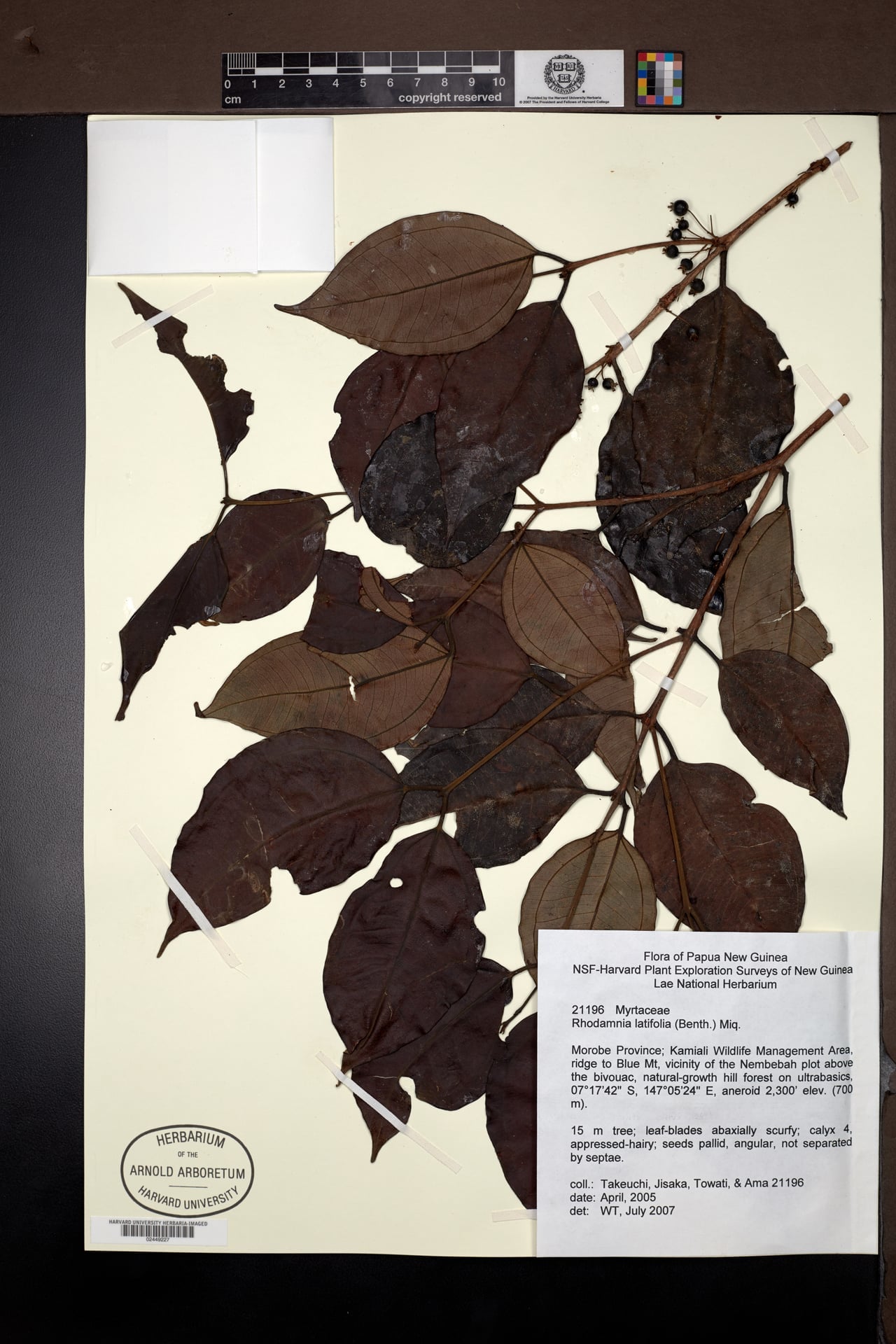
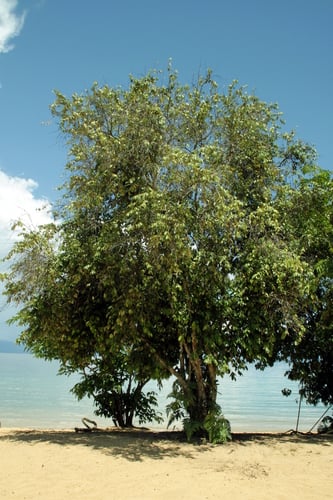
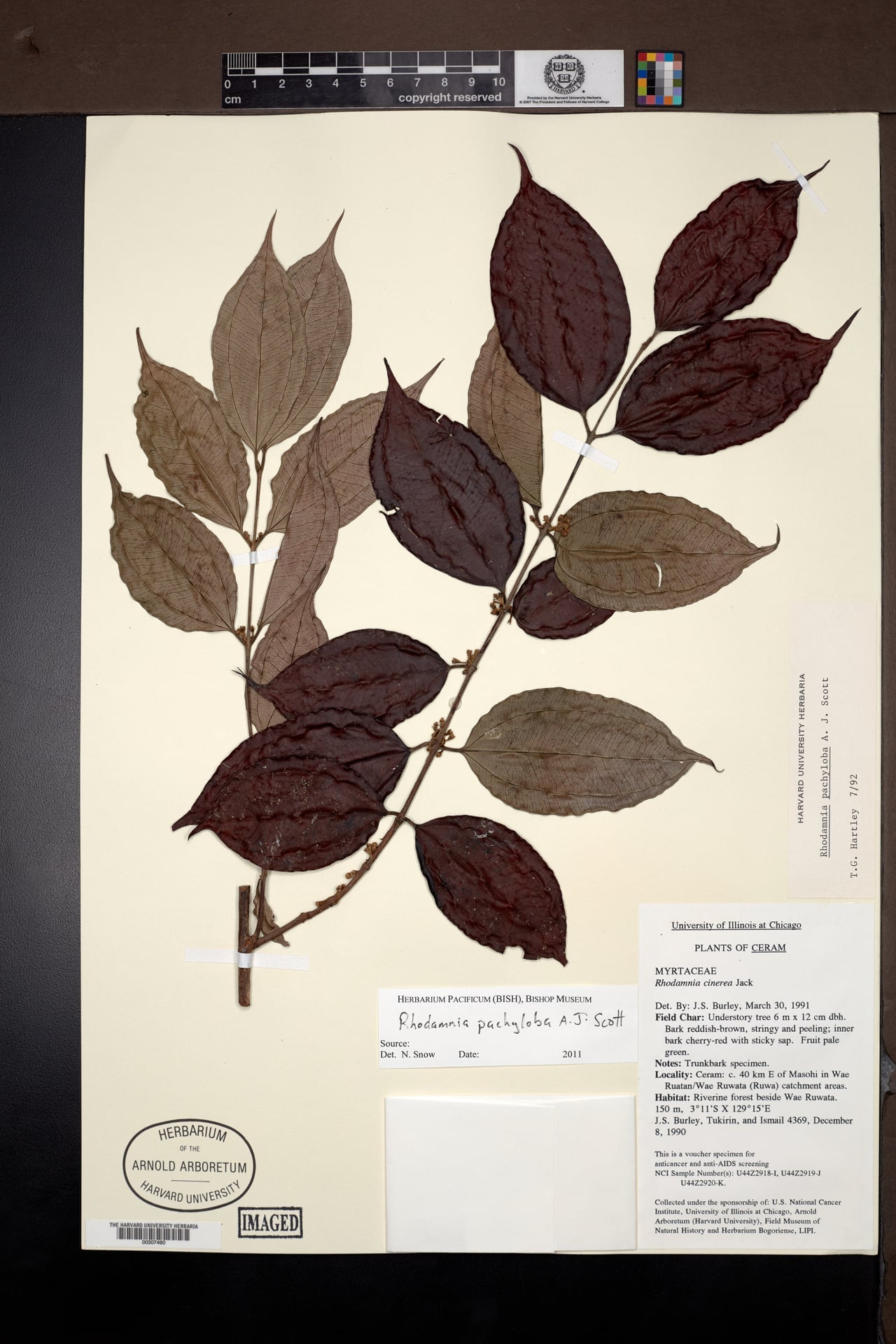
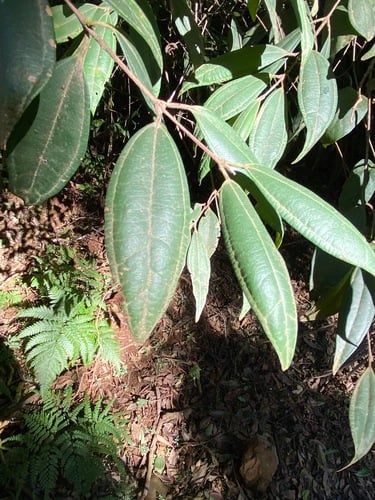
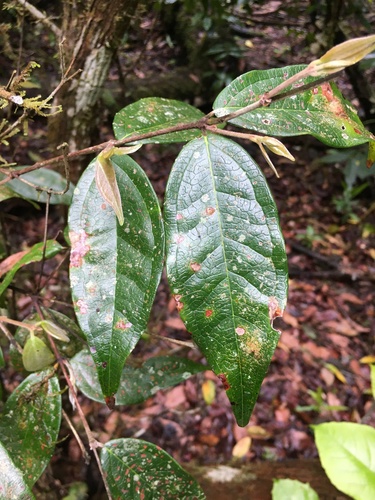
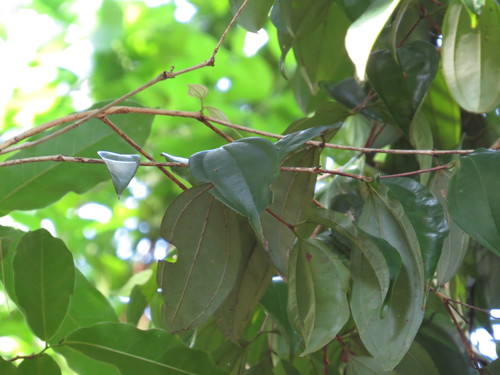
Syzygium caryophyllatum
(Linn.) Alston
South Indian plum
iNaturalist· cc-by-sa
(c) Dinesh Valke, some rights reserved (CC BY-SA)
iNaturalist· cc-by-sa
(c) Dinesh Valke, some rights reserved (CC BY-SA)
iNaturalist· cc-by-nc
(c) Ian Lockwood, some rights reserved (CC BY-NC), uploaded by Ian Lockwood
Summary
Source: WikipediaSyzygium caryophyllatum is a species of plant in the family Myrtaceae. It is a tree native to Sri Lanka and southern India. It grows in areas from sea level to elevations of 1,160 m (3,810 ft). In India it is found in the states of Kerala, Karnataka, Goa and Tamil Nadu. The fruit is edible. The local name in Karnataka is Kuntala/Kuntu Nerale.
Description
A shrub or small tree. It grows 6 m tall. The bark is grey. The leaves are simple and opposite. The leaf blade is 5-10 cm long by 2-4 cm wide. The flowers are white in groups at the ends of branches. The fruit is a black round berry. It is 5 mm across. There is one seed.
Edible Uses
The ripe fruit are eaten, primarily by children. The leaves and buds are also edible.
Traditional Uses
The ripe fruit are eaten.
This uses section is brief — help expand it
Distribution
A tropical plant. It grows along the edges of evergreen forests up to 700 m above sea level. It grows in open sandy places.
Where It Grows
Asia, India, Indonesia, Northeastern India, SE Asia, Sri Lanka*,
Propagation
Seed - best sown as soon as it is ripe.
Other Uses
The brown wood is rather soft.
Production
In India flowering and fruiting is January to February.
Other Information
They are eaten mainly by children.
Notes
It is a plant at risk.
Nutrition
| Part | Moisture | kJ | kcal | Protein | Vit A | Vit C | Iron | Zinc |
|---|---|---|---|---|---|---|---|---|
| Fruit | 70.5 | 435 | 104 | — | — | 37 | 1.5 | — |
Synonyms
Also Known As
Bhedas, Cherujara, Chota jambul, Dan, Heen-dan, Kani, Karinjara, Kshdurajambu, Kuntala, Kunta nerale, Kunta nurale, Loungpan, Malai naaval, Marungi, Nimbuli, Njara, Pottinjaval, Ran lawang, Shenjarel
References (8)
- Ambasta, S.P. (Ed.), 2000, The Useful Plants of India. CSIR India. p 613
- Ashton, M. S., et al 1997, A Field Guide to the Common Trees and Shrubs of Sri Lanka. WHT Publications Ltd. pdf p 297
- Dobriyal, M. J. R. & Dobriyal, R., 2014, Non Wood Forest Produce an Option for Ethnic Food and Nutritional Security in India. Int. J. of Usuf. Mngt. 15(1):17-37
- Khaple, A. K., Gurav, M. & Hubballi, S., Population Studies of Wild Edible Fruit Tree Species in Kodagu. International Journal of Life Sciences Vol. 1 No. 3
- Rajapaksha, U., 1998, Traditional Food Plants in Sri Lanka. HARTI, Sri Lanka. p 330
Show all 8 references Hide references
- Ramachandran, V.S., 1987, Further Notes on the Ethnobotany of Cannanore District, Kerala. J. Econ. Tax. Bot. Vol. 11 No. 1 pp 47-
- Ravikrishna, S., 2011, Ethno-medico-botanical survey on Wild Edible fruits of Udupi Taluq, Udupi p 96
- Thokchom, R., et al, 2016, Documentation and assessment of wild medicinal and edible flowers of valley districts of Manipur. International Journal of Research in Applied, Natural and Social Sciences. 4(11):13-20 (As Eugenia)