Opuntia elatior
Mill.
Fafdo-Thor
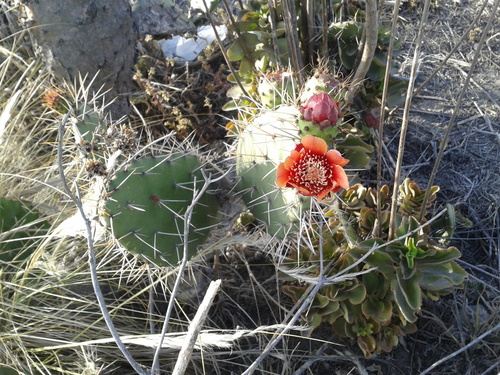
iNaturalist· cc-by-nc
(c) Fundación Dodo Colombia, some rights reserved (CC BY-NC)
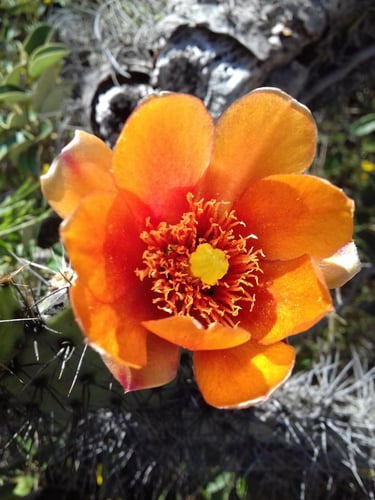
iNaturalist· cc-by-nc
(c) jaimebraschi, some rights reserved (CC BY-NC)
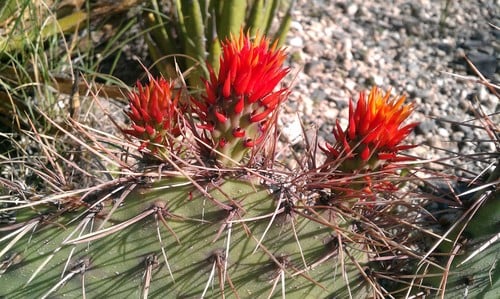
iNaturalist· cc-by-nc
(c) hoangvanhuan, some rights reserved (CC BY-NC)
Description
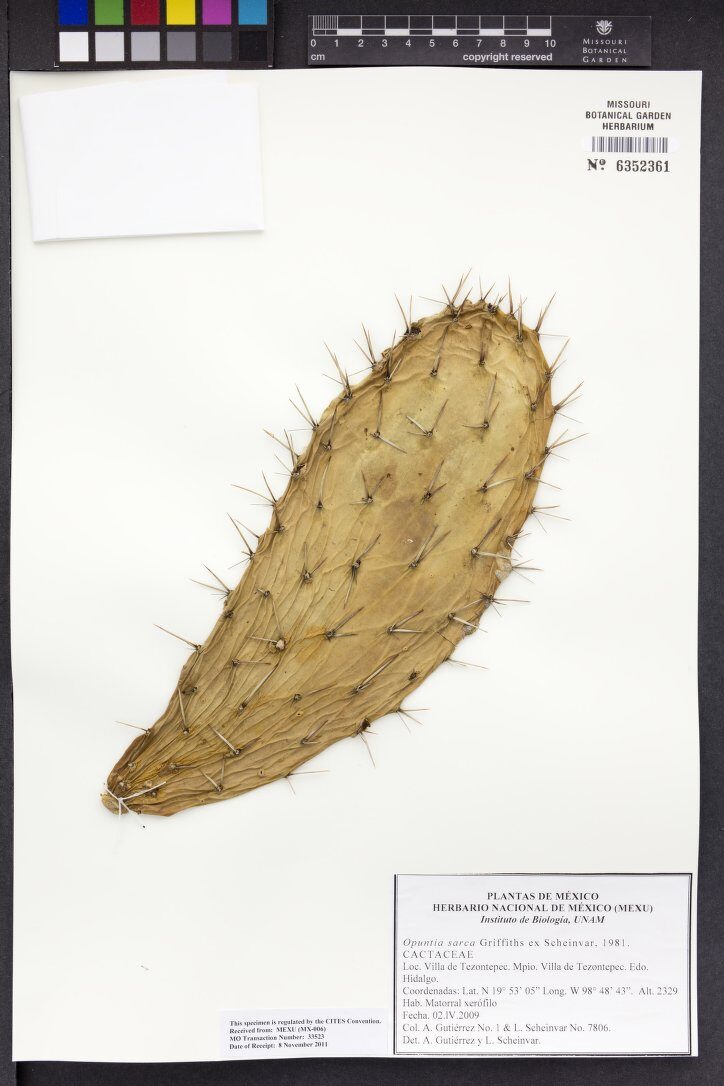
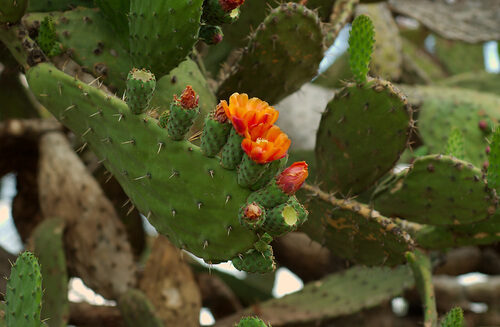
A cactus. It is shrubby and forms clumps. They can be 5 m high. The stem segments are oblong and olive green. They are 10-40 cm long. There are 2-8 spines which are like needles and dark brown. They are 2-7 cm long. The flowers are yellow with red stripes. They are 5 cm across. The fruit are oval and red. They are fleshy.
Edible Uses
The ripe sweet fruits are eaten raw after removing the spines, or roasted.
Traditional Uses
The ripe fruit are sweet and eaten raw after removing the spines. They are also roasted.
This uses section is brief — help expand it
Distribution
A tropical plant. In the Himalayas it grows up to 2,000 m above sea level.
Where It Grows
Andes, Antilles, Asia, Australia, Bangladesh, Canary Is., Caribbean, Central America, Colombia, Costa Rica, Himalayas, India, Kenya, Morocco, Myanmar, Northeastern India, Panama, SE Asia, South America, Spain, Trinidad-Tobago, Tunisia, Venezuela,
Production
In India in the Ghats fruit are available January to July.
Synonyms
Also Known As
Agfanta, Fanta, Hathia thor, Nagphani, Nivandga, Nivdung, Phadyanivadung, Phansavar, Sabarbond
References (16)
- Ambasta, S.P. (Ed.), 2000, The Useful Plants of India. CSIR India. p 411
- Anderson, E.F., 2001, The Cactus Family, Timber Press. p 497
- Gard. dict. ed. 8: Opuntia no. 4. 1768
- GAMMIE, (As Opuntia nigricans)
- GUPTA & KANODIA, (As Opuntia nigricans)
Show all 16 references Hide references
- http://iscmumbai.maharashtra.gov.in/floristic%20survey.html
- Jadhav, R., et al, 2015, Forest Foods of Northern Western Ghats: Mode of Consumption, Nutrition and Availability. Asian Agri-History Vol. 19, No. 4: 293-317
- Kew Plants of the World Online
- Kiran, K. C., et al, 2019, Diversity and Seasonal Availability of Potential Wild Edible Plants from Vidarbha Region of Maharashtra State, India. Int.J.Curr.Microbiol.App.Sci (2019) 8(2): 1434-1446
- Kuvar, S. D. & Shinde, R. D., 2019, Wild Edible Plants used by Kokni Tribe of Nasik District, Maharashtra. Journal of Global Biosciences. Volume 8, Number 2, 2019, pp. 5936-5945
- Lopez-Diago, D. & Garcia, N., 2021, Wild edible fruits of Colombia. Biota ColomBiana 22 (2) p 34
- Prachi, K., et al, 2012, Underutilized wild fruits of North Maharashtra. Journal of Research in Plant Sciences. (2012) 1:071-076
- Pullaiah, Y., Krishnamurthy, K. V. & Bahadur, B., (Eds.), 2016, Ethnobotany of India, Volume 1: Eastern Ghats and Deccan.
- Reddy, B. M., 2012, Wild edible plants of Chandrapur district, Maharashtra, India. Indian Journal of Natural Products and Resources. 3(1) pp 110-117
- Shah, G.L., 1984, Some economically important plant of Salsette Island near Bombay. J. Econ. Tax. Bot. Vol. 5 No. 4 pp 753-765
- Syn. pl. succ. 189. 1812 (As Opuntia nigricans)