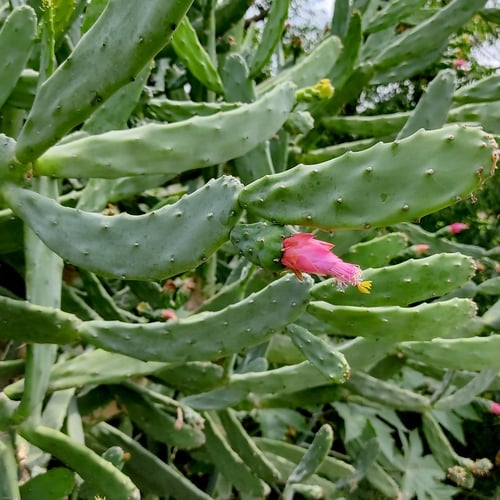
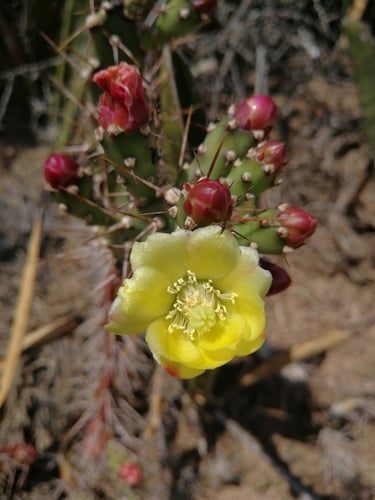
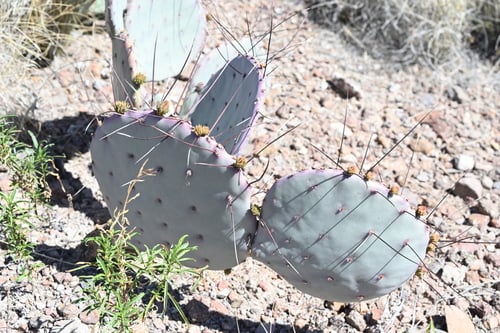
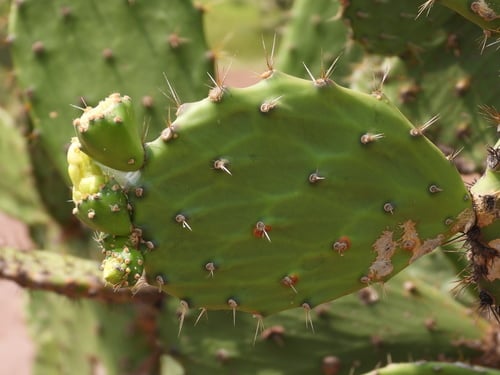
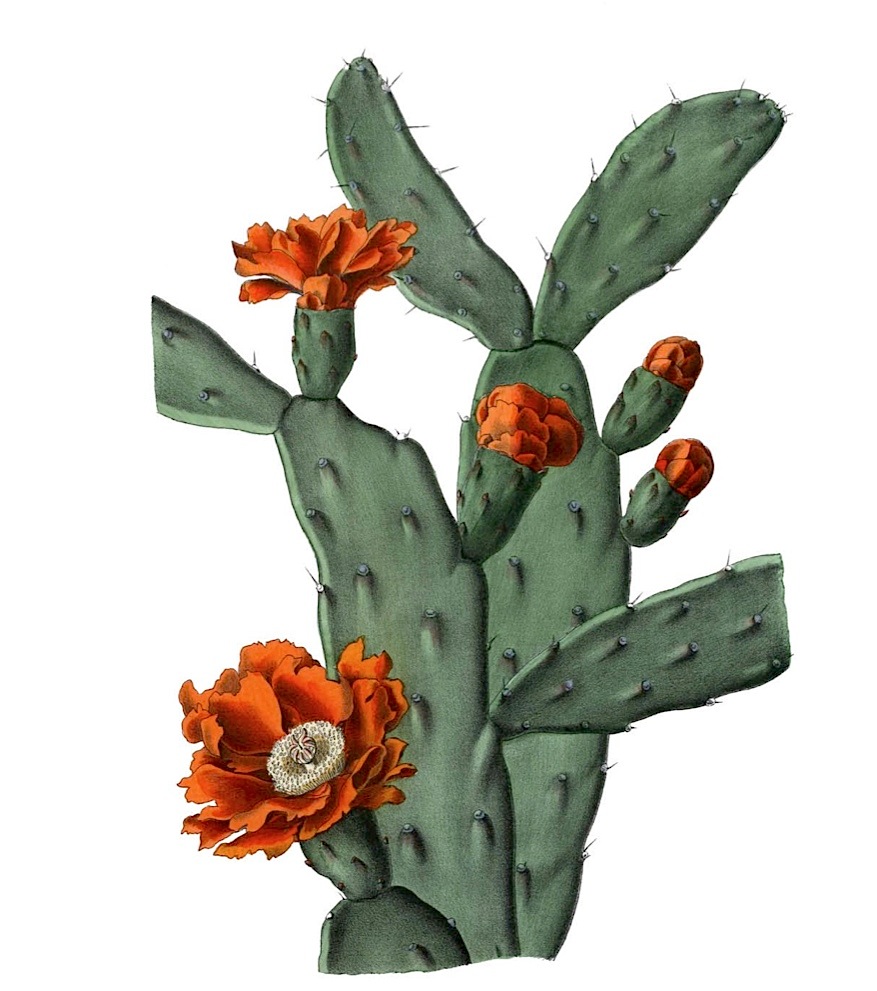
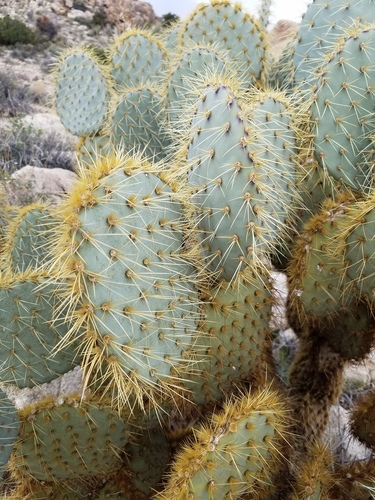
Hylocereus undatus - (Haw.) Britton & Rose
(Haw.) Britton & Rose
Dragon Fruit, Red Pitaya
gbif· cc-by
GBIF
gbif· cc-by
GBIF
gbif· cc-by
GBIF
Description
Hylocereus undatus is an evergreen Shrub growing to 4 m (13ft) by 2 m (6ft) at a fast rate. See above for USDA hardiness. It is hardy to UK zone 10. The flowers are pollinated by Bats. The plant is self-fertile. It is noted for attracting wildlife. Suitable for: light (sandy), medium (loamy) and heavy (clay) soils, prefers well-drained soil and can grow in nutritionally poor soil. Suitable pH: mildly acid and neutral soils and can grow in very acid soils. It can grow in semi-shade (light woodland) or no shade. It prefers dry or moist soil and can tolerate drought.
Edible Uses
Fruit - raw or cooked. Delicious. A sweet, pleasant flavour. The red fruit is 7 - 12cm long, covered in prominent scales. Unopened flower buds can be cooked and eaten as a vegetable.
Known Hazards
Plant has spines or sharp edges; use extreme caution when handling
Distribution
Central America - Mexico southwards, also in the West Indies.
Where It Grows
SOUTHERN AMERICA: El Salvador, Guatemala, Honduras, Mexico Central, Mexico Gulf, Mexico Northeast, Mexico Southeast, Mexico Southwest,
Cultivation
A plant of the warm tropical lowlands with low to high rainfall. It grows best in areas where annual daytime temperatures are within the range 18 - 28c, but can tolerate 12 - 34c. It succeeds with a mean annual rainfall in the range 300 - 3,500mm. Often an epiphytic plant, though it also grows on the ground. Requires a well-drained soil and a pH of 6 or lower. Prefers a pH in the range 5.3 - 6.7, tolerating 5 - 7.5. Widely cultivated in the tropics and subtropics, it has often escaped from cultivation and become naturalised. It has been classified as 'invasive' in some areas, where it often spreads vegetatively. Plants grow well, but do not always set fruit well, when growing in the wetter areas of the tropics. They can have 4-6 fruiting cycles per year. Flowering Time: Late Summer/Early Fall. Bloom Color: Green White/Near White. Spacing: 12-15 in. (30-38 cm). The fruit is usually harvested in late summer to autumn, approximately 30 to 50 days after flowering. Dragonfruit is a relatively fast-growing cactus, often producing fruit within 1 to 3 years after planting, depending on growing conditions. Hylocereus typically flowers in late spring to early summer. Hylocereus undatus is typically self-fertile but can benefit from cross-pollination for better fruit set.
Propagation
Seed - Stem cuttings. The cuttings are usually dried out for a week or two. The plants are self sterile and have to be pollinated by bats and moths. Hand pollination is recommended for good fruit production.
Other Uses
Hedge. Agroforestry Uses: This species can be grown as a hedge or trellis plant, providing habitat for wildlife. Its flowers attract pollinators, and the fruit is a valuable food crop. The plant can be used to make a beautiful flowering hedge.
Synonyms
Also Known As
Dragon Fruit, Red Pitaya, Strawberry Pear, Night blooming Cereus, Queen of the Night, Honolulu Queen, Chacam, Chak-wob, Flor de caliz, Junco tapatio, Night blooming cereus, Pitahaya, Pitaia-branca, Pitaia-vermelha, Pitaya orejona, Pitaya, Pratiel puehs, Queen of the night, Reina de la noche, Strawberry pear, Tasajo, Thang loy, Zacamb