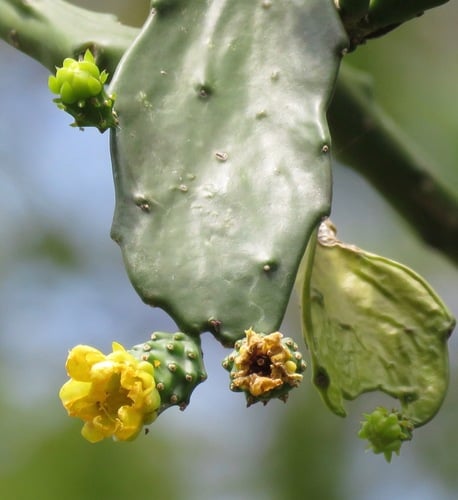
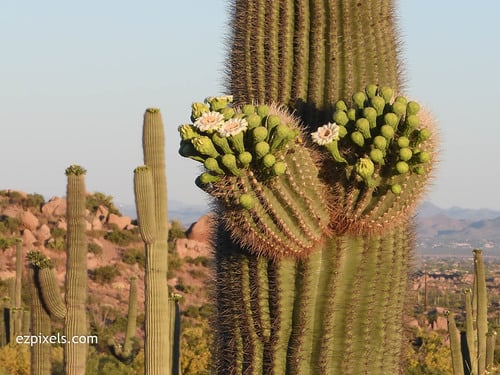
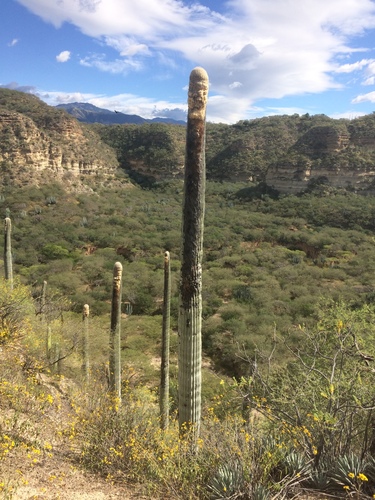
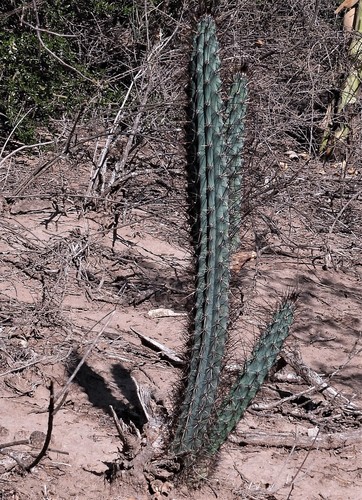
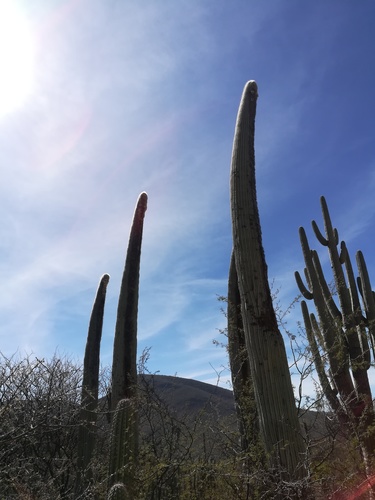
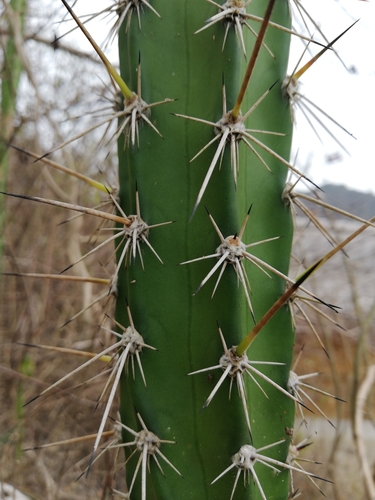
Hylocereus setaceus
(Salm-Dyck ex DC.) Ralf Bauer
Pitainha
iNaturalist· cc-by
(c) Pablo, some rights reserved (CC BY)
iNaturalist· cc-by-nc
(c) Vitor C. Dias Gonçalves, some rights reserved (CC BY-NC)
iNaturalist· cc-by-nc
(c) Vitor C. Dias Gonçalves, some rights reserved (CC BY-NC)
Description
A succulent climbing shrub. It has aerial roots that assist in its support. The fruit are 10 cm long and 6 cm wide.
This description is brief — help expand it
Edible Uses
The fruit are eaten raw and have a sweet pulp.
Traditional Uses
The fruti are eaten raw. They have a sweet pulp.
This uses section is brief — help expand it
Distribution
It is a tropical plant. It needs a well-drained soil with a pH of 6 or lower. It grows from sea level to 900 m above sea level in Brazil.
Where It Grows
Argentina, Bolivia, Brazil, Paraguay, South America,
Cultivation
Plants can be grown by stem cuttings.
Other Information
It is sometimes cultivated.
Synonyms
References (4)
- Fern, K., 2012, Tropical Species Database http://theferns.info/tropical/
- Lorenzi, H. et al, 2000, Brazilian Fruits and Cultivated Exotics. Instituto Plantarum De Estudos Da Flores LTDA. Brazil
- Taylor, N. P.,2000, Taxonomy and phytogeography of the Cactaceae of eastern Brazil. PhD thesis. The Open University.
- World Checklist of Useful Plant Species 2020. Royal Botanic Gardens, Kew