Homalocephala polycephala - (Engelm. & J.M.Bigelow) F.M.Knuth
(Engelm. & J.M.Bigelow) F.M.Knuth
Triangle Cactus, Cotton-top cactus
gbif· cc-by-nc
darcysummits
gbif· cc-by-nc
EscalanteSlim
gbif· cc-by-nc
EscalanteSlim
Description
Homalocephala polycephala is an evergreen Shrub growing to 0.6 m (2ft) by 1 m (3ft 3in) at a slow rate. See above for USDA hardiness. It is hardy to UK zone 9. The flowers are pollinated by Bees, Insects. It is noted for attracting wildlife. Suitable for: light (sandy) and medium (loamy) soils and can grow in nutritionally poor soil. Suitable pH: neutral and basic (mildly alkaline) soils and can grow in very alkaline soils. It cannot grow in the shade. It prefers dry soil and can tolerate drought.
Edible Uses
Seeds are the primary edible component and rank among the finest desert wild foods. Stems are technically edible but considered inferior. Edible Uses & Rating. Rated high for seeds but low for stems. Where abundant, it represents an excellent survival food. Taste, Processing & Kitchen Notes. Seeds possess a delicately crunchy texture, hearty aroma, and outstanding flavor comparable to premium nuts or grains. Fruits are dry and cotton-filled rather than juicy, making them ideal for long storage. Stems likely require sweetening or extensive preparation. Seasonality (Phenology). Yellow flowers bloom in late summer, followed by fruits in autumn. Seeds often remain viable through winter into spring. Safety & Cautions (Food Use). Dense spines require tools such as sticks for safe fruit extraction. Always verify local protections before harvesting. Harvest & Processing Workflow. Fruits are pried loose, opened, and seeds poured out. Seeds can be eaten raw, roasted, or ground. Cultivar/Selection Notes. Rarely cultivated outside specialty cactus collections. Look-Alikes & Confusion Risks. The cottony fruit masses and clustered stems distinguish it from other Echinocactus species. Traditional/Indigenous Use Summary. Documented as an important food for the Panamint Indians, especially during lean seasons.
Medicinal Uses
Cotton-top Cactus or Mohave Mound Cactus, has historical, traditional, and limited practical uses that fall under the category of medicinal, or more broadly, ethno-botanical, in Native American cultures. Traditional Medicine: The plant has been part of traditional, folk-remedy practices for various ailments, though specific, detailed applications are less widely documented compared to other cacti. Nutritional Use/Food: The seeds and flower stalks of the cactus are edible, providing sustenance, although, in many regions,, it is now protected and harvesting is restricted. Utility & Protection: While not a "medical" use in the sense of a drug, the spines of the genus Echinocactus were used by indigenous populations as functional tools, including for tattooing, fishhooks, and, in some cases, to treat or prevent skin ailments through the removal of spines. Conservation Status: Because it is a slow-growing and often rare plant, it is protected, making its use as a traditional medicine largely obsolete, and it is primarily used in landscaping. While some related barrel cacti, such as Ferocactus species, are used for more specific remedies like treating fever or for hydration, the Echinocactus polycephalus is often noted for its spiritual and traditional importance in Native American ethnobiology rather than for modern, validated pharmaceutical uses.
Known Hazards
Dense spines require tools such as sticks for safe fruit extraction. Always verify local protections before harvesting.
Distribution
Many-headed barrel cactus or cotton-top cactus, is native to some of the most extreme, arid environments in the American Southwest and northwestern Mexico.
Where It Grows
US. USA. Arizona, California, Mexico Northwest, Nevada, Utah.
Cultivation
Cottontop cactus stands out as one of the few barrel-type cacti with genuinely excellent edible seeds. Growing Conditions. Thrives in full sun, rocky soils, and extremely low rainfall environments. Habitat & Range. Primarily the Mojave Desert, often on rocky slopes and desert pavements. Size & Landscape Performance. Creates dramatic mounded forms suitable for large xeriscapes. Cultivation (Horticulture). Requires exceptional drainage and minimal irrigation. Pests & Problems. Rot from excess moisture is the primary risk. Identification & Habit. Clustered barrel stems with 11–25 ribs and conspicuous woolly fruit masses. Pollinators. Large bees are the main pollinators; beetles may also assist. Plant Name: Cottontop Cactus. Family: Cactaceae. Genus: Echinocactus. Common Names: Cottontop cactus. USDA Hardiness Zones: Approximately 8–10. Height/Spread: Up to about 60 cm tall, forming clustered mounds that may spread over a meter. The many-headed barrel cactus or cotton-top cactus is native to some of the most extreme, arid environments in the American Southwest and northwestern Mexico. It is highly adapted to hot, arid climates and is primarily found in the Mojave and Sonoran Deserts. Natural Habitat and Distribution: Regions: Mojave Desert (California, Arizona, Nevada, Utah) and Sonoran Desert (California, Sonora). Locations: It is found in areas like Death Valley National Park, Mojave National Preserve, Anza-Borrego Desert State Park, and the Cabeza Prieta National Wildlife Refuge. Terrain: Rocky or gravelly soils on dry, hot slopes, hills, alluvial fans, and in canyon washes. Substrates: Grows on both limestone-derived and igneous substrates. Elevation: Generally found at elevations between 100 and 5,000 feet (30 to 1,500+ meters). Key Characteristics in Habitat: Clumping Habit: The cactus forms distinct, often large, mounds or clusters of 20 to 30, or sometimes up to 100+ stems, which are typically 1 to 2 feet tall. Spines: Dense, sharp, yellow to red spines, which turn bright red when wet. Adaptation: It is a slow-growing species that can live for over 100 years. It thrives in areas with5 inches or less of annual rainfall. "Cotton top" Name: The common name comes from the dense, white, woolly, and felt-like fruit that covers the top of the plant. Subspecies: Echinocactus polycephalus var. xeranthemoides is found in northern Arizona and southern Utah (often near the Grand Canyon) in pinyon-juniper woodland edges. The species is considered slow-growing, very long-lived, and sensitive to overwatering.
Propagation
Usually from seed; clump division is possible but uncommon.
Other Uses
The species is used as an ornamental, and the specimens are extracted from the wild; this is accentuated in the subpopulations found near urban areas. Rarely cultivated outside specialty cactus collections. Echinocactus (Homalocephala) were used by indigenous populations as functional tools, including for tattooing, fishhooks, and, in some cases, to treat or prevent skin ailments through the removal of spines.
Synonyms
Also Known As
Cotton-top Cactus or Mohave Mound Cactus. many-headed barrel cactus. Echinocactus polycephalus Engelm. & J.M.Bigelow is a synonym of Homalocephala polycephala.
More from Cactaceae
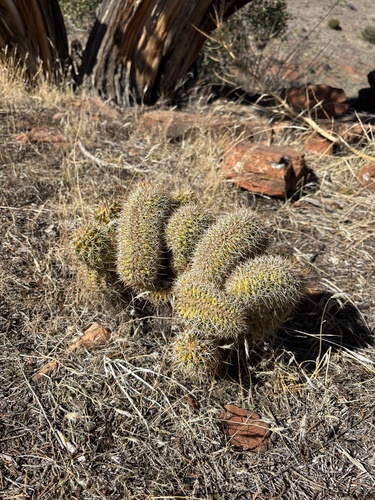
Echinocereus fasciculatus
Strawberry hedgehog
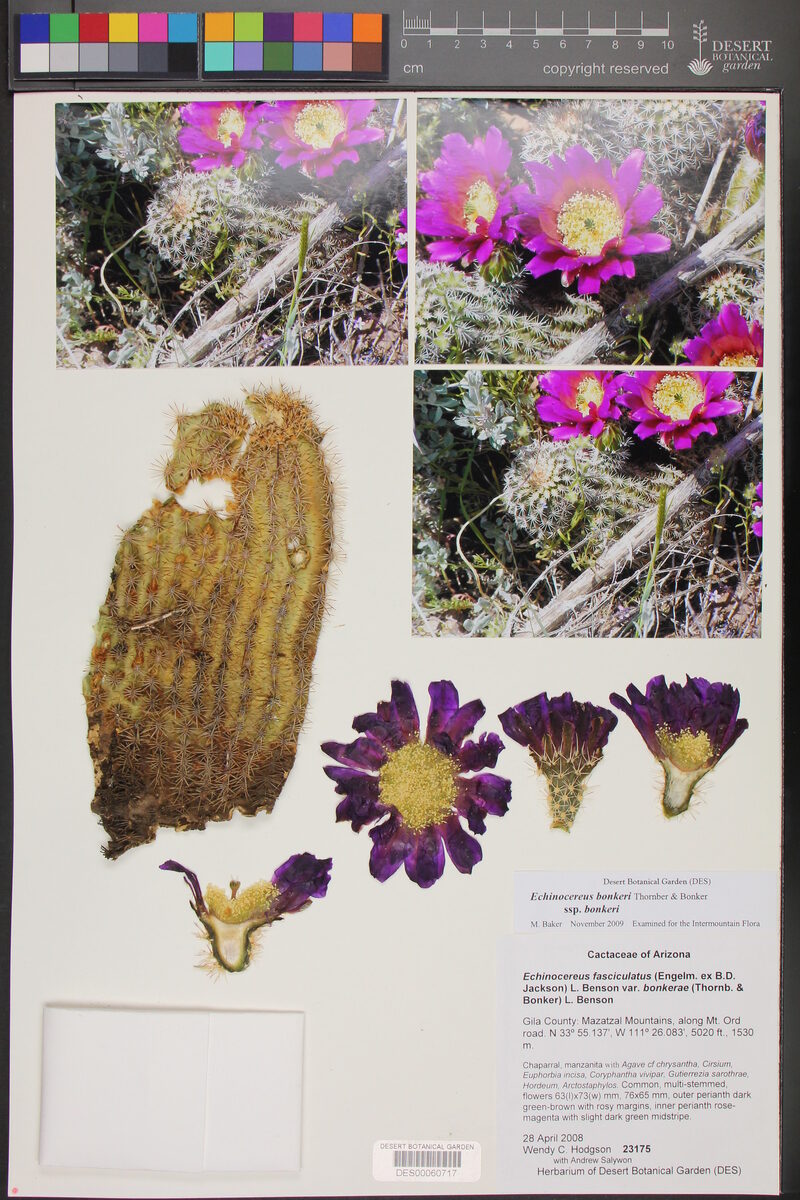
Echinocereus fasciculatus var. bonkerae
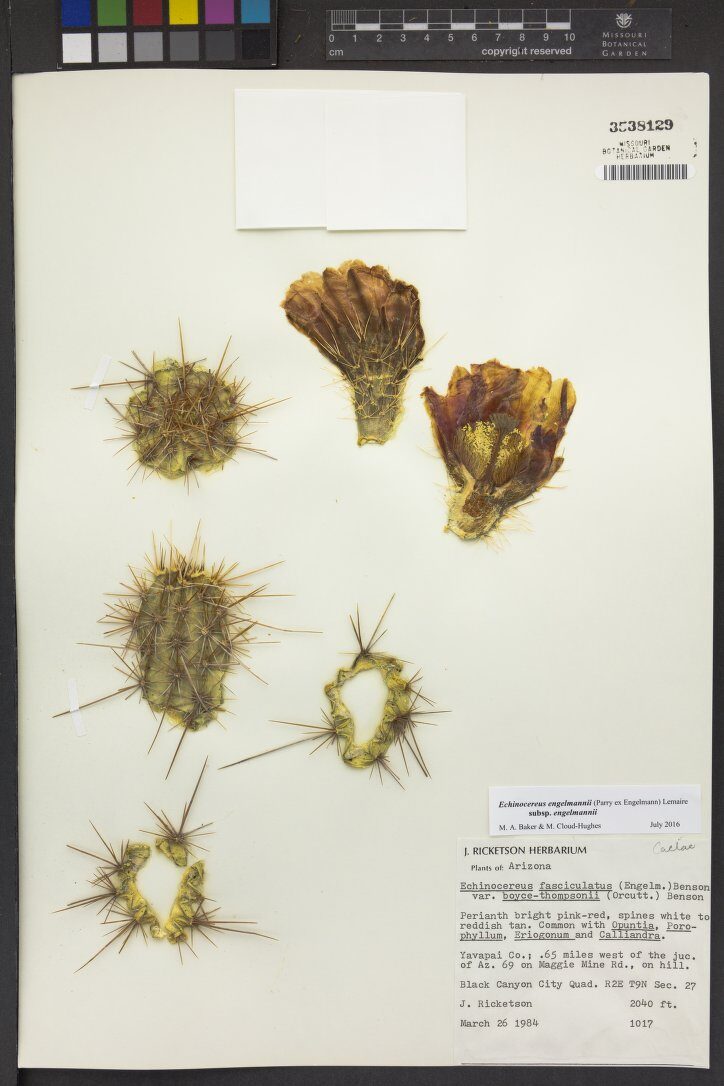
Echinocereus fasciculatus var. boyce-thompsonii
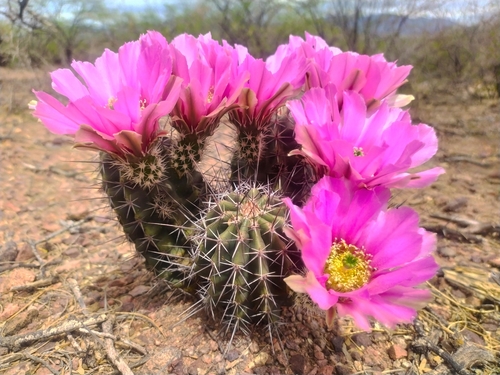
Echinocereus fendleri
Fendler's hedgehog cactus, Fendler needle-spine hedghog, Kuenzler's hedgehog, Kuenzler's cactus
Echinocereus ledingii
Leding's hedgehog cactus
Echinocereus nicholii
Nichol's hedgehog cactus, Golden hedgehog cactus