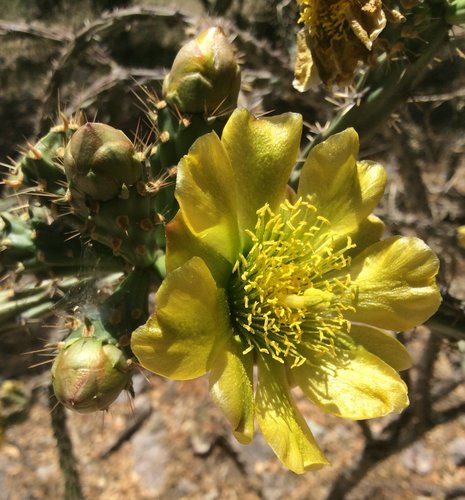
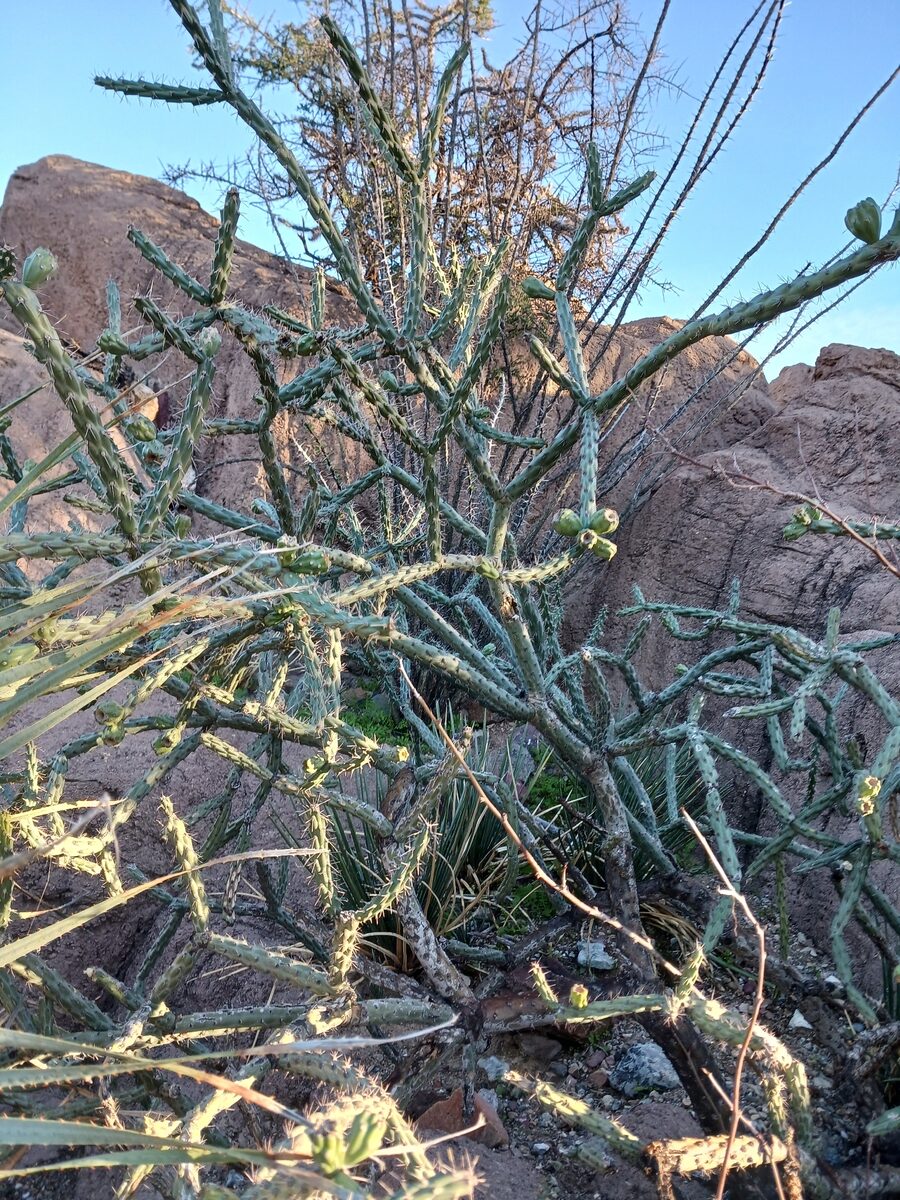
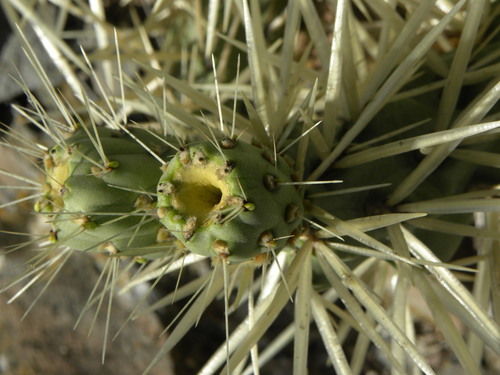
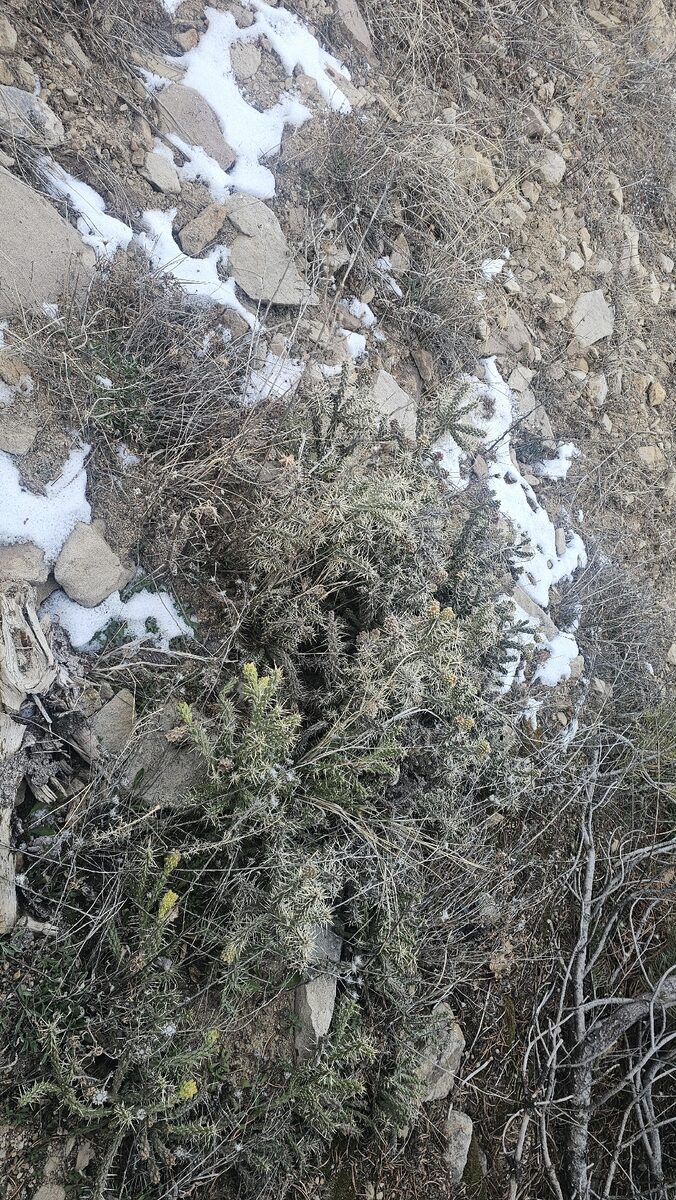
Homalocephala texensis - (Hopffer) Britton & Rose
(Hopffer) Britton & Rose
Horse Crippler or Devil's Head cactus.
gbif· cc-by-nc
dirtbagbotany
gbif· cc-by-nc
dirtbagbotany
gbif· cc-by-nc
dirtbagbotany
Description
Homalocephala texensis is an evergreen Shrub growing to 0.1 m (0ft 4in) by 0.2 m (0ft 8in) at a slow rate. See above for USDA hardiness. It is hardy to UK zone 8. The flowers are pollinated by Bees, Insects. It is noted for attracting wildlife. Suitable for: light (sandy) and medium (loamy) soils and can grow in nutritionally poor soil. Suitable pH: neutral and basic (mildly alkaline) soils and can grow in very alkaline soils. It cannot grow in the shade. It prefers dry soil and can tolerate drought.
Edible Uses
Fruits are edible and reportedly sweet, though ethnobotanical references are surprisingly sparse. Edible Uses & Rating. Rated moderate. Fruits appear palatable but may be quickly consumed by wildlife. Taste, Processing & Kitchen Notes. Authors describe the fruits as sweet and flavorful. Their fleshy pulp suggests they can be eaten fresh or possibly processed into preserves. Seasonality (Phenology). Blooms in late spring with pinkish-purple flowers. Fruits ripen during summer. Safety & Cautions (Food Use). Spines remain hazardous despite the spineless fruits. Confirm identification and legality before harvesting. Harvest & Processing Workflow. Collect ripe red fruits and remove any remaining spines. Consume fresh or process immediately. Cultivar/Selection Notes. No known cultivars. Look-Alikes & Confusion Risks. May resemble small barrel cacti but is notably flattened and wider than tall. Traditional/Indigenous Use Summary. Sparse documentation suggests it was not a major staple, possibly due to competition from animals.
Medicinal Uses
Horse Crippler or Devil's Head cactus, has limited documented medical uses, acting primarily as a source of food and water in arid environments rather than a specific medicinal herb.
Known Hazards
Spines remain hazardous despite the spineless fruits. Confirm identification and legality before harvesting.
Distribution
Native to the arid regions of the Southwestern United States (specifically Texas, southeastern New Mexico, and Oklahoma) and northeastern Mexico. It is particularly prevalent in the Chihuahuan Desert and surrounding regions.
Where It Grows
US. USA. Mexico Northeast, New Mexico, Oklahoma, Texas.
Cultivation
Horse crippler is the most edible member of the genus yet remains a minor wild food due to inconsistent availability. Growing Conditions. Prefers dry limestone soils and intense sun. Habitat & Range. Chihuahuan Desert uplands, especially western Texas and adjacent New Mexico. Size & Landscape Performance. Its flattened form makes it striking in desert gardens. Cultivation (Horticulture). Suitable for xeriscapes with excellent drainage. Pests & Problems. Generally hardy; overwatering is the chief threat. Identification & Habit. A dome-shaped cactus with 13–26 ribs and annulate spines; produces red fleshy fruits. Pollinators. Likely pollinated by native bees attracted to the large diurnal flowers. Plant Name: Horse Crippler. Family: Cactaceae. Genus: Echinocactus. Common Names: Horse crippler cactus. USDA Hardiness Zones: Approximately 7–10. Height/Spread: About 10–15 cm tall and 20–30 cm wide, typically solitary. Natural Habitat Characteristics: Geography and Climate: It grows in Chihuahuan Desert grasslands, scrublands, arid brushland (such as the Tamaulipan thornscrub), and sometimes in open oak woodlands. Altitude: Found from near sea level up to 1,400 meters (about 4,600 feet) in elevation. Soil: Thrives in dry, well-drained, and often shallow soils, including limestone gravel, sandy, and calcareous loam soils. Position: They are generally solitary, low-growing plants that often sit flush with or partially buried in the soil, making them difficult to spot in the grass. Range in Mexico: Found in the northeastern states of Coahuila, Nuevo Léon, Tamaulipas, and parts of Chihuahua, Durango, and Zacatecas. This species is well-adapted to extreme, hot, and dry conditions, and is known for its ability to withstand cold and occasional snow in its native range.
Propagation
Primarily by seed.
Other Uses
Suitable for xeriscapes with excellent drainage. Echinocactus (Homalocephala) were used by indigenous populations as functional tools, including for tattooing, fishhooks, and, in some cases, to treat or prevent skin ailments through the removal of spines. Fruits provide food for desert animals, while the plant contributes to soil stability and microhabitats.
Synonyms
Also Known As
Echinocactus texensis Hopffer is a synonym of Homalocephala texensis. Horse Crippler or Devil's Head cactus.