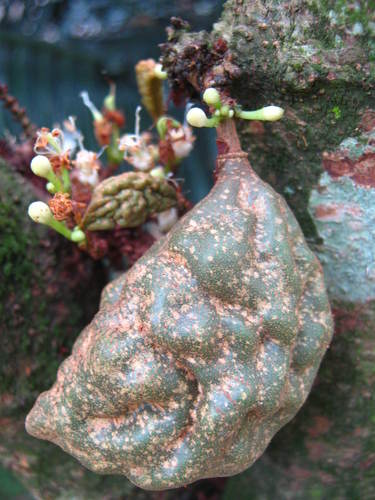
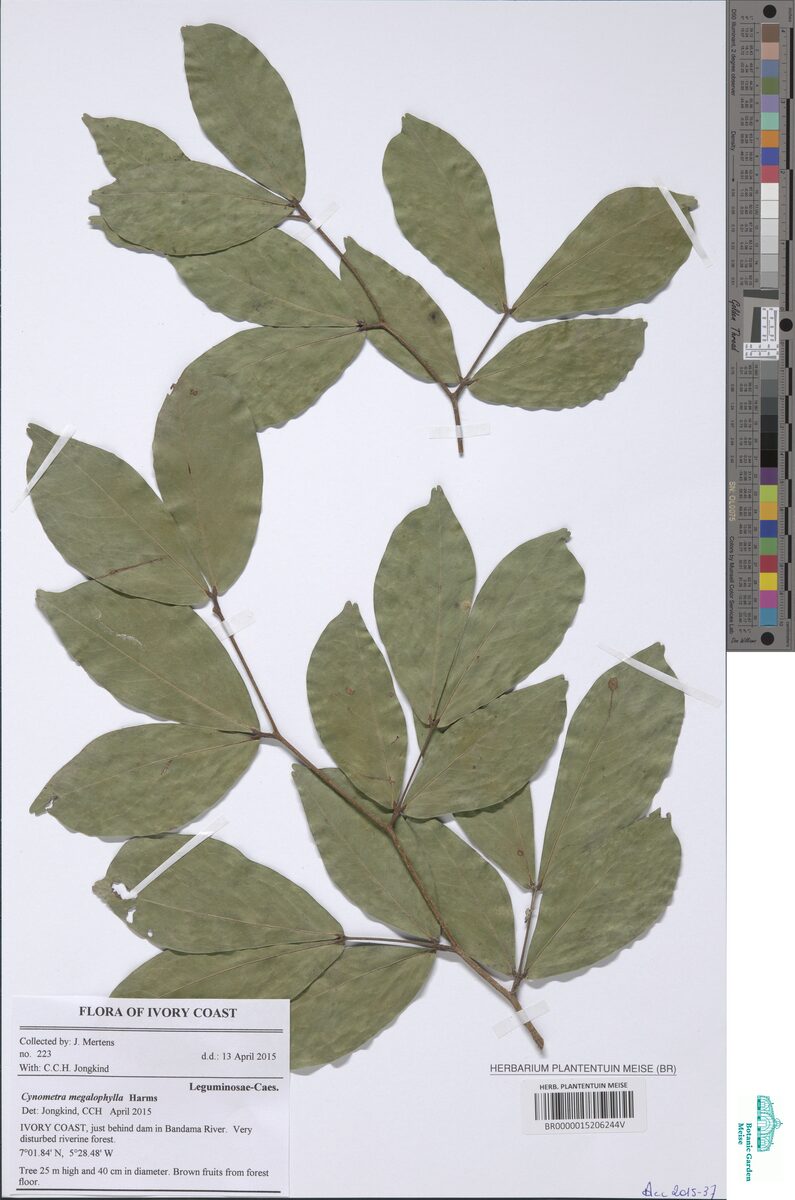
Bauhinia purpurea
L.
Butterfly Tree, Purple orchid Tree
iNaturalist· cc-by-nc
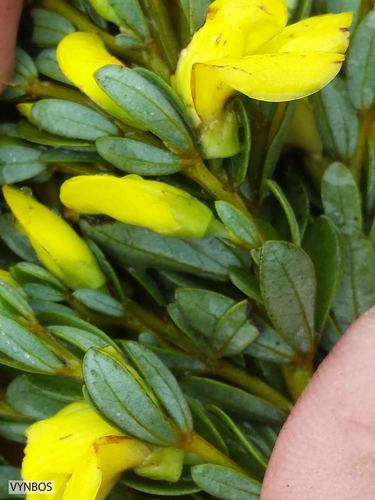
(c) Jeanne Benioff, some rights reserved (CC BY-NC)
iNaturalist· cc-by-nc
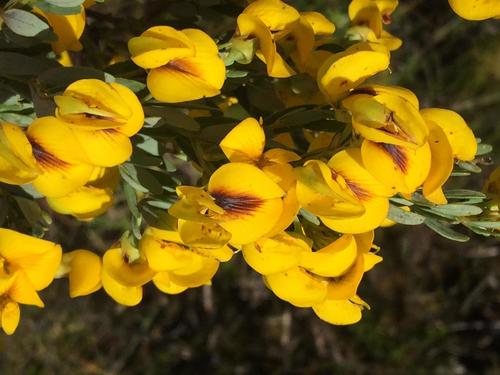
(c) Mattheus Mota, some rights reserved (CC BY-NC)
iNaturalist· cc-by-nc
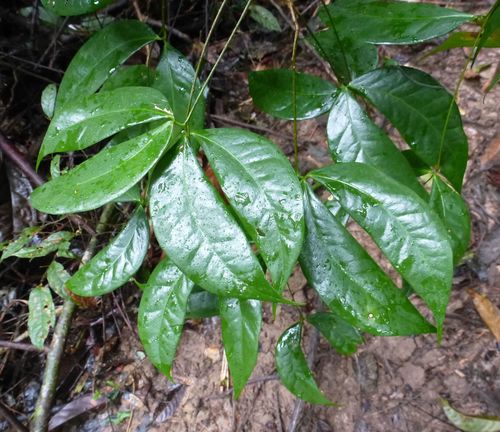
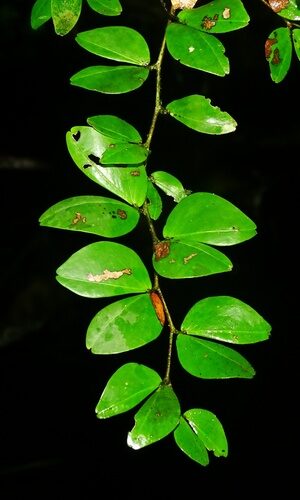
(c) Mattheus Mota, some rights reserved (CC BY-NC)
Summary
Source: WikipediaBauhinia purpurea is a species of flowering plant in the family Fabaceae, native to the Indian subcontinent and Myanmar, and widely introduced elsewhere in tropical and subtropical areas of the world. Common names include orchid tree, purple bauhinia, camel's foot, butterfly tree, and Hawaiian orchid tree.
Description
An evergreen shrub or small tree. It grows to 4-10 m high and spreads to 2 m across. The stem is erect and slender. The branches are crooked. The leaves are green and have 2 lobes which divide the leaves for half their length. They are rounded and 7-16 cm long and the same width. The leaf stalk is 3 cm long. The flowers are purple and orchid like. They are large and can be 6 cm across. They can occur either on their own or in flowering branches and can be in the axils of leaves or at the ends of branches. The flower buds are 4-5 angled. The flower petals are reddish purple and often with coloured marks. The petals do not overlap and there are 3-4 stamens. The fruit are oblong brown pods. They are flattened and can be 25 cm long by 2 cm wide. There are 5-6 seeds. The seeds are 12-13 mm long.
Edible Uses
Edible Parts: Flowers Fruit Leaves Seed Seedpod Edible Uses: Condiment Gum Edible portion: Flowers, Leaves, Seeds, Fruit, Gum. Leaves - cooked and eaten as a vegetable. They are used in curries. Flower buds and flowers - cooked and eaten as a vegetable. The flower buds are often pickled or used in curries. Young seedpods - cooked and eaten as a vegetable. The seeds are fried and eaten. The gum is edible.
Traditional Uses
The young leaves are cooked and eaten in India. They are used in curries. The flower buds and young fruit are cooked as a vegetable. They are also pickled. The ripe seeds are fried and eaten. The gum is edible.
Medicinal Uses
Carminative Laxative The root is carminative. The flowers are laxative. The bark, roots and flowers, when mixed with rice-water, are used in poultice form as a maturant.
Known Hazards
In India, the bark is extensively applied in glandular diseases and as a poison antidote while the leaves are administered as cough medicine. The flowers are said to be laxative and used in curries and pickles.
Distribution
A tropical plant. It is drought and frost tender. In Nepal it grows from 300-3000 m altitude. It can grow in arid places. In the Indian Himalayas it grows between 1,300-1,400 m above sea level. It suits hardiness zones 11-12. In Yunnan.
Where It Grows
Africa, Asia, Australia, Bangladesh, Barbados, Bhutan, Burkina Faso, Cambodia, Central Africa, Central America, China, Congo, Costa Rica, East Africa, Egypt, El Salvador, Eswatini, Ethiopia, Fiji, Ghana, Guatemala, Guyana, Hawaii, Himalayas, India, Indochina, Indonesia, Iraq, Laos, Madagascar, Malawi, Malaysia, Maldives, Martinique, Mauritius, Mexico, Middle East, Mozambique, Myanmar*, Nepal, Nigeria, North Africa, North America, Northeastern India, Pacific, Pakistan, Panama, Papua New Guinea, PNG, Philippines, Puerto Rico, Sao Tome and Principe, SE Asia, Sierra Leone, Sikkim, Slovenia, South Africa, Southern Africa, South America, Sri Lanka, St Lucia, Swaziland, Taiwan, Thailand, Trinidad-Tobago, Uganda, United Arab Emirates, UAE, USA, Vietnam, West Africa, West Indies, West Timor, Zambia, Zimbabwe,
Cultivation
A plant of subtropical to tropical regions where it can usually be found at elevations from 500 - 2,000 metres, exceptionally to 3,000 metres. The mean annual temperature in its natural habitat ranges from 12° - 21°c; it experiences an absolute maximum shade temperature of 38 - 46c and an absolute minimum of -1° - +9°c. Severe frost kills the leaves of seedlings and saplings, but they can recover during the growing season. It grows in areas with a mean annual rainfall in the range 1,000 - 5,000mm. Grows best in a sunny position. Prefers a fertile, moisture-retentive but well-drained, sandy, loamy or gravelly soil. The tree actually flowers best when growing on drier soils. The plant is commonly cultivated in the tropics, where it sometimes escapes from cultivation. There are reports that it can become established in some areas and has been reported as 'invasive' in some Pacific Islands. The growth of young plants is very rapid under favourable conditions. They have been known to attain heights of 3 metres within 12 months and to be almost 5 metres tall and flowering by the end of their second year. The pods develop quickly, some attaining a good length whilst the tree is still in flower. Although many species within the family Fabaceae have a symbiotic relationship with soil bacteria, this species is said to be devoid of such a relationship and therefore does not fix atmospheric nitrogen. Production: It begins flowering at an early age.
Propagation
Seed - it germinates readily, with up to 100% germinating after 14 months storage. Sow in a nursery seedbed in light shade. Germination is very rapid, with seedlings appearing within 4 - 10 days. Seedlings grow rapidly and, under good conditions, can be more than 1 metre tall within 2 months of germinating. The seedlings are somewhat difficult to transplant and so are best moved to their permanent positions whilst still small. If larger plants are moved then they should be pruned back to allow easier establishment. Layering Cuttings of half-ripe wood.
Other Uses
Dye Fibre Fuel Gum Pioneer Tannin Wood Other uses rating: High (4/5). Landscape Uses: Pest tolerant, Aggressive surface roots possible, Specimen, Blooms are very showy. Form: Rounded, Vase. Agroforestry Uses: This tree should make an excellent pioneer with its ease of establishment, rapid growth and hardiness. Some thought should be given, however, to the possibility of it escaping from cultivation. Other Uses The plant yields a gum. The bark is a source of tannins. It is also used for dyeing. A fibre is obtained from the bark. The wood is rosy-white in colour, turning brown upon exposure to the atmosphere. Fine and closely grained, it is hard and durable. It is used for carpentry and joinery when large enough; otherwise it is used for agricultural implements. The wood is used for fuel. Special Uses Food Forest
Production
It begins flowering at an early age.
Other Information
It is not known if it is used for food in Papua New Guinea. It is a cultivated food plant.
Notes
A tree cultivated as an ornamental. There are about 250-350 Bauhinia species. Most are in the tropics. Also as Caesalpinaceae.
Nutrition
| Part | Moisture | kJ | kcal | Protein | Vit A | Vit C | Iron | Zinc |
|---|---|---|---|---|---|---|---|---|
| Buds | — | — | — | — | — | — | — | — |
| Flowers | — | — | — | — | — | — | — | — |
| Leaves | 74.4 | — | 366 | 6.2 | — | — | 16.8 | 21 |
| Seeds | — | — | — | — | — | — | — | — |
| Fruit | — | — | — | — | — | — | — | — |
Synonyms
Also Known As
Aapta, Alibangbang, Barada, Bol-megong, Bunga kupu-kupu, Chee-kung, Ching-kho, Chingthrao angangba, Chuvannamandaram, Dev-Kanchan, Deva kanchan, Ger her kwo, Guiral, Javvahiru, Jia telong, Kachnar, Kachner, Kairwal, Kanchan, Kanchanam, Kandan, Kaniar, Karalli, Karar, Katumandaram, Keelra, Kha-lat, Khair-wal, Khuf al-jeme, Kobida, Koilar, Koina sag, Koiralo, Koliar, Kom arxa, Kowdel, Kurul, Levosii, Maha-hlega-ni, Mandari, Masi, Megong, Mong-bo do, Mong bo hoa tim, Msekese, Orhidejno drevo, Pacham, Phak-siew, Pohon bohinia ungu, Purple Bauhinia, Rakia kanchan, Rakia-kanchan, Rakto kanchan, Rato kanchan, Sarul, Shivapa, Sona, Swedae-ni, Taa-ki, Tanki, Tapak kuda, Tapak unta, Tingka lakchu, Vaibeh, Vaubeh, Vau-fa-vang, Zi Yangtija
References (94)
- Abbiw, D.K., 1990, Useful Plants of Ghana. West African uses of wild and cultivated plants. Intermediate Technology Publications and the Royal Botanic Gardens, Kew. p 41
- Anderson, E. F., 1993, Plants and people of the Golden Triangle. Dioscorides Press. p 203
- Arora, R. K., 2014, Diversity in Underutilized Plant Species - An Asia-Pacific Perspective. Bioversity International. p 100
- Asfaw, Z. and Tadesse, M., 2001, Prospects for Sustainable Use and Development of Wild Food Plants in Ethiopia. Economic Botany, Vol. 55, No. 1, pp. 47-62
- Ambasta S.P. (Ed.), 2000, The Useful Plants of India. CSIR India. p 69
Show all 94 references Hide references
- Aryal, K. P. et al, 2009, Uncultivated Plants and Livehood Support - A case study from the Chepang people of Nepal. Ethnobotany Research and Applications. 7:409-422
- Bandyopadhyay, S. et al, 2009, Wild edible plants of Koch Bihar district, West Bengal. Natural Products Radiance 8(1) 64-72
- Barwick, M., 2004, Tropical and Subtropical Trees. A Worldwide Encyclopedic Guide. Thames and Hudson p 48
- Bircher, A. G. & Bircher, W. H., 2000, Encyclopedia of Fruit Trees and Edible Flowering Plants in Egypt and the Subtropics. AUC Press. p 55
- Bodkin, F., 1991, Encyclopedia Botanica. Cornstalk publishing, p 135
- Bohra, N., et al, 2017, Ethnobotany of wild edible plants traditionally used by the local people in the Ramnagar regions from Nainital District, Uttarakhand, India. Biolife 5(1): 12-19
- Bole, P.V., & Yaghani, Y., 1985, Field Guide to the Common Trees of India. OUP p 23
- Borrell, O.W., 1989, An Annotated Checklist of the Flora of Kairiru Island, New Guinea. Marcellin College, Victoria Australia. p 93
- Burkill, H. M., 1985, The useful plants of west tropical Africa, Vol. 3. Kew.
- Chandrakumar, P., et al, 2015, Ethnobotanical studies of wild edible plants of Gond, Halba and Kawar tribes of Salekasa Taluka, Gondia District, Maharashtra State, India. International Research Journal of Pharmacy 6(8)
- Dangol, D. R., 2002, Economic uses of forest plant resources in western Chitwan, Nepal. Banko Janakari, 12(2): 56-64
- Dangol, D. R. et al, 2017, Wild Edible Plants in Nepal. Proceedings of 2nd National Workshop on CUAOGR, 2017.
- Devarkar, V. D., et al, 2011, Dietary and Medicinal Significance of Wild Vegetables from Osmanabad Region, Maharashtra (India). Life sciences Leaflets 11:317-332.
- Dobriyal, M. J. R. & Dobriyal, R., 2014, Non Wood Forest Produce an Option for Ethnic Food and Nutritional Security in India. Int. J. of Usuf. Mngt. 15(1):17-37
- Dyani, S.K., & Sharma, R.V., 1987, Exploration of Socio-economic plant resources of Vyasi Valley in Tehri Garwhal. J. Econ. Tax. Bot. Vol. 9 No. 2 pp 299-310
- Ekka, N. S. & Ekka, A., 2016, Wild Edible plants Used by Tribals of North-east Chhattisgarh (Part-I), India. Research Journal of Recent Sciences. Vol. 5(ISC-2015), 127-131 (2016)
- Engel, D.H., & Phummai, S., 2000, A Field Guide to Tropical Plants of Asia. Timber Press. p 36
- Etherington, K., & Imwold, D., (Eds), 2001, Botanica's Trees & Shrubs. The illustrated A-Z of over 8500 trees and shrubs. Random House, Australia. p 121
- Facciola, S., 1998, Cornucopia 2: a Source Book of Edible Plants. Kampong Publications, p 66
- Flora Zambesiaca. http://apps.kew.org/efloras
- Fowler, D. G., 2007, Zambian Plants: Their Vernacular Names and Uses. Kew. p 28
- Gardner, S., et al, 2000, A Field Guide to Forest Trees of Northern Thailand, Kobfai Publishing Project. p 168
- Ghimeray, A. K., Lamsal, K., et al, 2010, Wild edible angiospermic plants of the Illam Hills (Eastern Nepal) and their mode of use by local community. Korean J. Pl. Taxon. 40(1)
- Ghosh, C. & Das A. P., 2011, Some useful and poisonous tea garden weeds from the Darjiling District of West Bengal, India. Pleione 5(1): 91 - 114
- Gunjatkar, N., & Vartak, V.D., 1982, Enumeration of wild edible legumes from Pune District, Maharashtra State. J.Econ. Tax. Bot. Vol 3 pp 1-9
- GUPTA
- Hedrick, U.P., 1919, (Ed.), Sturtevant's edible plants of the world. p 94
- Hibbert, M., 2002, The Aussie Plant Finder 2002, Florilegium. p 39
- ILDIS Legumes of the World http:www;ildis.org/Legume/Web
- Jadhav, R., et al, 2015, Forest Foods of Northern Western Ghats: Mode of Consumption, Nutrition and Availability. Asian Agri-History Vol. 19, No. 4: 293-317
- Japanese International Research Centre for Agricultural Science www.jircas.affrc.go.jp/project/value_addition/Vegetables
- Joshi, N., et al, 2007, Traditional neglected vegetables of Nepal: Their sustainable utilization for meeting human needs. Tropentag 2007. Conference on International Agricultural Research for Development.
- Joshi, N. & Siwakoti, M., 2012, Wild Vegetables Used by Local Community of Makawanpur District and Their Contribution to Food Security and Income Generation. Nepal Journal of Science and Technology Vol. 13, No. 1 (2012) 59-66
- Kar, A., et al, 2013, Wild Edible Plant Resources used by the Mizos of Mizoram, India. Kathmandu University Journal of Science, Engineering and Technology. Vol. 9, No. 1, July, 2013, 106-126
- Karim, F. M. & Dakheel, A, J., 2006, Salt-tolerant plants of the United Arab Emirates. 2006. International Center for Biosaline Agriculture, Dubai, UAE. p 106
- Khodram,S. D., et al, 2019, Local knowledge of edible flowers used in Mizoram. Indian Journal of Traditional Knowledge Vol 18(40 pp 715-723
- Kiran, K. C., et al, 2019, Diversity and Seasonal Availability of Potential Wild Edible Plants from Vidarbha Region of Maharashtra State, India. Int.J.Curr.Microbiol.App.Sci (2019) 8(2): 1434-1446
- Krishen P., 2006, Trees of Delhi, A Field Guide. DK Books. p 194
- Kumar, Y J. et al, 1987, Further Contribution to the Ethnobotany of Meghalaya: Plants used by "War jaintia" of Jaintia Hill District. Econ. Tax. Bot. Vol 11 No. 1 pp 65-
- Kuvar, S. D. & Shinde, R. D., 2019, Wild Edible Plants used by Kokni Tribe of Nasik District, Maharashtra. Journal of Global Biosciences. Volume 8, Number 2, 2019, pp. 5936-5945
- Llamas, K.A., 2003, Tropical Flowering Plants. Timber Press. p 198
- Lord, E.E., & Willis, J.H., 1999, Shrubs and Trees for Australian gardens. Lothian. p 48
- Lugod, G.C. and de Padua L.S., 1979, Wild Food Plants in the Philippines. Vol. 1. Univ. of Philippines Los Banos. p 45
- Maikhuri, R, K, and Gangwar, A. K., 1993, Ethnobiological Notes on the Khasi and Garo Tribes of Meghalaya, Northeast India, Economic Botany, Vol. 47, No. 4, pp. 345-357
- Manandhar, N.P., 2002, Plants and People of Nepal. Timber Press. Portland, Oregon. p 106
- Marandi, R. R. & Britto, S. J., 2015, Medicinal Properties of Edible Weeds of Crop Fields and Wild plants Eaten by Oraon Tribals of Latehar District, Jharkhand. International Journal of Life Science and Pharma Research. Vo. 5. (2) April 2015
- Martin, F.W. & Ruberte, R.M., 1979, Edible Leaves of the Tropics. Antillian College Press, Mayaguez, Puerto Rico. p 87, 198
- Mishra, S. & Chaudhury, S. S., 2012, Ethnobotanical flora used by four major tribes of Koraput, Odisha, India. Genetic Resources Crop Evolution 59:793-804
- Mukhia, P.K., et al, 2013, Wild plants as Non Wood Forest Products used by the rural community of Dagana, a southern foothill district of Bhutan, SAARC Journal, 27 pages
- Murtem, G. & Chaudhrey, P., 2016, An ethnobotanical note on wild edible plants of Upper Eastern Himalaya, India. Brazilian Journal of Biological Sciences, 2016, v. 3, no. 5, p. 63-81.
- Narayanan Ratheesh, M. K. et al, 2011, Wild edible plants used by the Kattunaikka, Paniya and Kuruma tribes of Wayanad District, Kerala, India. Journal of Medicinal Plants Research Vol. 5(15), pp. 3520-3529
- Perry, F., and Hay, R., 1982, Guide to Tropical and Subtropical Plants. Sun Books p 12
- Pfoze, N. L., et al, 2012, Survey and assessment of floral diversity on wild edible plants from Senapati district of Manipur, Northeast India. Journal or Biodiversity and Environmental Sciences. 1(6):50-52
- Pham-Hoang Ho, 1999, An Illustrated Flora of Vietnam. Nha Xuat Ban Tre. p 853
- Prabha, Y. P., et al, 2010, Documentation of Wild Edible Plants of Melghat Forest, Dist. Amravati, Maharashtra State, India. Ethnobotanical Leaflets 14: 751-58, 2010.
- Radha, B., et al, 2013, Wild Edible Plant Resources of the Lohba Range of Kedarnath Forest Division (KFD), Garhwal Himalaya, India. Int. Res J. Biological Sci. Vol. 2 (11), 65-73
- Rajkalkshmi, P. et al, 2001, Total carotenoid and beta-carotene contents of forest green leafy vegetables consumed by tribals of south India. Plant Foods for Human Nutrition 56:225-238
- Ray, A., et al, 2020, How many Wild Edible Plants do we Use. Frontiers in Sustainable Food Systems. 4:56 p 12
- Recher, P, 2001, Fruit Spirit Botanical Gardens Plant Index. www.nrg.com.au/~recher/ seedlist.html p 4
- Royal Botanic Gardens, Kew (1999). Survey of Economic Plants for Arid and Semi-Arid Lands (SEPASAL) database. Published on the Internet; http://www.rbgkew.org.uk/ceb/sepasal/internet [Accessed 21st April 2011]
- Sarma, H., et al, 2010, Updated Estimates of Wild Edible and Threatened Plants of Assam: A Meta-analysis. International Journal of Botany 6(4): 414-423
- Sawian, J. T., et al, 2007, Wild edible plants of Meghalaya, North-east India. Natural Product Radiance Vol. 6(5): p 413
- Seal, T., 2012, Evaluation of Nutritional Potential of Wild Edible Plants, Traditionally Used by the Tribal People of Meghalaya. American Journal of Plant Nutrition and FertilizationTechnology 2(1): 19-26
- Seidemann J., 2005, World Spice Plants. Economic Usage, Botany, Taxonomy. Springer. p 64
- Setiya, A. V., et al, 2016, Exploration and documentation of some wild edible plants used by the aboriginals from Gadchiroli District (M.S.) India. International Advanced Research Journal in Science, Engineering and Technology. 3(7)
- Shah, S. K., 2014, Dietary contribution of underutilized minor crops and indigenous plants collected from uncultivated lands and forests in Nepal. in Promotion of Underutilized Indigenous Food Resources for Food Security and Nutrition in Asia and Pacific. FAO. Bangkok p 64
- Sharma, B.D., & Lakshminarasimhan, P., 1986, Ethnobotanical Studies on the Tribals of Nasik District (Maharashtra). J. Econ. Tax. Bot. Vol. 8 No. 2 pp 439-446
- Shin, T., et al, 2018, Traditional knowledge of wild edible plants with special emphasis on medicinal uses in Southern Shan State, Myanmar. Journal of Ethnobiology and Ethnomedicine (2018) 14:48
- Shrestha, S., 2021, Wild Edible Plants of Dhankuta, Eastern Nepal. Rupantaran : A Multidisciplinary Journal Vol. V : pp 100-109, September, 2021 p 102
- Singh, B., et al, 2012, Wild edible plants used by Garo tribes of Mokrek Biosphere Reserve in Meghalaya, India. Indian Journal of Traditional Knowledge. 11(1) pp 166-171
- Singh, G. K. & Ahirwar, R. K., 2013, An Ethnobotanical Survey for Certain Wild Edible Plants of Chanda Forest District Dindori Central India. International Journal of Science and Research. 6:14
- Sp. pl. 1:375. 1753
- Staples, G.W. and Herbst, D.R., 2005, A tropical Garden Flora. Bishop Museum Press, Honolulu, Hawaii. p 306
- Sujanapal, P., & Sankaran, K. V., 2016, Common Plants of Maldives. FAO & Kerala FRI, p 54
- Sukarya, D. G., (Ed.) 2013, 3,500 Plant Species of the Botanic Gardens of Indonesia. LIPI p 153
- Sundriyal, M., et al, 1998, Wild edibles and other useful plants from the Sikkim Himalaya, India. Oecologia Montana 7:43-54
- Sundriyal, M., et al, 2004, Dietary Use of Wild Plant Resources in the Sikkim Himalaya, India. Economic Botany 58(4) pp 626-638
- Sutjaritjai, N., et al, 2019, Traditional Uses of Leguminosae among the Karen in Thailand. Plants 2019, 8, 600 p 5
- Swaminathan, M.S., and Kochnar, S.L., 2007, An Atlas of Major Flowering Trees in India. Macmillan. p 118
- Swaziland's Flora Database http://www.sntc.org.sz/flora
- Terra, G.J.A., 1973, Tropical Vegetables. Communication 54e Royal Tropical Institute, Amsterdam, p 29
- Thokchom, R., et al, 2016, Documentation and assessment of wild medicinal and edible flowers of valley districts of Manipur. International Journal of Research in Applied, Natural and Social Sciences. 4(11):13-20
- Uprety, Y., et al, 2012, Diversity of use and local knowledge of wild edible plant resources in Nepal. Journal of Ethnobotany and Ethnomedicine 8:16
- Uprety, Y., et al, 2016, Traditional use and management of NTFPs in Kangchenjunga Landscape: implications for conservation and livelihoods. Journal of Ethnobiology and Ethnomedicine (2016) 12:19
- Valder, P., 1999, The Garden Plants of China. Florilegium. p 267
- Verdcourt, B., 1979, Manual of New Guinea Legumes. Botany Bulletin No 11, Division of Botany, Lae, Papua New Guinea. p 118
- World Checklist of Useful Plant Species 2020. Royal Botanic Gardens, Kew
- www.worldagroforestrycentre.org/treedb/
- Zeven, A. C. & de West, J. M. J., 1982, Dictionary of cultivated plants and their regions of diversity. Wageningen. p 75