Erythrophleum suaveolens
(Guill. & Perr.) Brenan
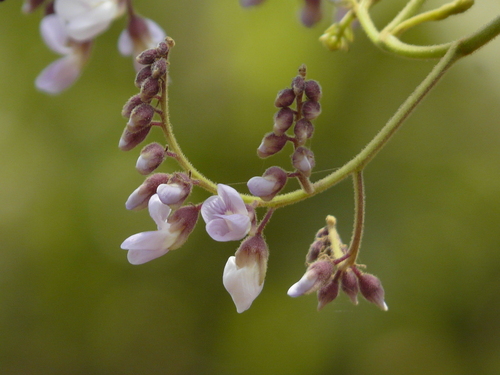
iNaturalist· cc-by-nc
(c) Mark Hyde, Bart Wursten and Petra Ballings, some rights reserved (CC BY-NC)
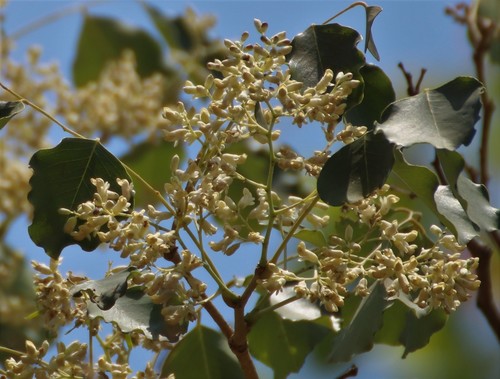
iNaturalist· cc-by-nc
(c) georgia-ss, some rights reserved (CC BY-NC), uploaded by georgia-ss
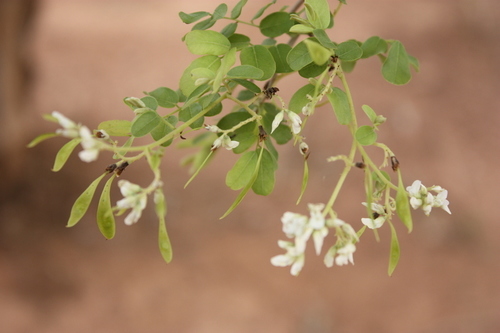
iNaturalist· cc-by-nc
(c) Bart Wursten, some rights reserved (CC BY-NC), uploaded by Bart Wursten
Summary
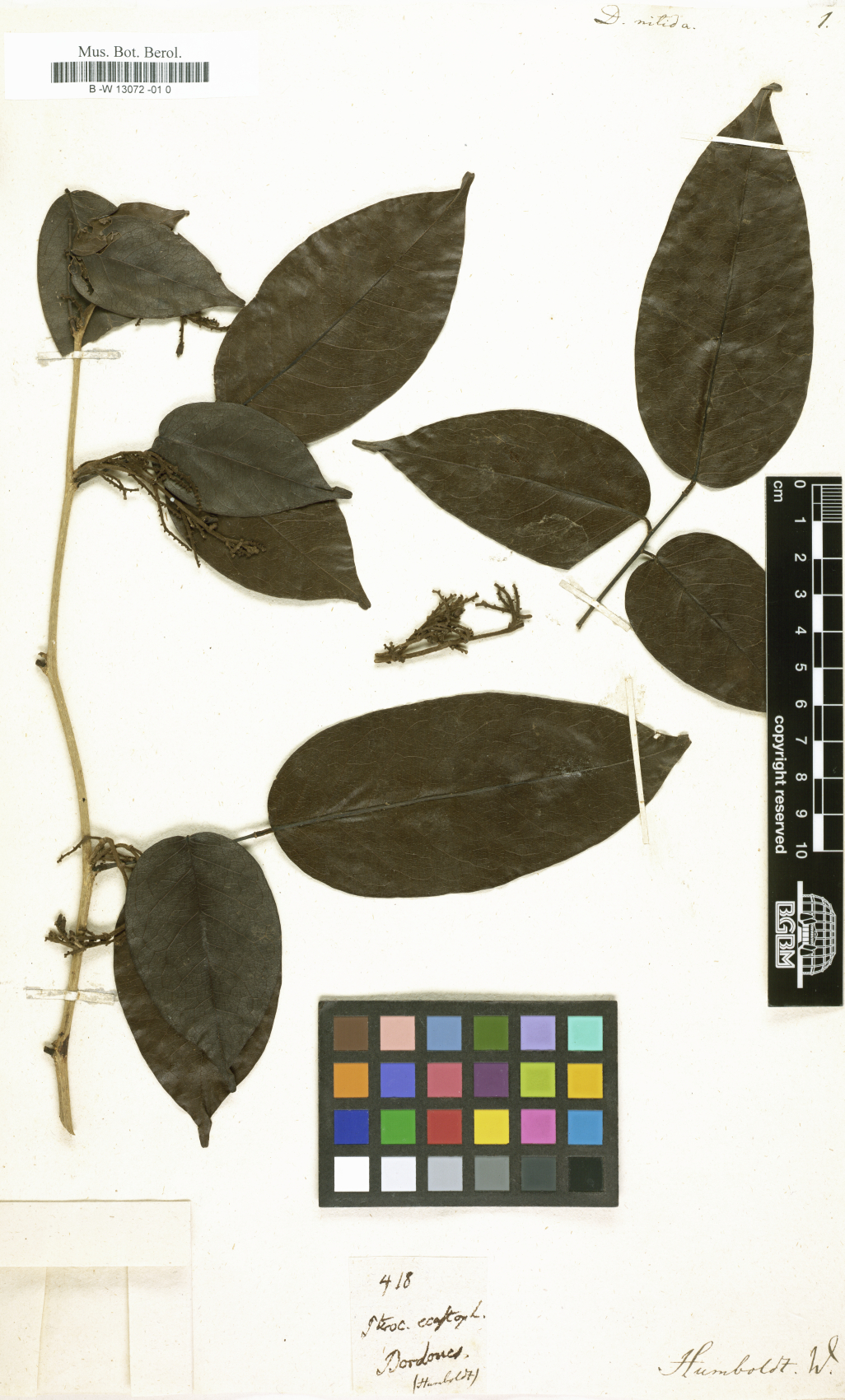
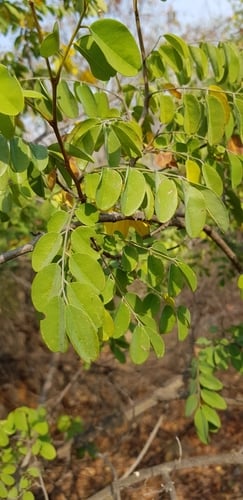
Source: WikipediaErythrophleum suaveolens, also known as the ordeal tree, is a species of flowering plant that can be found across most of tropical Africa. The species are 20 metres (66 ft) in height, and have a rough and blackish bark. The plants leaves have 2–3 pairs of pinnae, which carry 7–13 leaflets. The leaflets are 5 by 2.5 centimetres (1.97 in × 0.98 in), are green coloured and ovate. The flowers have fluffy spikes, and are creamy-yellow coloured. Fruits are hard, the pod of which is flat. The bark of the tree has been used in Liberia to make a toxic concoction used for a form of trial by ordeal called "sassywood". This use has given it the common name of the "Ordeal Tree".
Description
A large tree. It grows 40 m tall and is 2.5 m around. The trunk is 10-16 m tall and often has buttresses. The bark is grey and poisonous. The leaves are twice divided and have 3-4 pairs of smaller leaflet shoots. These are 15-30 cm long and arranged oppositely. Along these there are 8-14 leaflets that are 5-10 cm long by 3-4 cm wide. The flowers are yellow to red and in dense crowded spike like stalks. These are 8-10 cm long and 18 mm across. The fruit are woody pods 8-15 cm long by 4-5 cm wide. They are flat and rounded at both ends. The seeds are hard and 8 mm long.
Edible Uses
None known
Traditional Uses
The bark is poisonous.
This uses section is brief — help expand it
Medicinal Uses
The bark is used as an emetic and purgative. A diluted decoction of the roots is used as an anthelmintic, particularly against tapeworm. In the late 19th century, bark extracts were used in Western medicine to treat heart failure, though this was discontinued due to side effects and the superior results of digitoxin. Externally, crushed bark is applied to swellings caused by Filaria, and a decoction of roots and bark is used to soothe general body pain. The dried powdered bark is taken as a snuff to relieve headache. Research has confirmed the presence of medically active alkaloids in the plant. Alkaloid content in the bark ranges from 0.3% to 1.5%, varying with tree age: a water extract of bark from 60-year-old trees contained 0.5% alkaloids, compared to 0.9% in 150-year-old trees. The bark extract has good local anaesthetic activity on eyes and skin, though its use on the eye was questioned due to irritant effects on the conjunctiva. Trials as a surgical or dental anaesthetic were less successful, as higher doses produced symptoms of poisoning. The alkaloids stimulate the heart in a manner similar to digitoxin and ouabain, though the effect is very short-lasting due to rapid metabolism. In addition to increasing heart contraction in systole, the alkaloids also increase activity in diastole, and cassaine produced a violent state of excitation. Strong diuretic effects were also observed, along with increased contractions of the intestine and uterus. Norcassamidine has local anaesthetic action and is a convulsant. The bark also contains procyanidins (polyphenols) with antioxidant properties, and the relaxant effect of the bark extract is attributed to these compounds. The bark additionally contains the trihydroxystilbene resveratrol, which shows antiplatelet aggregation, coronary vasodilator, antileukaemic, antifungal, and protein-tyrosine kinase inhibitory activities. Trihydroxystilbenes are considered protective against atherosclerosis and coronary heart disease, though resveratrol is registered only as a food supplement and not as a medicine. The bark contains the flavone luteolin, which colours orange when treated with magnesium powder and a few drops of hydrochloric acid — a reaction that distinguishes it from Erythrophleum africanum, whose bark colours violet due to the presence of 2,3-dihydroxymyricetin. Roots and bark are the primary parts harvested for medicinal use, with traditional herbalists using ad hoc techniques to collect them from trees of all ages.
Known Hazards
The bark contains a range of alkaloids. In high doses, the bark extract is an extremely strong, rapid-acting cardiac poison, in warm-blooded animals causing shortness of breath, seizures and cardiac arrest in a few minutes. Although the alkaloid content in the seeds is markedly lower than in the stem bark, the seeds are more toxic. This strong activity is due to a strong haemolytic saponin, which acts in a synergistic way to the alkaloids. The bark has been used in arrow poisons and as ordeal poison and the bark and leaves as fish poison. The sawdust may irritate mucous membranes and may cause allergy and asthma of labourers in sawmills.
Distribution
It is a tropical plant. It grows in woodland and savannah woodland. It grows up to 1,100 m above sea level.
Where It Grows
Africa*, Asia, Burkina Faso, Cameroon, Central Africa, Côte d'Ivoire, East Africa, Ghana, Guinea, Guinée, Guinea-Bissau, Indonesia, Ivory Coast, Malawi, Nigeria, SE Asia, Senegal, Tanzania, Zambia, West Africa,
Cultivation
It can be grown from seeds or by stumps. Seeds germinate in 7-21 days and are best in the dark.
Propagation
Seeds take approximately three weeks to germinate and are best sown in a sunny position in a nursery seedbed. Germination typically occurs within 7–21 days. Plants can also be grown from stumps.
Other Uses
The tree has been promoted for agroforestry use due to its nitrogen-fixing properties and the large volume of leaf litter it produces, which benefits intercrops. However, trials have noted a negative effect of the leaf mulch on crop yields. The bark contains tannins. Powdered bark mixed with palm oil processing residue, when boiled and combined with seeds of maize, cowpea, or cotton, effectively reduces pest damage to stored seeds. Dried leaves mixed with stored grains and pulses repel or kill storage insects. The heartwood is orangey-yellowish brown to reddish brown, darkening on exposure, and is clearly distinct from the 3–6cm wide band of creamy-yellow sapwood. The grain is interlocked with a coarse texture and moderate lustre. The wood is hard to very hard, heavy to very heavy, elastic, and durable even in contact with soil, being resistant to fungi, dry wood borers, and termites. It seasons slowly with a high risk of checking and distortion, but is moderately stable to stable once dry. Sawing is difficult with a fairly high blunting effect; stellite-tipped or tungsten carbide tools are recommended. Finishing is generally fair, though planing can be difficult due to interlocked grain. Pre-boring is needed for nails and screws, and gluing is suitable for internal use only. The wood and iron should not be in contact in damp conditions due to risk of reciprocal damage. Suitable uses include joinery, heavy flooring, railway sleepers, harbour and dock work, turnery, construction, bridges, boat building, and wheel hubs. Though not highly valued as firewood, it produces excellent charcoal.
Notes
Also as Caesalpinaceae.
Synonyms
Also Known As
Baier, Bentabe, Betitche, Betomo, Budatchai, Buirame, Mancone, Manconi, Otone, Potrodom, Tali, Talidhe, Talo, Tebi, Teli
References (3)
- Chapman, J. D. & Chapman, H. M., 2001, The Forest Flora of Taraba and Andamawa States, Nigeria. WWF & University of Canterbury. p 182
- Oteng-Amoako, A. A. (Ed.), 2006, 100 Tropical African Timber Trees from Ghana. Forestry Research Institute of Ghana. p 142
- Sukarya, D. G., (Ed.) 2013, 3,500 Plant Species of the Botanic Gardens of Indonesia. LIPI p 264