Bauhinia malabarica
Roxb.
Malabar ebony, Mountain ebony
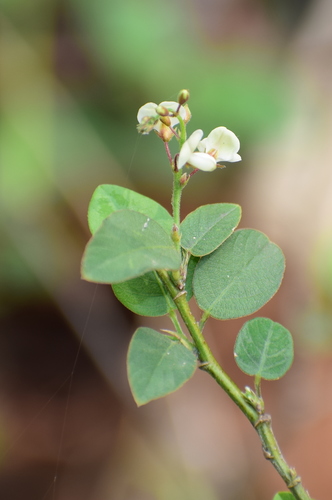
iNaturalist· cc-by-sa
(c) Dinesh Valke, some rights reserved (CC BY-SA)
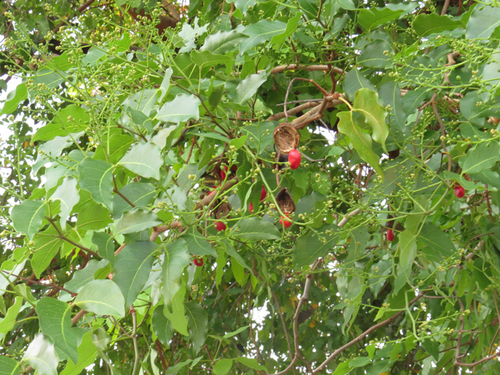
iNaturalist· cc-by-sa
(c) Dinesh Valke, some rights reserved (CC BY-SA)
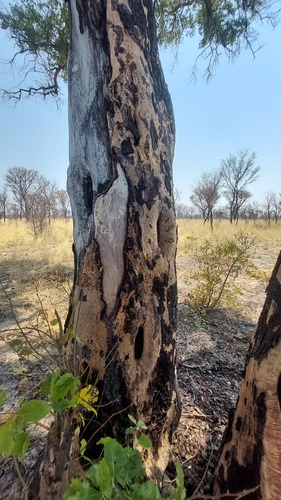
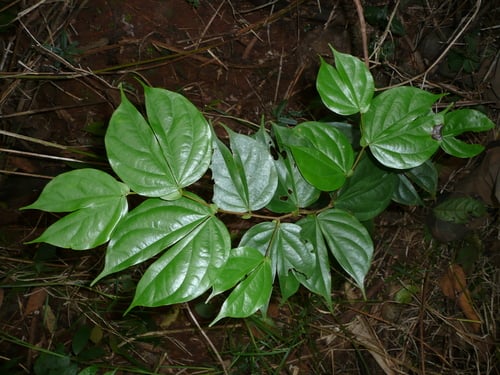
iNaturalist· cc-by-nc
(c) Radha Veach, some rights reserved (CC BY-NC)
Description
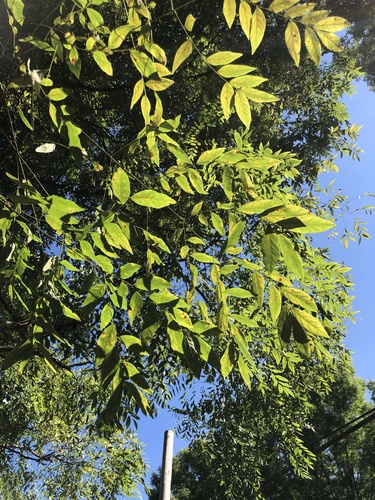
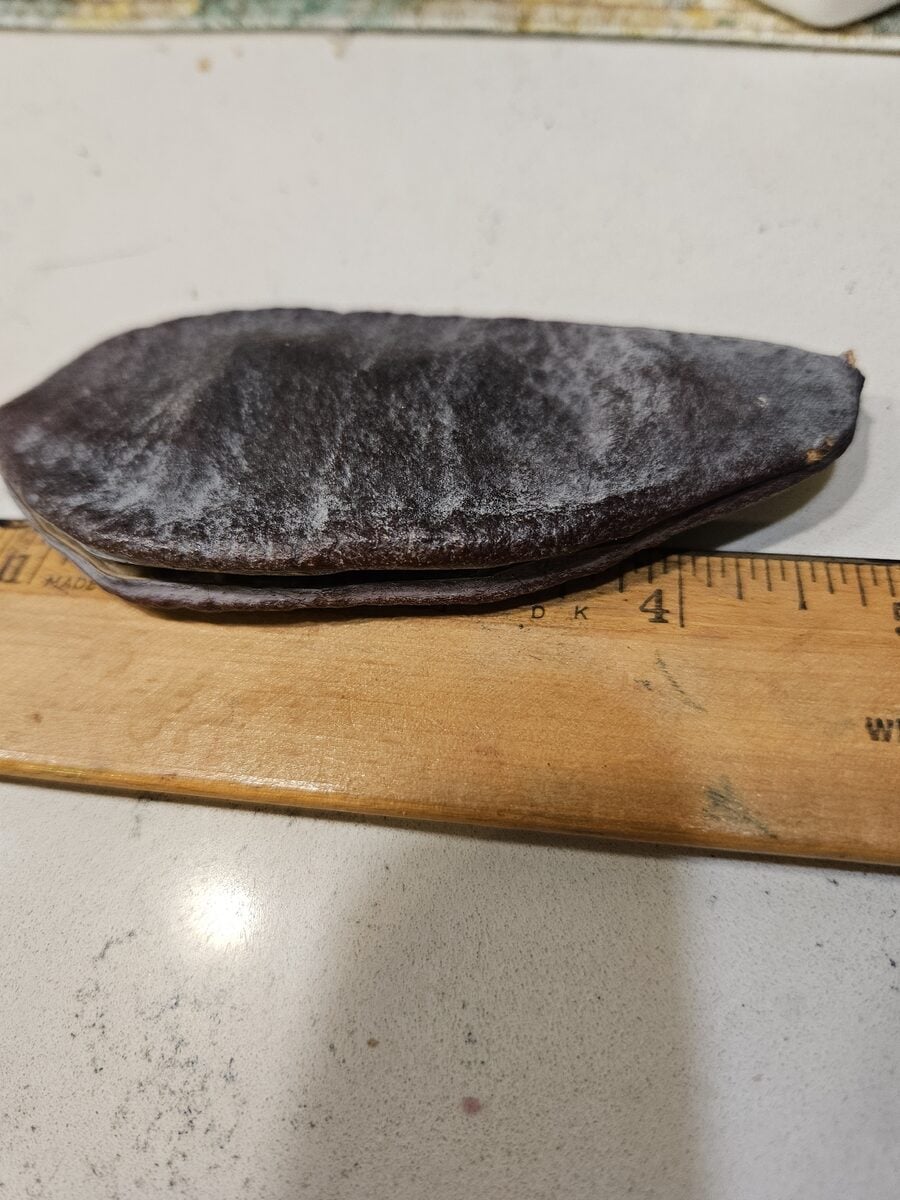
A small to large tree. It grows 3-5 m high but can be up to 17 m high. The trunk branches near the base. It loses its leaves during the year. The leaves are alternate and smooth. The base is slightly heart shaped. The tip is notched. The leaves are 1-20 cm long. The flowers are white or pink. The fruit is a flat pod. The pods are long. They can be 25-30 cm long. They contain many seeds. The pod gradually tapers to the tip. The pod has an irregular network of veins.
Edible Uses
Young leaves are cooked as a vegetable and used to flavour soups, stews, meat and fish dishes. Young seeds are cooked and eaten. The flowers are eaten cooked.
Traditional Uses
The leaves are used to flavour dishes. They can be used in soups, stews or meat and fish dishes. Young leaves are cooked as a vegetable. Young seeds are cooked and eaten. The flowers are eaten cooked.
Distribution
It is a tropical plant. It grows in Nepal at 200-1200 m altitude. It grows on open hillsides. It grows in areas with a rainfall of 1,000 - 3,000 mm each year. In Indonesia it grows from sea level to 150 m above sea level.
Where It Grows
Asia, Australia, Cambodia, East Timor, Himalayas, India, Indochina, Indonesia, Japan, Laos, Malaysia, Myanmar, Nepal, Northeastern India, Pacific, Philippines, SE Asia, Sikkim, Thailand, Timor-Leste, Vietnam,
Cultivation
Plants are grown from seed. It can also be grown by cuttings or air-layering. Seeds can be sown directly in the field or put in a nursery and transplanted.
Production
It is fairly fast growing.
Other Information
It is a cultivated food plant in the Western Ghats.
Notes
There are about 250-350 Bauhinia species. Most are in the tropics. Also as Caesalpinaceae.
Nutrition
| Part | Moisture | kJ | kcal | Protein | Vit A | Vit C | Iron | Zinc |
|---|---|---|---|---|---|---|---|---|
| Leaves | 86.9 | 197 | 47 | 3.4 | — | — | 0.3 | — |
| Seeds | — | — | — | — | — | — | — | — |
Synonyms
Also Known As
Alibangbang, Amili, Amil tanki, Amli, Amlosa, Bentjuluk, Bwegyin, Chinbyit, Hanthar, Karmai, Khormang, Kotra, Malabar orchid tree, Phak xiao, Pohon bauhinia malabar, Pulishinta, Seaw, Selik, Shin-le-yat, Som siew, Tanki, Tenga kotra
References (36)
- Ambasta S.P. (Ed.), 2000, The Useful Plants of India. CSIR India. p 69
- Arora, R. K., 2014, Diversity in Underutilized Plant Species - An Asia-Pacific Perspective. Bioversity International. p 100
- Barwick, M., 2004, Tropical and Subtropical Trees. A Worldwide Encyclopedic Guide. Thames and Hudson p 48
- Bircher, A. G. & Bircher, W. H., 2000, Encyclopedia of Fruit Trees and Edible Flowering Plants in Egypt and the Subtropics. AUC Press. p 55
- Brown, W.H., 1920, Wild Food Plants of the Philippines. Bureau of Forestry Bulletin No. 21 Manila. p 66
Show all 36 references Hide references
- Dangol, D. R., 2002, Economic uses of forest plant resources in western Chitwan, Nepal. Banko Janakari, 12(2): 56-64
- Dobriyal, M. J. R. & Dobriyal, R., 2014, Non Wood Forest Produce an Option for Ethnic Food and Nutritional Security in India. Int. J. of Usuf. Mngt. 15(1):17-37
- Eiadthong, W., et al, 2010, Management of the Emerald Triangle Protected Forests Complex. Botanical Consultant Technical Report. p 22
- Ezeagu, I. E., 2009, Nutritional Value of Tropical Plant Seeds. in Modification of Seed Composition to Promote Health and Nutrition. Agronomy Monograph 51. American Society of Agronomy,
- Facciola, S., 1998, Cornucopia 2: a Source Book of Edible Plants. Kampong Publications, p 66
- Flora of Australia Volume 12, Mimosaceae (excl. Acacia) Caesalpiniaceae. Melbourne: CSIRO Australia (1998) p 162
- Fl. ind. ed. 1832, 2:321. 1832
- Food Composition Tables for use in East Asia FAO http://www.fao.org/infoods/directory No. 393
- Gardner, S., et al, 2000, A Field Guide to Forest Trees of Northern Thailand, Kobfai Publishing Project. p 169
- Gunjatkar, N., & Vartak, V.D., 1982, Enumeration of wild edible legumes from Pune District, Maharashtra State. J.Econ. Tax. Bot. Vol 3 pp 1-9
- Hedrick, U.P., 1919, (Ed.), Sturtevant's edible plants of the world. p 94
- Joshi, N., et al, 2007, Traditional neglected vegetables of Nepal: Their sustainable utilization for meeting human needs. Tropentag 2007. Conference on International Agricultural Research for Development.
- Kachenchart, B., et al, 2008, Phenology of Edible Plants at Sakaerat Forest. In Proceedings of the FORTROP II: Tropical Forestry Change in a Changing World. Bangkok, Thailand.
- Khumgratok, S., Edible Plants in Cultural Forests of Northeastern Thailand. Mahasarakham University Thailand.
- Luczaj, L., et al, 2021, Wild food plants and fungi sold in the markets of Luang Prabang, Lao PDR. Journal of Ethnobiology and Ethnomedicine (2021) 17:6
- Manandhar, N.P., 2002, Plants and People of Nepal. Timber Press. Portland, Oregon. p 106
- Martin, F.W. & Ruberte, R.M., 1979, Edible Leaves of the Tropics. Antillian College Press, Mayaguez, Puerto Rico. p 198
- Ochse, J.J. et al, 1931, Vegetables of the Dutch East Indies. Asher reprint. p 367
- Paczkowska, G. & Chapman, A.R., 2000, The Western Australian Flora. A Descriptive Catalogue. Western Australian Herbarium. p 190
- Patiri, B. & Borah, A., 2007, Wild Edible Plants of Assam. Geethaki Publishers. p 42
- Pham-Hoang Ho, 1999, An Illustrated Flora of Vietnam. Nha Xuat Ban Tre. p 855
- Polinag, M. A., 2003, Food from the Wilderness. Department of Environment and Natural Resources. Laguna.
- Sarma, H., et al, 2010, Updated Estimates of Wild Edible and Threatened Plants of Assam: A Meta-analysis. International Journal of Botany 6(4): 414-423
- Savita, et al, 2006, Studies on wild edible plants of ethnic people in east Sikkim. Asian J. of Bio Sci. (2006) Vol. 1 No. 2 : 117-125
- Seidemann J., 2005, World Spice Plants. Economic Usage, Botany, Taxonomy. Springer. p 64
- Solomon, C., 2001, Encyclopedia of Asian Food. New Holland. p 25
- Srichaiwong, P., et al, 2014, A Study of the Biodiversity of Natural Food Production to Support Community Upstream of Chi Basin, Thailand. Asian Social Science 10 (2):
- Sukarya, D. G., (Ed.) 2013, 3,500 Plant Species of the Botanic Gardens of Indonesia. LIPI p 152
- Terra, G.J.A., 1973, Tropical Vegetables. Communication 54e Royal Tropical Institute, Amsterdam, p 29
- WATT
- Wild edible plants of Himachal Pradesh