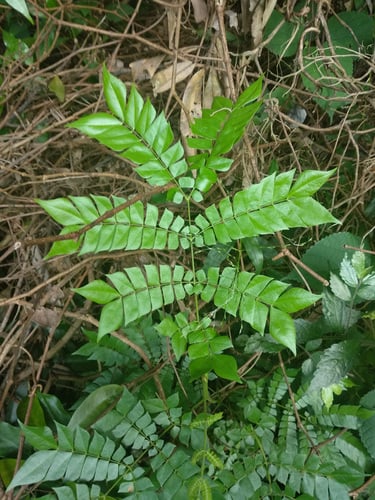
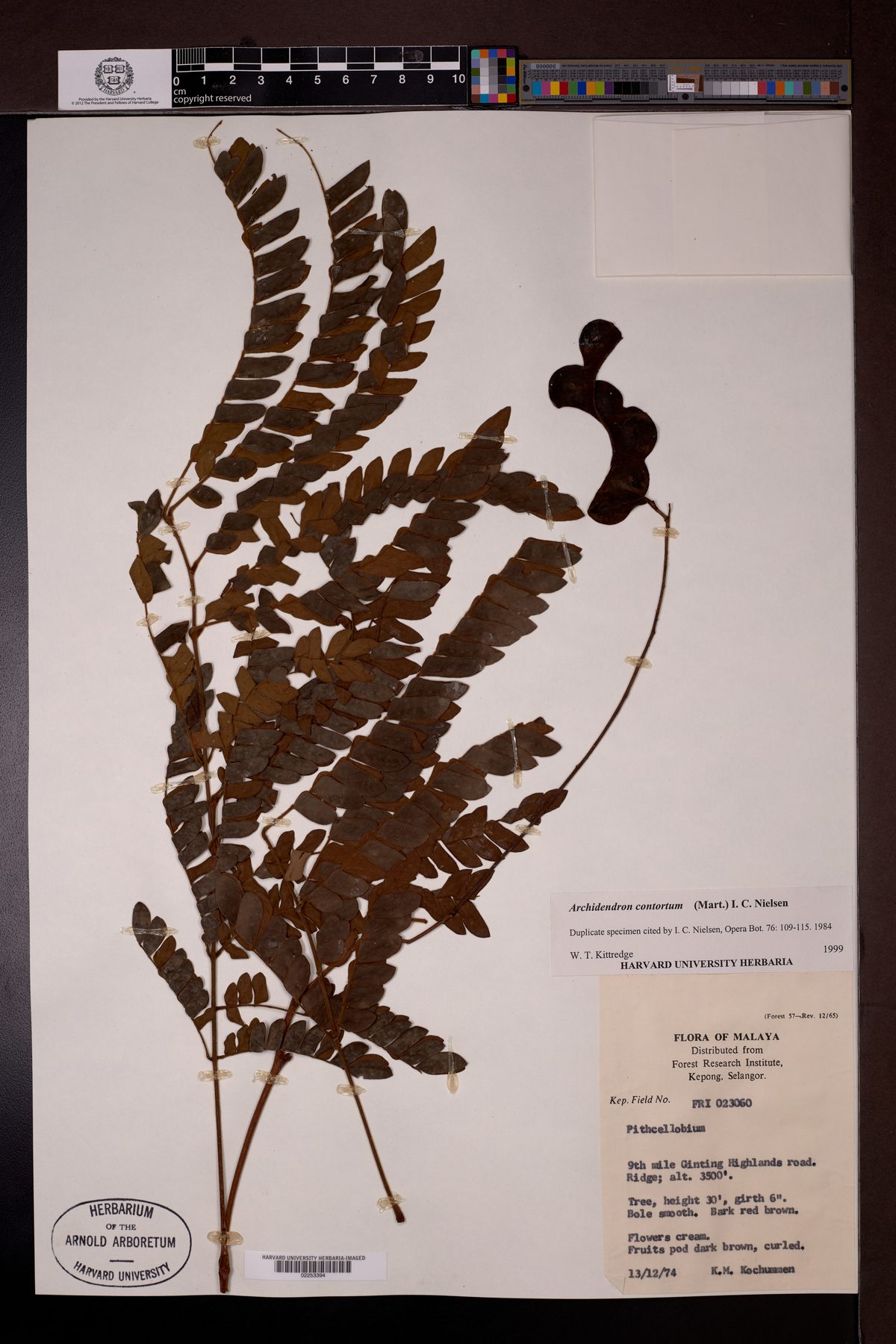
Gymnocladus chinensis
Baill.
Soap tree
iNaturalist· cc-by
(c) Andrew Conboy, some rights reserved (CC BY), uploaded by Andrew Conboy
iNaturalist· cc-by
(c) Andrew Conboy, some rights reserved (CC BY), uploaded by Andrew Conboy
iNaturalist· cc-by-nc
(c) Huang Baochen | 黄宝臣, some rights reserved (CC BY-NC)
Summary
Source: WikipediaGymnocladus chinensis, the soap tree or Chinese coffeetree, is a tree in the subfamily Caesalpinioideae of the pea family Fabaceae. It is native to central China and maybe the Eastern Himalayas also. The leaves have huge bipinnate leaves starting purple then shading to green.
Description
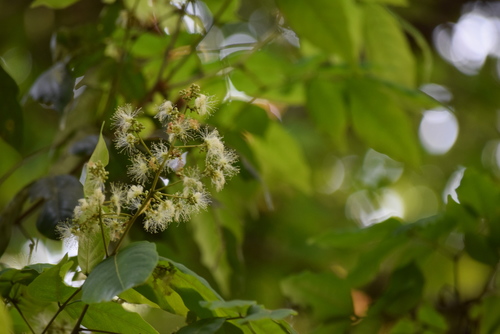
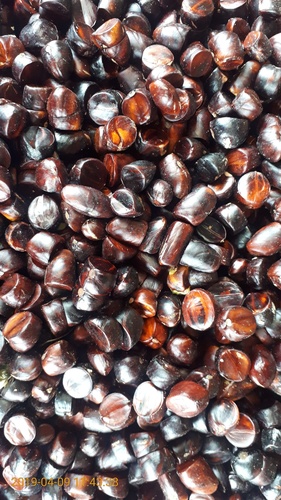
A tree. It grows 9 m high. The leaves are large and up to 1 m long. They have up to 24 oblong leaflets. These can be 35 mm long. Trees are separately male and female. The flowers are lilac coloured. The are along downy clusters. The fruit is pulpy and 10 cm long. There are 2-4 seeds that are blackish and 2 cm across.
Edible Uses
The seed is edible when cooked.
Medicinal Uses
None known
Distribution
It is a subtropical plant. In SE China it grows in mountain slopes and mixed forests between 100-1,500 m above sea level. It suits hardiness zones 9-10. In Sichuan.
Where It Grows
Asia, China, Myanmar, SE Asia,
Cultivation
Requires a deep rich well-drained moisture retentive soil and a sunny position. A very ornamental plant, it is only hardy in the mildest areas of Britain tolerating temperatures down to about to -5°c. It rarely flowers in Britain, requiring more summer heat than it usually gets here. The tree has a light canopy so does not cast much shade and is therefore a good species for the top canopy of a woodland garden. Dioecious. Male and female plants must be grown if seed is required. This species has a symbiotic relationship with certain soil bacteria, these bacteria form nodules on the roots and fix atmospheric nitrogen. Some of this nitrogen is utilized by the growing plant but some can also be used by other plants growing nearby. At least some members of this genus do not have these nitrogen-producing bacteria on the roots.
Propagation
Seed is best sown in a greenhouse as soon as it is ripe, though early spring sowing in a greenhouse is also possible. Scarification and pre-soaking in warm water for 24 hours, particularly for stored seed, will improve germination. Ensure the seed has swollen after soaking; if not, soak again, and if it still does not swell, carefully file away a small portion of the seedcoat without damaging the embryo. Prick seedlings into fairly deep individual pots as soon as they are large enough to handle and grow on in the greenhouse for at least their first winter. Plant out in late spring or early summer after the last expected frosts, and consider providing some cold protection for the first couple of winters outdoors. Root cuttings 4cm long and 1cm thick can be taken in December and planted horizontally in pots in a greenhouse, with a good percentage of success.
Other Uses
The fruit is high in saponins and is used as a soap for washing fabrics and the body. The wood is hard, durable, and finishes to a fine lustre; it is used for cabinet making.
Notes
There are 4 Gymnocladus species. Also as Caesalpinaceae.
Also Known As
Fei Tsao Chia
References (3)
- Compt. Rend. Assoc. Franc. Avanc. Sci. 3:418-427; Bull. Mens. Soc. Linn. Paris 1:34. 1875
- Etherington, K., & Imwold, D., (Eds), 2001, Botanica's Trees & Shrubs. The illustrated A-Z of over 8500 trees and shrubs. Random House, Australia. p 361
- Plants for a Future database, The Field, Penpol, Lostwithiel, Cornwall, PL22 0NG, UK. http://www.scs.leeds.ac.uk/pfaf/