Guibourtia conjugata
(Bolle) J. Leonard
Small false mopane
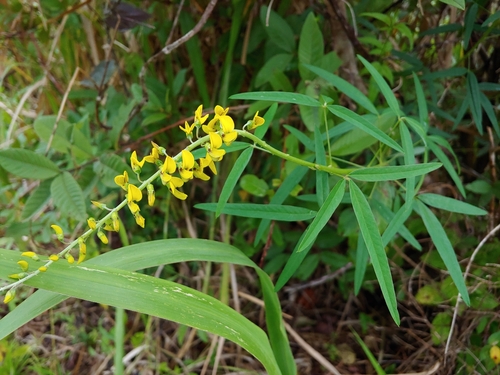
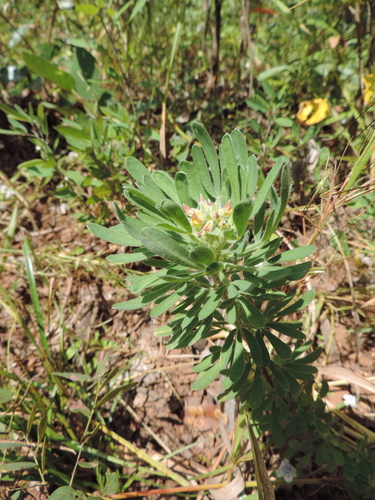
iNaturalist· cc-by-nc
(c) franceschase, some rights reserved (CC BY-NC)
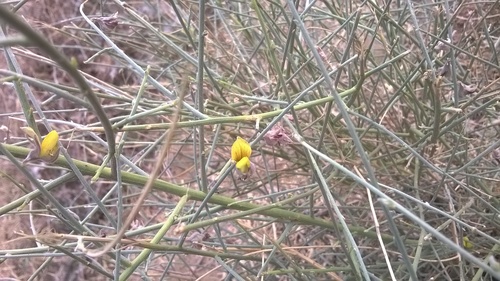
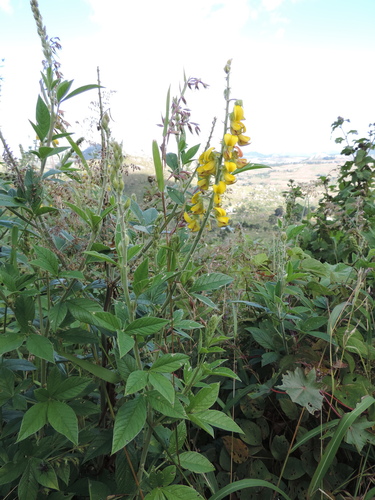
iNaturalist· cc-by-nc
(c) graemewolfaard, some rights reserved (CC BY-NC), uploaded by graemewolfaard
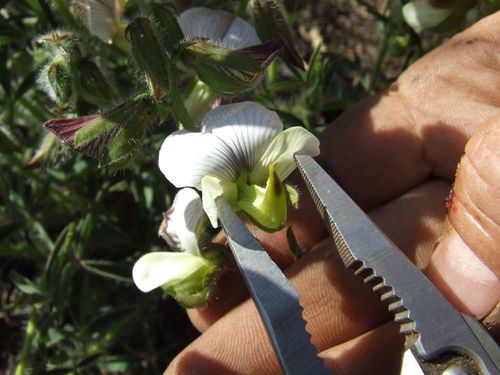
iNaturalist· cc-by-nc
(c) Francois du Randt, some rights reserved (CC BY-NC), uploaded by Francois du Randt
Summary
Source: WikipediaGuibourtia conjugata is a species of small to medium-sized trees from family Fabaceae that can be found in Mozambique, Zambia and Zimbabwe. The plants are growing in woods and along the river banks of Limpopo and Mpumalanga. The plant is 9 meters tall, with the leaves that can range from 3–5 cm in length and are ovated and a bit curved. The plant's flowers are either white or yellow coloured and are 5 mm in diameter. Their apex is rounded and is hairless.
Description
An erect tree. It is small to medium sized. It grows 9 m tall. It loses its leaves during the year. The bark is pale grey. The leaves are twice divided. The leaflets are oval and only slightly curved. They are 3-5 cm long. They are unequal on each side. They are shiny green above and paler underneath. The flowers are in loose heads at the ends of the branches. They are yellow or white. They are 5 mm across. The fruit is a flat, thin, leathery pod. It is almost round and 4 cm long by 3 cm wide. It is creamy brown. The seed do not have a fleshy layer around them.
Edible Uses
The seeds are used to make drinks and oil.
Traditional Uses
The seeds are used for drinks and oil.
This uses section is brief — help expand it
Distribution
It is a subtropical plant. It grows in dry soil. It can grow in arid places. It grows in deep sand and along river banks. In Zimbabwe it grows up to 1,500 m above sea level.
Where It Grows
Africa, East Africa, Mozambique, South Africa, Southern Africa, Zambia, Zimbabwe,
Cultivation
Although many species within the family Fabaceae have a symbiotic relationship with soil bacteria, this species is said to be devoid of such a relationship and therefore does not fix atmospheric nitrogen.
Other Uses
A good, hard resin is obtained from the stem. Called Inhambane copal, it is sometimes traded. Copal is a hard resin, obtained from various tropical trees, that is used to make varnish.
Notes
Also as Caesalpinaceae.
Also Known As
Messousso, N'tsoutso
References (2)
- Royal Botanic Gardens, Kew (1999). Survey of Economic Plants for Arid and Semi-Arid Lands (SEPASAL) database. Published on the Internet; http://www.rbgkew.org.uk/ceb/sepasal/internet [Accessed 21st April 2011]
- World Checklist of Useful Plant Species 2020. Royal Botanic Gardens, Kew