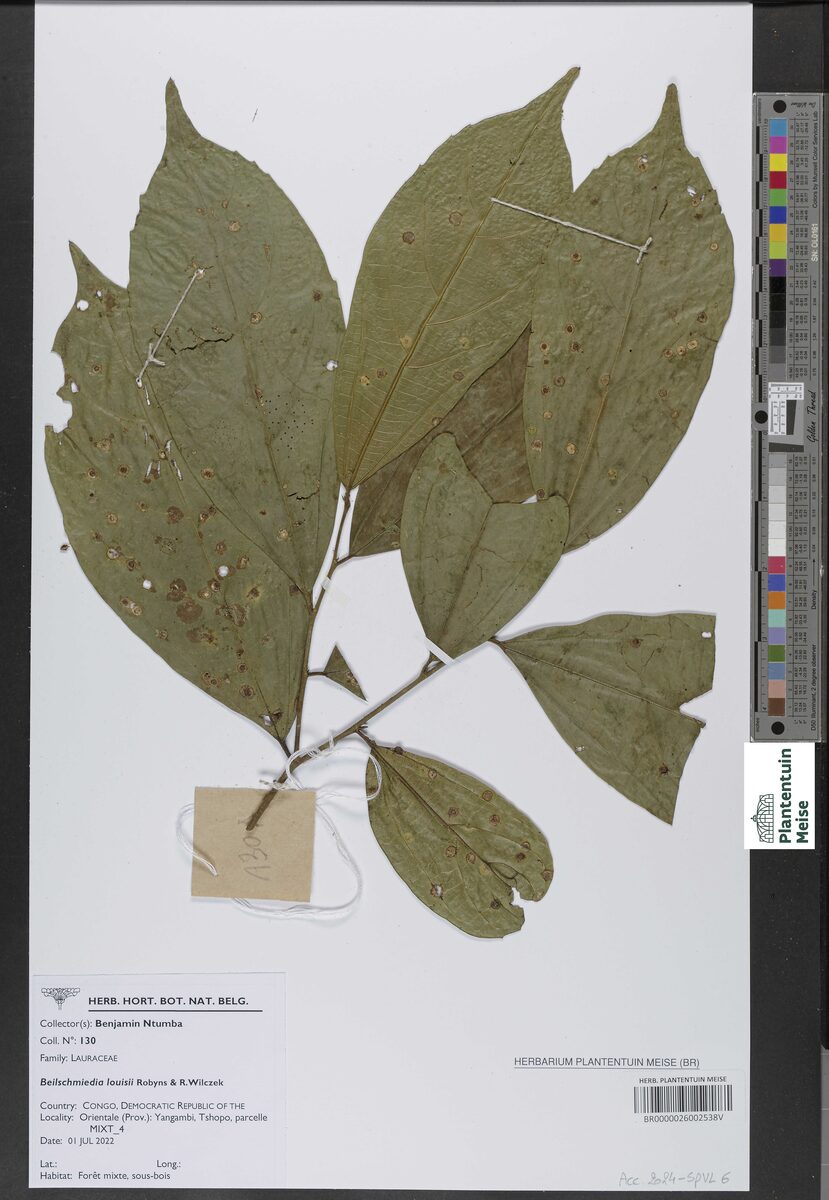
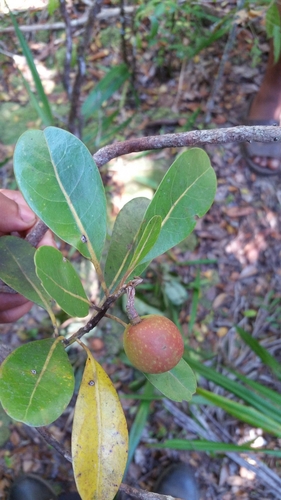
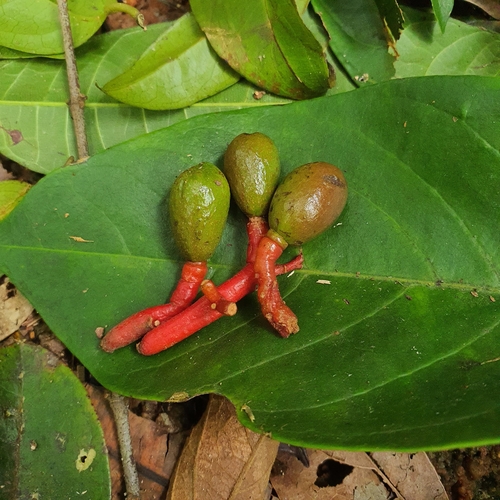
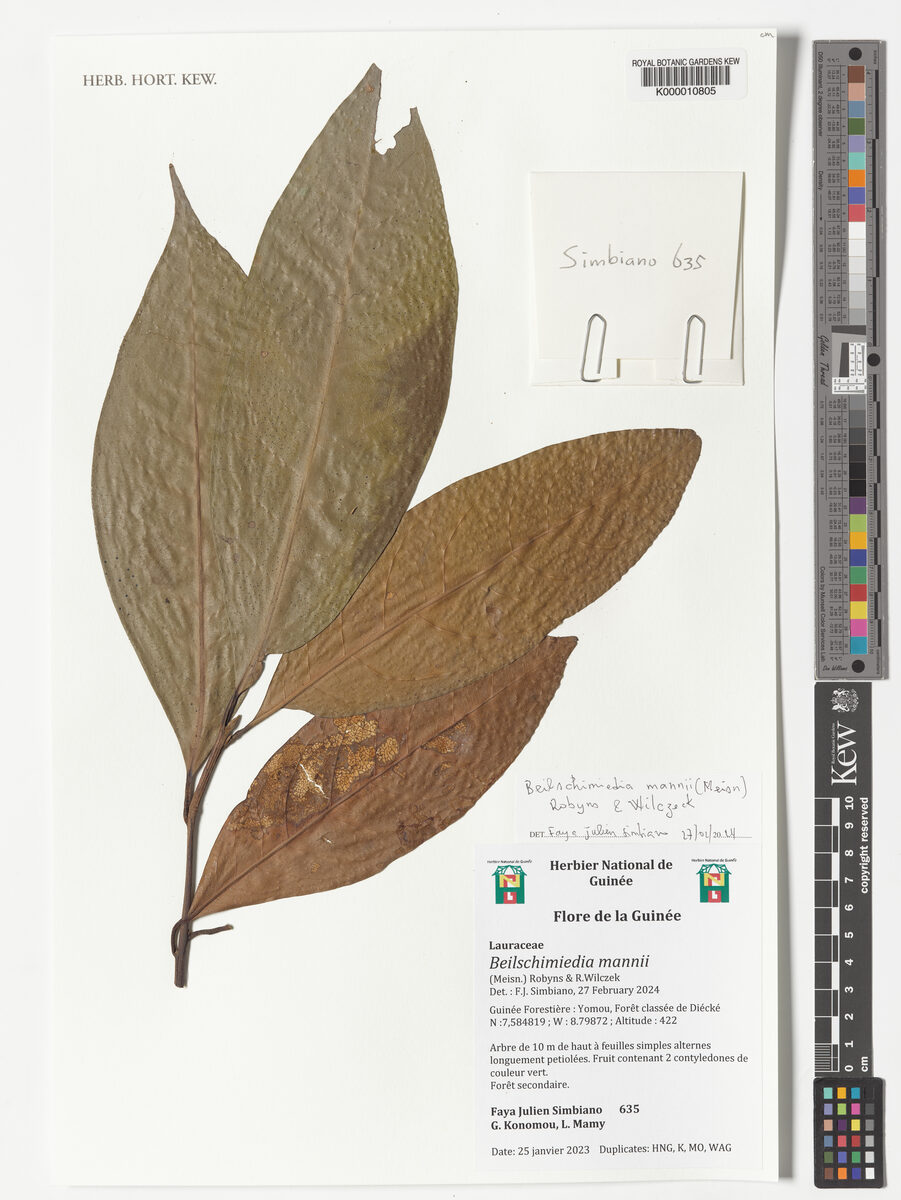
Cinnamomum sintoc
Blume
Java cassia, Cinnamon sintoc tree
iNaturalist· cc-by-nc-sa
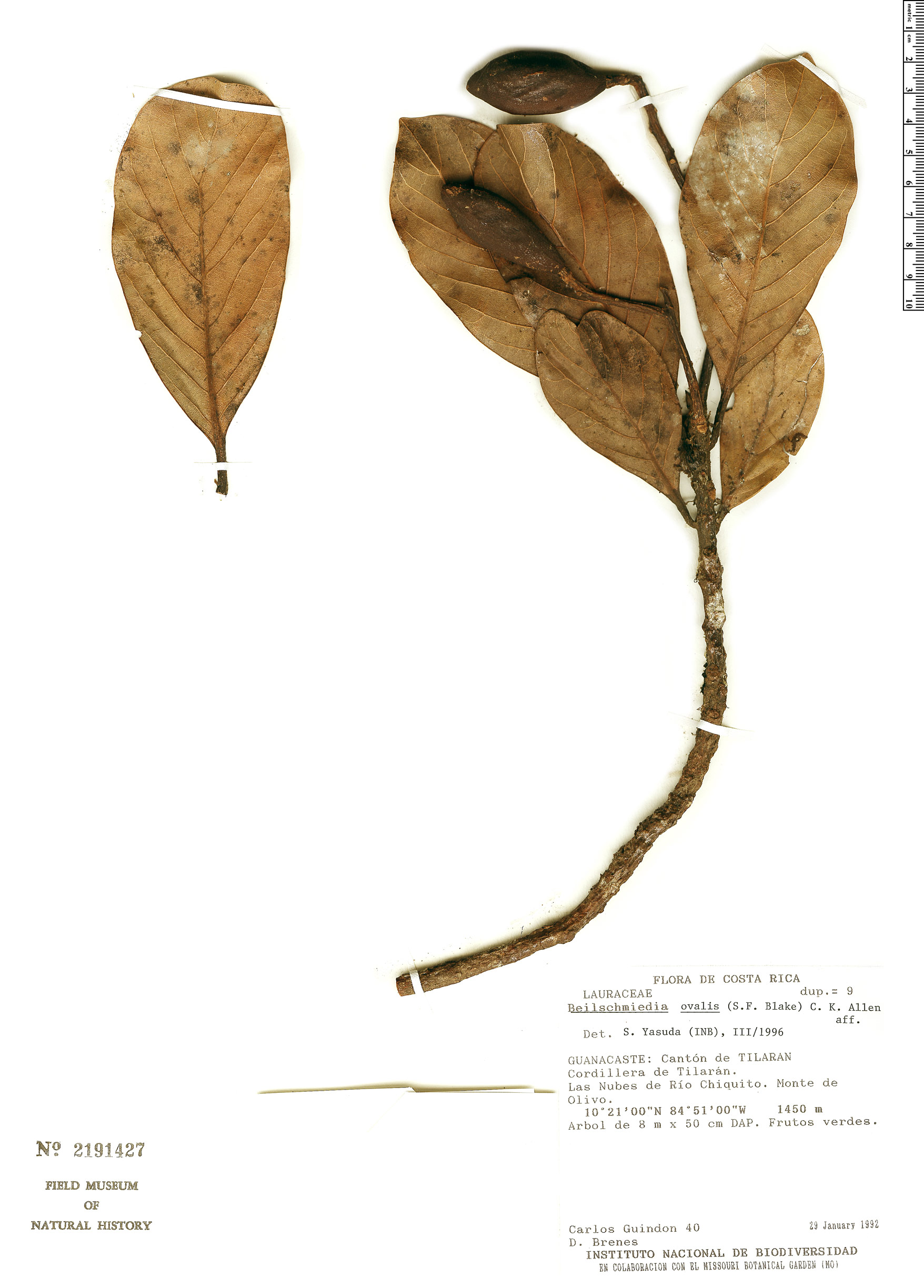
(c) Smithsonian Institution, National Museum of Natural History, Department of Botany, some rights reserved (CC BY-NC-SA)
iNaturalist· cc-by-nc
(c) Ilyas Dahrun, some rights reserved (CC BY-NC)
wikimedia· cc-by-sa
Wikimedia Commons - Fransiskus Agus Harsanto
Summary
Source: WikipediaCinnamomum sintoc is a species of tree in the laurel family (Lauraceae). It is native to Borneo, Sumatra, Peninsular Malaysia, and Java. It is a tree growing to 27 metres tall, with a trunk to 30 cm in diameter. In Borneo it is native to Sarawak (Lundu District) and West and East Kalimantan, where it grows in mixed dipterocarp forest on sandy soil to 60 metres elevation.
Description
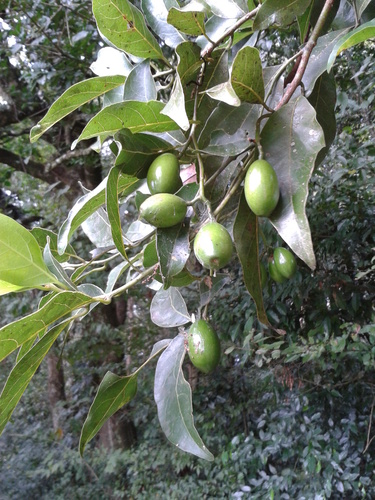
An evergreen tree. It grows 39 m tall. The leaves are oblong or sword shaped and 22 cm long by 3-8 cm wide. They are slightly rough. The base is wedge shaped and the tip has a sharp point. The flowers have both sexes. They are in groups in the axils of leaves. These are 10-15 cm long. The fruit are oblong and 18 mm long by 8 mm wide.
Edible Uses
The bark and spices derived from the tree are used.
Medicinal Uses
The bark, known as 'Sintoc bark', is antispasmodic, astringent and vermifuge. It is used in the treatment of diarrhoea and other intestinal complaints. The powdered bark is applied externally as a disinfectant on wounds.
Distribution
A tropical plant. It grows in lowland and mountain forests.
Where It Grows
Asia, India, Indochina, Indonesia, Malaysia, SE Asia, Thailand,
Cultivation
Species in this genus generally prefer an acidic soil with ample moisture in the growing season and a position with some shade. Species in this genus are generally able to resprout from basal wood if the top is damaged, and will soon recover from any damage.
Propagation
Seed - the seed of species in this genus generally has a short viability and is best sown as soon in containers as it is ripe. Remove the fruit pulp since this can inhibit germination. Soaking the seeds for 24 hours in lukewarm water hastens germination, which can take 1 - 6 months at 20°c. The germination rate of fresh seed is about 50%, falling to 25% for seed 6 months old, and zero for those 1 year old. Stored seed should be sown as soon as possible in containers. When they are large enough to handle, prick the seedlings out into individual pots and plant them out into their permanent positions when 10cm or more tall. Cuttings of semi-ripe side shoots, 7cm with a heel, in a frame with bottom heat.
Other Uses
There are a number of species (including this one) from Peninsular Malaysia that are in the family Lauraceae and produce a useful timber that is either not distinct enough in itself, or is in insufficient supply, to warrant being traded individually. These various species have been lumped together under the trade name ‘medang’. We do not have a specific description of the wood from this species, but a general description of medang timber is as follows:- The heartwood is very variable, from light-straw to red-brown and olive brown; the sapwood is ill-defined. The texture is moderately fine but even; the grain interlocked or wavy; the surface dull. The wood is not durable. It is easy to slightly difficult to resaw, and easy to moderately easy to cross-cut; easy to plane and the surface produced is smooth to moderately smooth. It is suitable for decorative work such as interior finishing, panelling, furniture and cabinet making. It is also suitable for plywood manufacture, whilst the heavier species are suitable for medium construction under cover
Notes
There are about 250 Cinnamomum species.
Synonyms
Also Known As
Pohon kayumanis sintok, Pohon waru sintok, Sintok
References (6)
- Burkill, I.H., 1966, A Dictionary of the Economic Products of the Malay Peninsula. Ministry of Agriculture and Cooperatives, Kuala Lumpur, Malaysia. Vol 1 (A-H) p 562 (As Cinnamomum sintok)
- Hedrick, U.P., 1919, (Ed.), Sturtevant's edible plants of the world. p 193 (As Cinnamomum sintok)
- PROSEA handbook Volume 13 Spices. p 275
- Seidemann J., 2005, World Spice Plants. Economic Usage, Botany, Taxonomy. Springer. p 103
- Sukarya, D. G., (Ed.) 2013, 3,500 Plant Species of the Botanic Gardens of Indonesia. LIPI p 199
Show all 6 references Hide references
- World Checklist of Useful Plant Species 2020. Royal Botanic Gardens, Kew