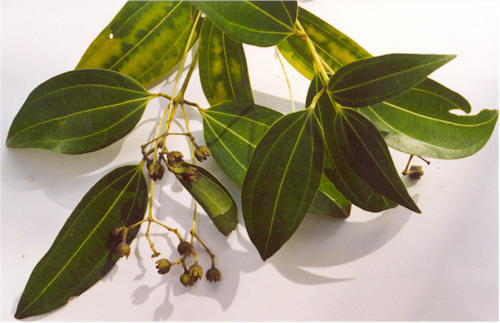
Cassytha melantha
R. Br.
Large dodderlaurel, Mallee Strangle Vine
iNaturalist· cc-by-nc
(c) Wayne Martin, some rights reserved (CC BY-NC)
iNaturalist· cc-by-nc
(c) Bernadette Lingham, some rights reserved (CC BY-NC)
Summary
Source: WikipediaCassytha melantha is a parasitic vine. Common names include coarse dodder-laurel and large dodder-laurel. The fruits are about 10–15 millimetres (0.39–0.59 in) in diameter and are green, drying to black. These are edible and are harvested in the wild. The species occurs in the states of Western Australia, South Australia, Tasmania, Victoria and New South Wales in Australia. The name has sometimes been misapplied to Cassytha filiformis.
Description
It is a tough twining plant that lives off other plants. It keeps growing from year to year. It can grow 9 m high and spread 3-4 m wide. It appears to be leafless. The flowers are very small and white. They are less than 10 mm across. The fruit are fleshy berries. They are round, green and without hairs. They become black at maturity.
Edible Uses
The fleshy black berries are eaten.
Traditional Uses
CAUTION: Some Cassytha have an alkaloid that can cause abortion and should not therefore be eaten by pregnant women.
This uses section is brief — help expand it
Known Hazards
Some Cassytha species contain alkaloids that can cause abortion and should not be eaten by pregnant women.
Distribution
It is a temperate plant. It grows in open forest and woodland. It kills the host plant. It mostly grows on Eucalypts. Tasmania Herbarium.
Where It Grows
Australia*, Tasmania*,
Notes
There are 15-20 Cassytha species. Sometimes they are in the family Cassythaceae.
Nutrition
| Part | Moisture | kJ | kcal | Protein | Vit A | Vit C | Iron | Zinc |
|---|---|---|---|---|---|---|---|---|
| Fruit | — | — | 1.4 | — | — | — | — | — |
References (8)
- Curtis, W.M., 1993, The Student's Flora of Tasmania. Part 3 St David's Park Publishing, Tasmania, p 597
- Dashorst, G.R.M., and Jessop, J.P., 1998, Plants of the Adelaide Plains & Hills. Botanic Gardens of Adelaide and State Herbarium. p 64
- Isaacs, J., 1987, Bush Food, Aboriginal Food and Herbal Medicine. Weldons. p 64, 65
- Lazarides, M. & Hince, B., 1993, Handbook of Economic Plants of Australia, CSIRO. p 51
- Mallee Wildflower Committee, Flowers of the Mallee. p 8
Show all 8 references Hide references
- Paczkowska, G. & Chapman, A.R., 2000, The Western Australian Flora. A Descriptive Catalogue. Western Australian Herbarium. p 278
- Tasmanian Herbarium Vascular Plants list p 37
- Whiting, J. et al, 2004, Tasmania's Natural Flora. Tasmania's Natural Flora Editorial Committee PO Box 194, Ulverstone, Tasmania, Australia 7315 p 199