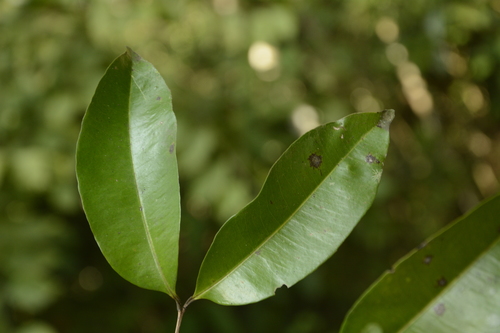
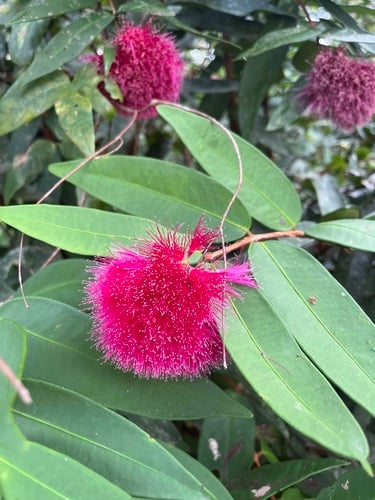
Gossia acmenoides
(F. Muell.) N. Snow & Guymer
Scrub ironwood, White Myrtle, Ironwood
iNaturalist· cc-by-sa
(c) Greg Tasney, some rights reserved (CC BY-SA), uploaded by Greg Tasney
iNaturalist· cc-by-sa
(c) Greg Tasney, some rights reserved (CC BY-SA), uploaded by Greg Tasney
iNaturalist· cc-by-sa
(c) Greg Tasney, some rights reserved (CC BY-SA), uploaded by Greg Tasney
Summary
Source: WikipediaGossia acmenoides, known as the scrub ironwood, is a rainforest tree of the family Myrtaceae, native to eastern Australia. The usual habitat of this small tree is drier rainforest areas. The range of natural distribution is from Jamberoo in New South Wales to Eungella National Park in northern Queensland. The generic name Gossia refers to the former premier of Queensland, Wayne Goss, who was a champion of conservation. The specific epithet acmenoides means that this type of tree resembles plants of the genus Acmena (many of which have been transferred to the genus Syzygium). The leaves of this plant resemble the lillypilly Syzygium smithii.
Description
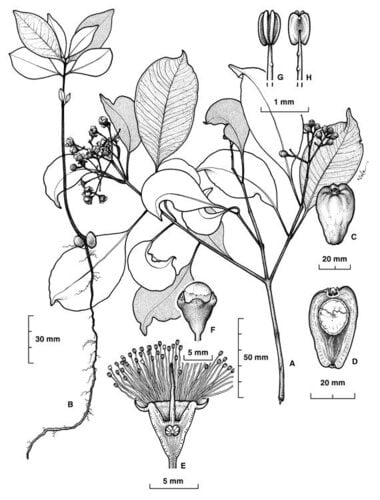
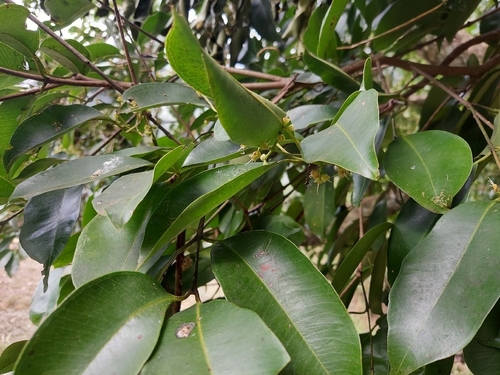
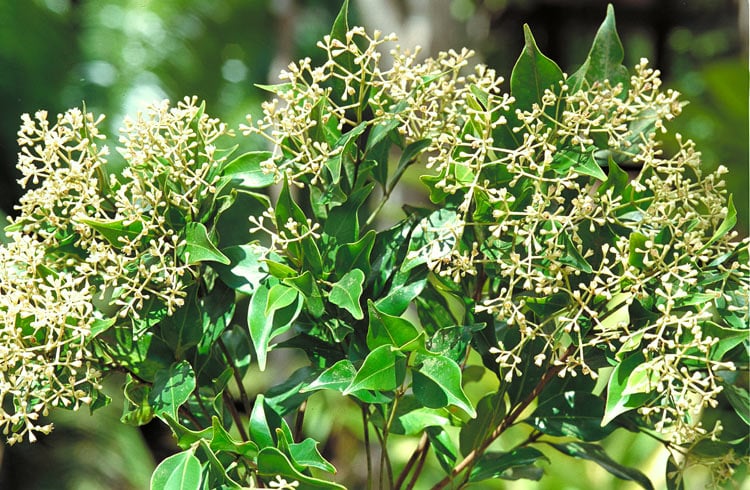
A small evergreen tree. It grows 5-18 m high and spreads 3-5 m wide. The trunk is crooked. The bark is smooth and brown. The leaves are 2-8 cm long and 1-3 cm wide. They are oval and taper to the tip. The leaves are dark green. The flowers are 1 cm across. They are white and occur in clusters of 2-3. These are in the axils of leaves. The fruit is a berry. It is 0.6 cm across. It is round and black.
Edible Uses
The leaves are used to flavour tea and as a general flavouring agent. The fruit is also edible.
Traditional Uses
The leaves are used to improve the flavour of tea.
This uses section is brief — help expand it
Medicinal Uses
The leaves are traditionally used to improve the flavour of tea.
Distribution
It grows in tropical to warm temperate regions. In tropical Queensland it grows from 50-600 m altitude. It requires a semi-shady position and a well drained soil. It will grow in most soils. It is damaged by drought and frost.
Where It Grows
Australia*,
Cultivation
It can be grown from seed or cuttings. Plants respond to fertiliser and watering.
Notes
There are 30 Gossia species. They occur in Australia.
Synonyms
References (10)
- Bodkin, F., 1991, Encyclopedia Botanica. Cornstalk publishing, p 120 (As Austromyrtus acmenoides)
- Cooper, W. and Cooper, W., 2004, Fruits of the Australian Tropical Rainforest. Nokomis Editions, Victoria, Australia. p 342
- Cribb, A.B. & J.W., 1976, Wild Food in Australia, Fontana. p 173 (As Austromyrtus acmenoides)
- Elliot, W.R., & Jones, D.L., 1982, Encyclopedia of Australian Plants suitable for cultivation. Vol 2. Lothian. p 261 (As Austromyrtus acmenoides)
- Hibbert, M., 2002, The Aussie Plant Finder 2002, Florilegium. p 36 (As Austromyrtus acmenoides)
Show all 10 references Hide references
- Jackes, B.R., 2001, Plants of the Tropics. Rainforest to Heath. An Identification Guide. James Cook University. p 68 (As Austromyrtus acmenoides)
- Jones D, L, 1986, Ornamental Rainforest Plants in Australia, Reed Books, p 60 (As Austromyrtus acmenoides)
- Low, T., 1992, Bush Tucker. Australia’s Wild Food Harvest. Angus & Robertson. p 34 (As Austromyrtus acmenoides)
- Smith, K & I., 1999, Grow your own bushfoods. New Holland. Australia. p 56 (As Austromyrtus acmenoides)
- Williams, J.B., Harden, G.J., and McDonald, W.J.F., 1984, Trees and shrubs in rainforests of New South Wales and Southern Queensland. Univ. of New England, Armidale. p 113 (As Austromyrtus acmenoides)