Baccaurea bracteata
Muell.-Arg.
Rambai hutan, Monkey tampoi tree
iNaturalist· cc-by-nc-nd
(c) loupok, some rights reserved (CC BY-NC-ND)
gbif· cc0
President and Fellows of Harvard College
Description
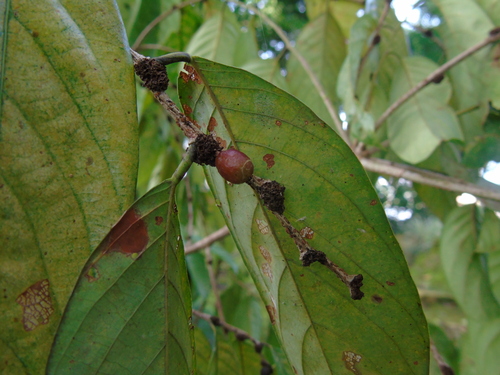
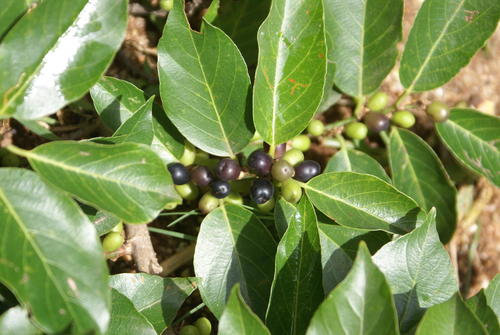
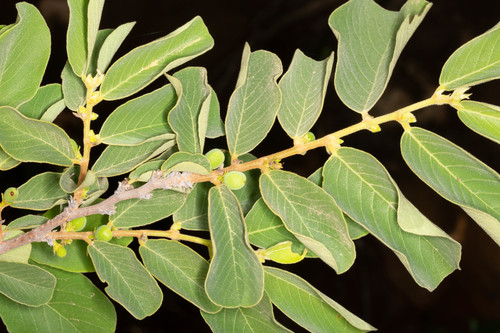
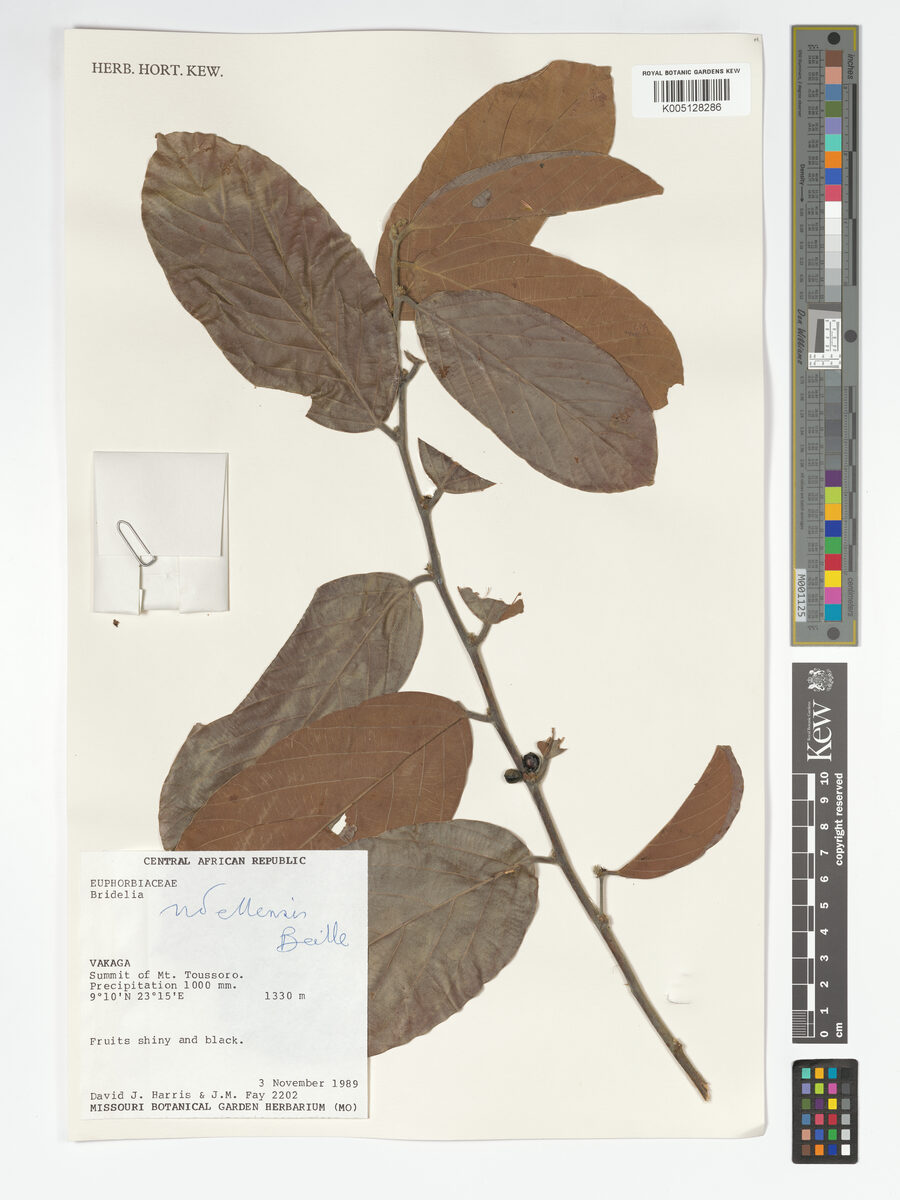
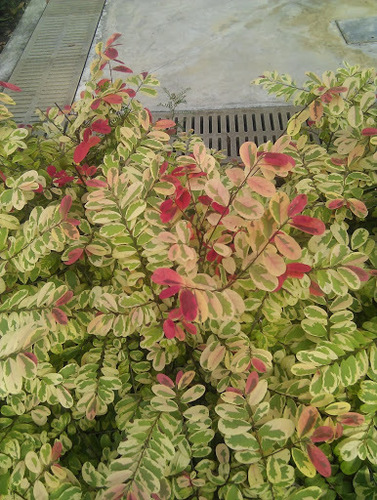
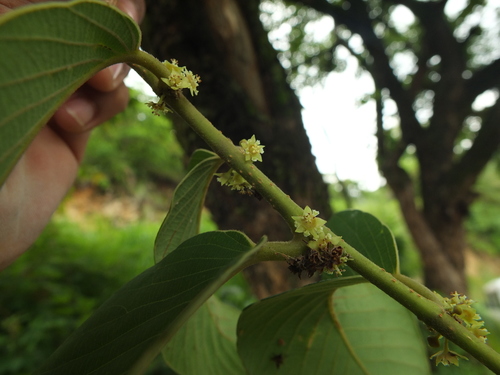
An evergreen tree. It grows 25 m high. The leaves are leathery and narrowly oblong. They are near the ends of twigs. They are hairy underneath. Plants are separately male and female. Male flowers are hairy. The flowers are 1.3 mm across and yellow-cream. The fruit are round and dark red. They are about 2 cm long. The flesh is yellow.
Edible Uses
The fruit are eaten; they have a sour flavor.
Traditional Uses
The fruit are eaten. They are sour.
This uses section is brief — help expand it
Medicinal Uses
We have no specific information on this species, but the bark of several members of this genus is used to relieve eye inflammation.
Distribution
A tropical plant. It can grow in swamps. It is usually near sea level but can grow up to 900 m altitude. It grows in limestone areas.
Where It Grows
Asia, Brunei, Indochina, Indonesia, Malaysia, Myanmar, SE Asia, Thailand,
Cultivation
Plants can be grown by seeds. Seeds need to be sown fresh.
Propagation
Seed - when sown fresh it usually germinates in a few days.
Other Uses
We have no specific information for this species, but the bark of several members of this genus is used, along with other ingredients, as a dyestuff to colour silk yellow, red or mauve, using the dyeing process known as 'pekan' in Malay. A good timber. The wood is used in construction. The stems are used in making laminaang, the traditional Dayak Kenya longhouse. In common with other trees that produce their flowers and fruits on the trunk of the tree, members of this genus are generally considered to be good support trees for the climbing rattan palms, which are grown to provide material for basket making, weaving into furniture, making ropes etc.
Notes
There are about 80 Baccaurea species.
Nutrition
| Part | Moisture | kJ | kcal | Protein | Vit A | Vit C | Iron | Zinc |
|---|---|---|---|---|---|---|---|---|
| Fruit | 64.2 | 681 | 163 | 2.1 | — | 0.8 | 0.6 | 3.9 |
Synonyms
Also Known As
Jematang, Kayu masam, Kelibon, Lawin daun, Lawma, Medang kechil, Pohon rambai hutan, Puak borong, Puak, Puak burung, Pugi barong, Pugi ranau, Ramai pa, Selantikan, Setambun, Taban, Tampoi paya, Tampoi, Terai rampak, Tutung
References (13)
- Altschul, S.V.R., 1973, Drugs and Foods from Little-known Plants. Notes in Harvard University Herbaria. Harvard Univ. Press. Massachusetts. no. 2158
- Bircher, A. G. & Bircher, W. H., 2000, Encyclopedia of Fruit Trees and Edible Flowering Plants in Egypt and the Subtropics. AUC Press. p 51
- Burkill, I.H., 1966, A Dictionary of the Economic Products of the Malay Peninsula. Ministry of Agriculture and Cooperatives, Kuala Lumpur, Malaysia. Vol 1 (A-H) p 280
- Giesen, W., 2013, Paludiculture: sustainable alternatives on degraded peat land in Indonesia (revised draft)
- Hoe, V. B. & Siong, K. H., 1999, The nutritional value of indigenous fruit and vegetables in Sarawak. Asia Pacific J. Clin. Nutr. 8(1):24-31
Show all 13 references Hide references
- Milow, P., et al, 2013, Malaysian species of plants with edible fruits or seeds and their evaluation. International Journal of Fruit Science. 14:1, 1-27
- PROSEA
- Siong, K. H., 2003, Indigenous Fruits of Sarawak. ITTO & Sarawak Forest Department. p 55
- Slik, F., www.asianplant.net
- Sukarya, D. G., (Ed.) 2013, 3,500 Plant Species of the Botanic Gardens of Indonesia. LIPI p 143
- Thitiprasert, W., et al, 2007, Country report on the State of Plant Genetic Resources for Food and Agriculture in Thailand (1997-2004). FAO p 95
- World Checklist of Useful Plant Species 2020. Royal Botanic Gardens, Kew
- www.nationalherbarium.nl/thaueuph/ Flora of Thailand.