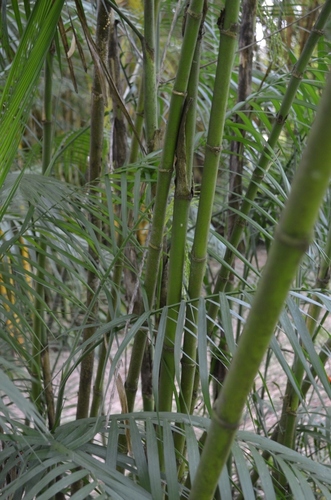
Attalea tessmannii
Burret
Yassmann attalea
iNaturalist· cc-by-nc
(c) Marcus Athaydes, some rights reserved (CC BY-NC), uploaded by Marcus Athaydes
iNaturalist· cc-by-nc
(c) Marcus Athaydes, some rights reserved (CC BY-NC), uploaded by Marcus Athaydes
Summary
Source: WikipediaAttalea tessmannii is a species of flowering plant in the family Arecaceae. It is found in Brazil and Peru. It is threatened by habitat loss.
Description
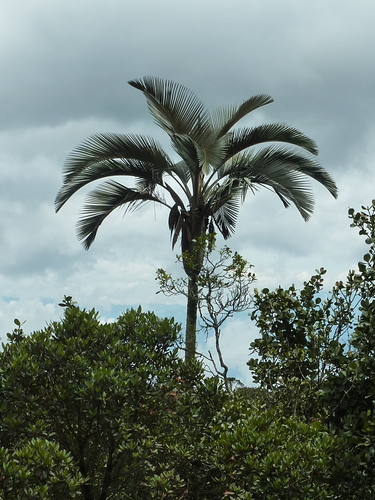
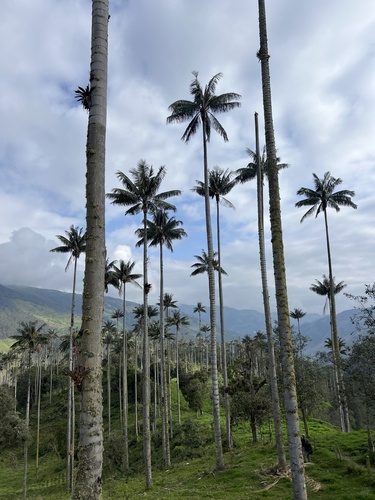
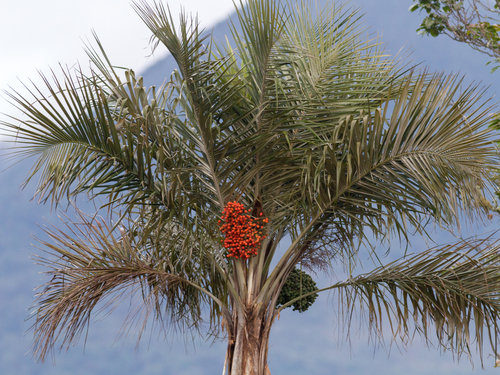
A palm. The trunk is 30 m tall and 30-46 cm wide. There are about 12 large leaves in the crown. The leaves are 11.5 m long. The fruit are 12 cm long and 6 cm wide.
Edible Uses
The seeds, fruit, and palm heart are eaten.
Distribution
It is a tropical plant.
Where It Grows
Amazon, Bolivia, Brazil, Central America, Panama, Peru, South America,
Other Uses
The endocarps are used to smoke newly collected latex for coaggulating into rubber.
Also Known As
Chonta, Cocao, Conta, Katirna, Shapaja
References (6)
- Grandtner, M. M. & Chevrette, J., 2013, Dictionary of Trees, Volume 2: South America: Nomenclature, Taxonomy and Ecology. Academic Press p 52
- Hunter, D., et al, 2019, The potential of neglected and underutilized species for improving diets and nutrition. Planta (2019) 250:709-729
- Kermath, B. M., et al, 2014, Food Plants in the Americas: A survey of the domesticated, cultivated and wild plants used for Human food in North, Central and South America and the Caribbean. On line draft. p 110
- Marcia, M. J., et al, 2011, Palm Uses in Northwestern South America: A Quantitative Review. Bot. Rev. (2011) 77:462-570
- Vasquez, R. and Gentry, A. H., 1989, Use and Misuse of Forest-harvested Fruits in the Iquitos Area. Conservation Biology 3(4): 350f
Show all 6 references Hide references
- World Checklist of Useful Plant Species 2020. Royal Botanic Gardens, Kew