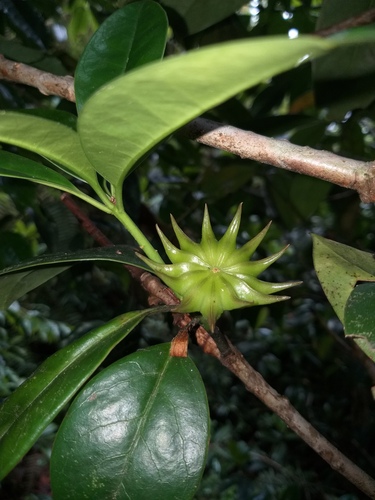
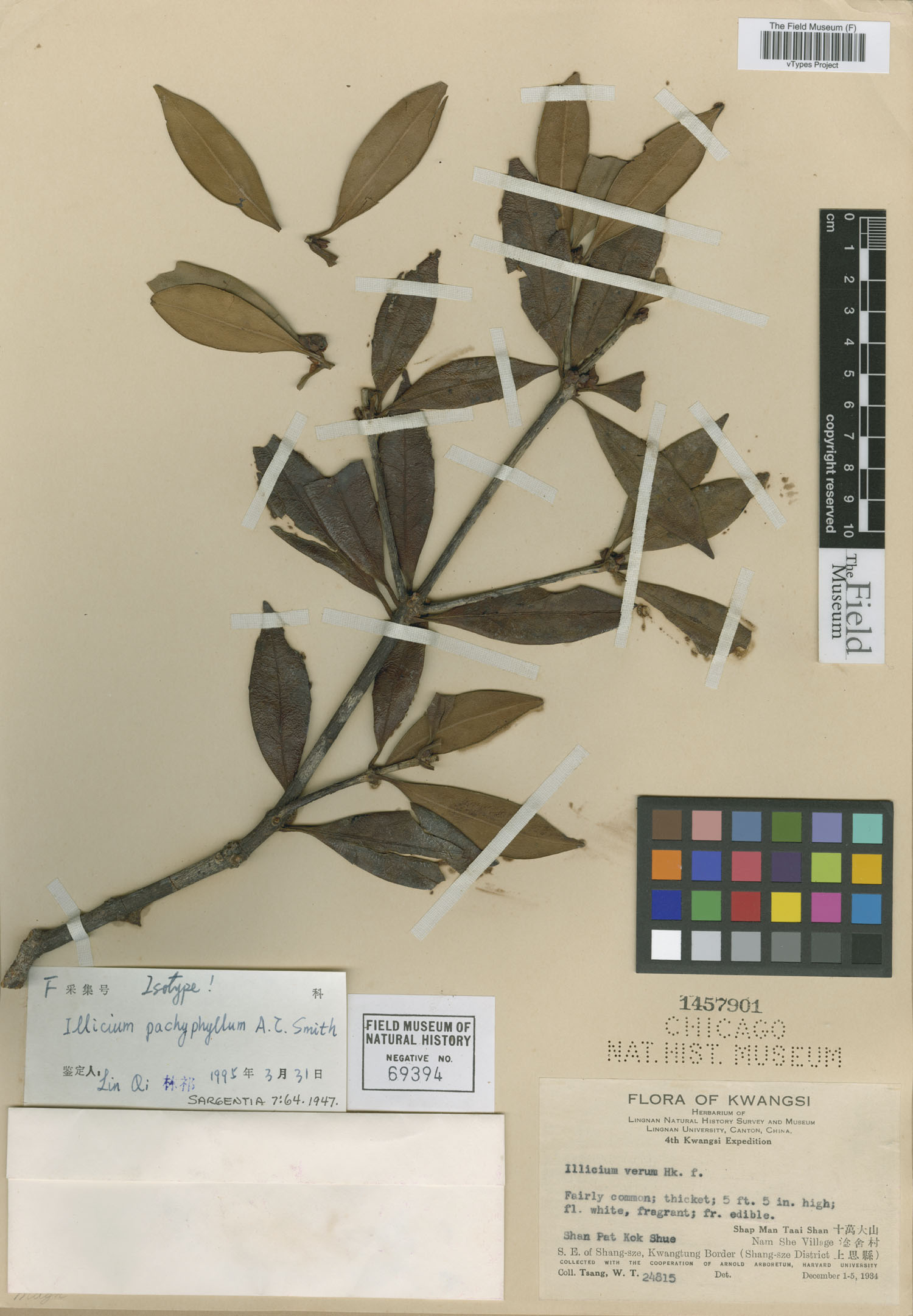
Illicium majus
Hook.f. & Thomson
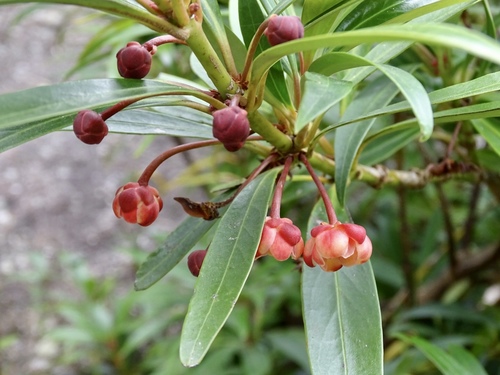
iNaturalist· cc-by-nc
(c) Stephen Thorpe, some rights reserved (CC BY-NC), uploaded by Stephen Thorpe
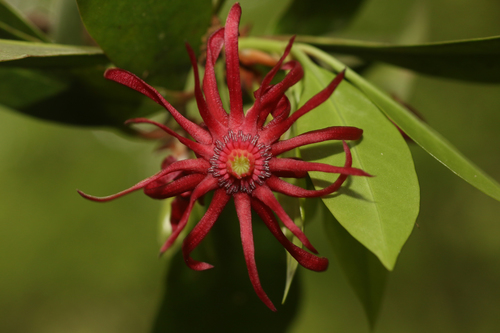
wikimedia· cc-by-sa
Wikimedia Commons - Zhangmoon618
wikimedia· cc-by-sa
Wikimedia Commons - Krzysztof Ziarnek, Kenraiz
Description
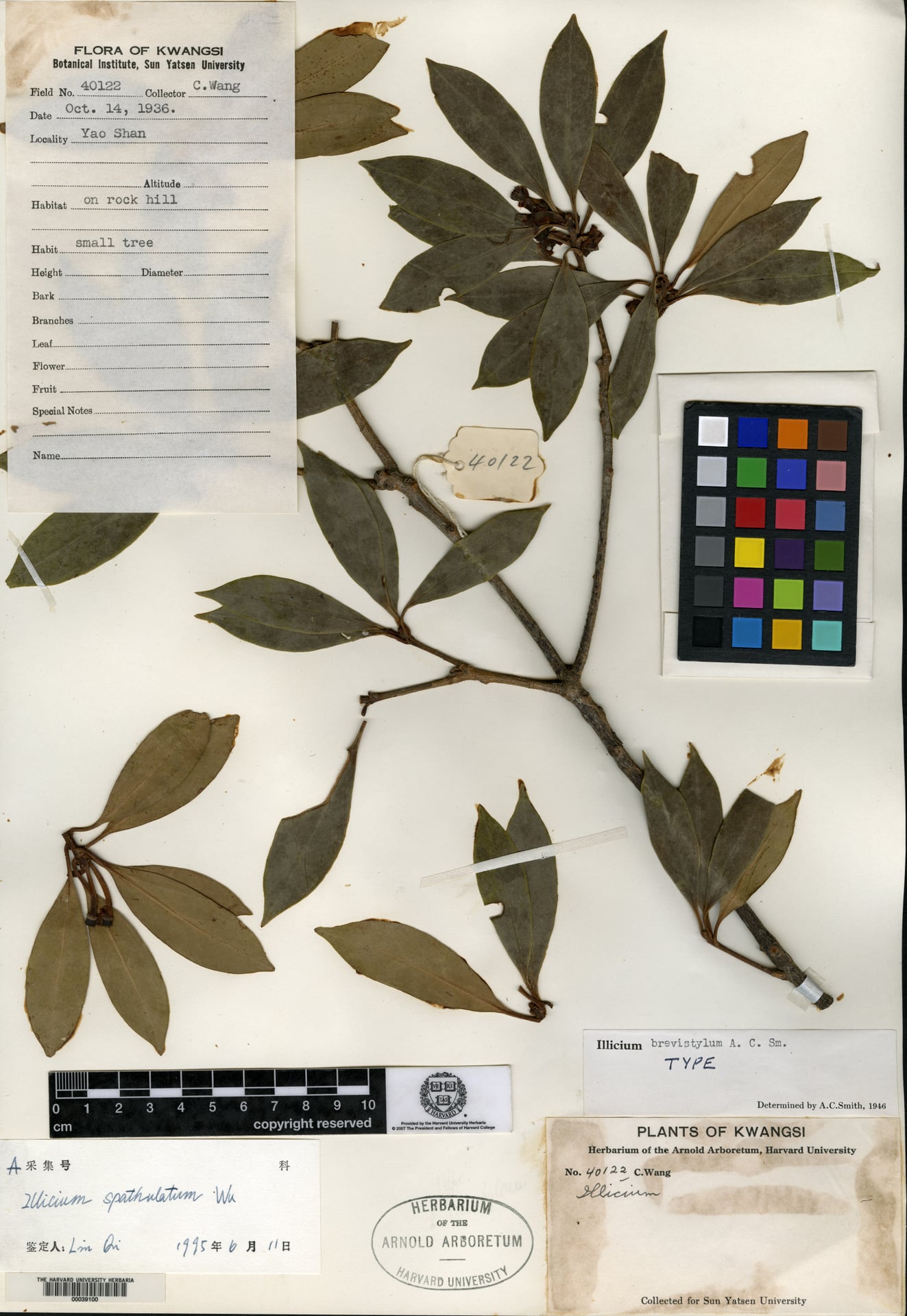
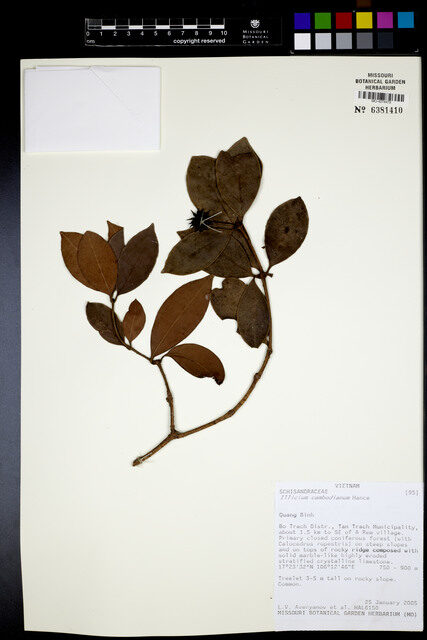
A tree. It grows 20 m tall. The leaves are in clusters of 3-6 in nodes towards the end of the branches. They are narrowly oval and 10-20 cm long by 3-7 cm wide. The flowers are in the axils of leaves or towards the ends of branches. The fruit have 10-14 follicles 1-3 cm long by 0.5-1.5 cm wide. The seeds are 6-10 mm long by 5-7 mm wide.
Traditional Uses
Caution: The fruit are listed as poisonous.
This uses section is brief — help expand it
Known Hazards
The fruit are listed as poisonous.
Distribution
It is a tropical plant. It grows in mixed forests and rocky slopes and along river banks between 300-2,500 m in southern China. In Yunnan.
Where It Grows
Asia, China, Indochina, Myanmar, SE Asia, Vietnam,
Production
In southern China plants flower in April to June and fruit in July to October.
Notes
There are 34 Illicium species. There are 3 species in tropical America. Also put in the family Illiciaceae.
Also Known As
Daihoi to
References (2)
- Altschul, S.V.R., 1973, Drugs and Foods from Little-known Plants. Notes in Harvard University Herbaria. Harvard Univ. Press. Massachusetts. no. 1012
- www.efloras.org Flora of China Volume 7