Pouteria maguirei
(Aubreville) Pennington
Maguire pouteria
wikimedia· cc-by-sa
Wikimedia Commons (via Wikimedia Commons)
gbif· cc-by-nc
Field Museum of Natural History - Botany Department | GDI 2013-2015
gbif· cc-by-nc
Rapid Reference Collection (RRC) | Field Museum of Natural History - Keller Science Action Center
gbif· cc-by-nc
Field Museum of Natural History - Botany Department | GDI 2013-2015
Summary
Source: WikipediaPouteria maguirei is a species of plant in the family Sapotaceae. It is found in Brazil and Venezuela.
Description
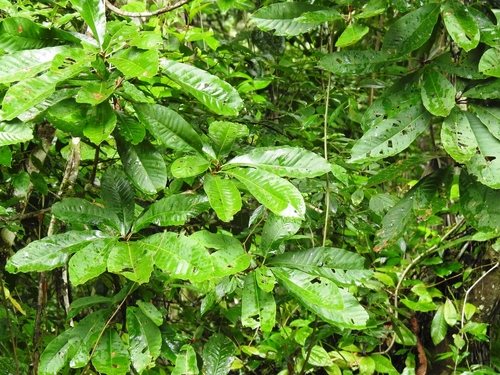
A tree. It grows 20 m tall. The trunk is 20 cm across. Young shoots have brown hairs. The leaves are in loose clusters and arranged in spirals. They are 7-17 cm long by 4-9 cm wide. The are oval. There are 6-8 pairs of secondary veins. The flowers are in groups of 4-6 flowers in the axils of leaves or below the leaves. The fruit are 7-10 cm long. They are oval. There are 2-4 seeds.
Edible Uses
The fruit is eaten.
Distribution
A tropical plant. It grows in permanently flooded forest between 100-150 m above sea level.
Where It Grows
Amazon, Brazil, Colombia, South America, Venezuela,
Notes
There are about 150-320 Pouteria species. They grow in the tropics.
Synonyms
Also Known As
Abiurana, Abiurana-do-igapo, Cabeza de baba, Cabeza de babocilla, Cabeza de babocillo, Chudumiro, Palo de babilla, Temare rebalsero
References (5)
- Grandtner, M. M. & Chevrette, J., 2013, Dictionary of Trees, Volume 2: South America: Nomenclature, Taxonomy and Ecology. Academic Press p 527
- Kermath, B. M., et al, 2014, Food Plants in the Americas: A survey of the domesticated, cultivated and wild plants used for Human food in North, Central and South America and the Caribbean. On line draft. p 693
- Pennington, T.D., 1990, Sapotaceae in Flora Neotropica Monograph 52. New York Botanical Gardens. p 448
- Roa, J. A. G. & Boada, D. S. G., 2018, Fundación para el Fortalecimiento de la Fruticultura y Plantas Alimenticias no Convencionales en Colombia.
- Van Roosmalen, M.G.M., & Garcia, O. M., 2000, Fruits of the Amazonian Forest. Part 2: Sapotaceae. Acta Amazonica 30(2): 187-290
More from Sapotaceae
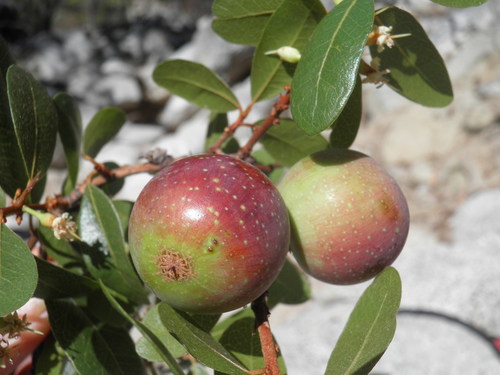
Sideroxylon peninsulare
Babelama, Western bumelia
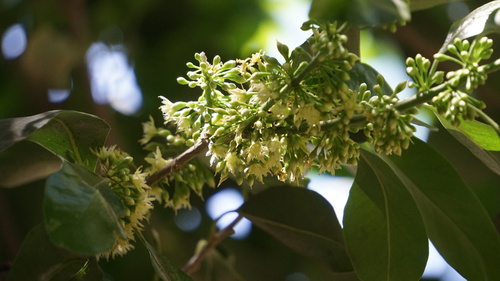
Sideroxylon persimile
Acoma piquant, Limoncillo
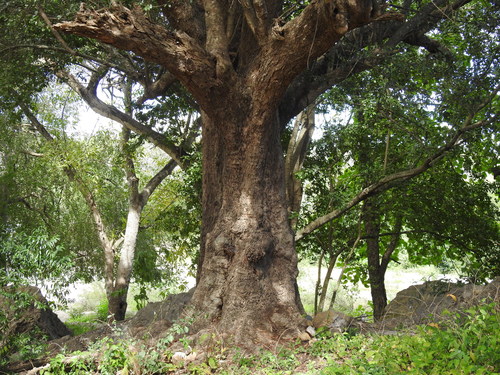
Sideroxylon persimile subsp. subsessiliflorum
Bebelama, Chuwa, Cupilla
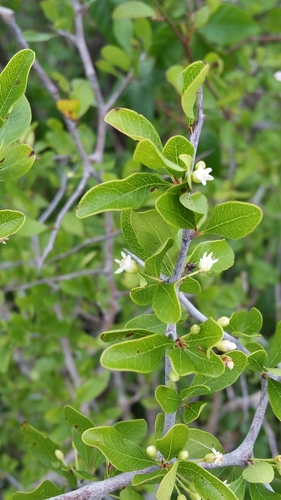
Sideroxylon reclinatum
Western Buckthorn, Smooth buckthorn
Sideroxylon stevensonii
Chicle faisan, Faisan
Sideroxylon tenax
Ironwood, Tough bumelia, Narrowleaf bumelia, Tough buckthorn, Silver buckthorn