Chrysophyllum giganteum
A. Chev.
gbif· cc-by
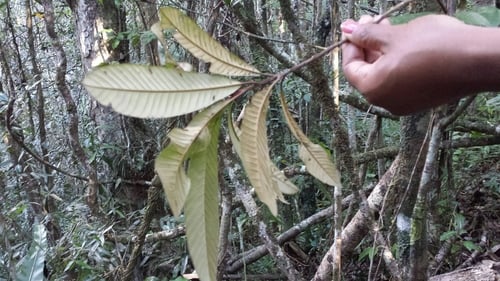
Meise Botanic Garden
gbif· cc-by
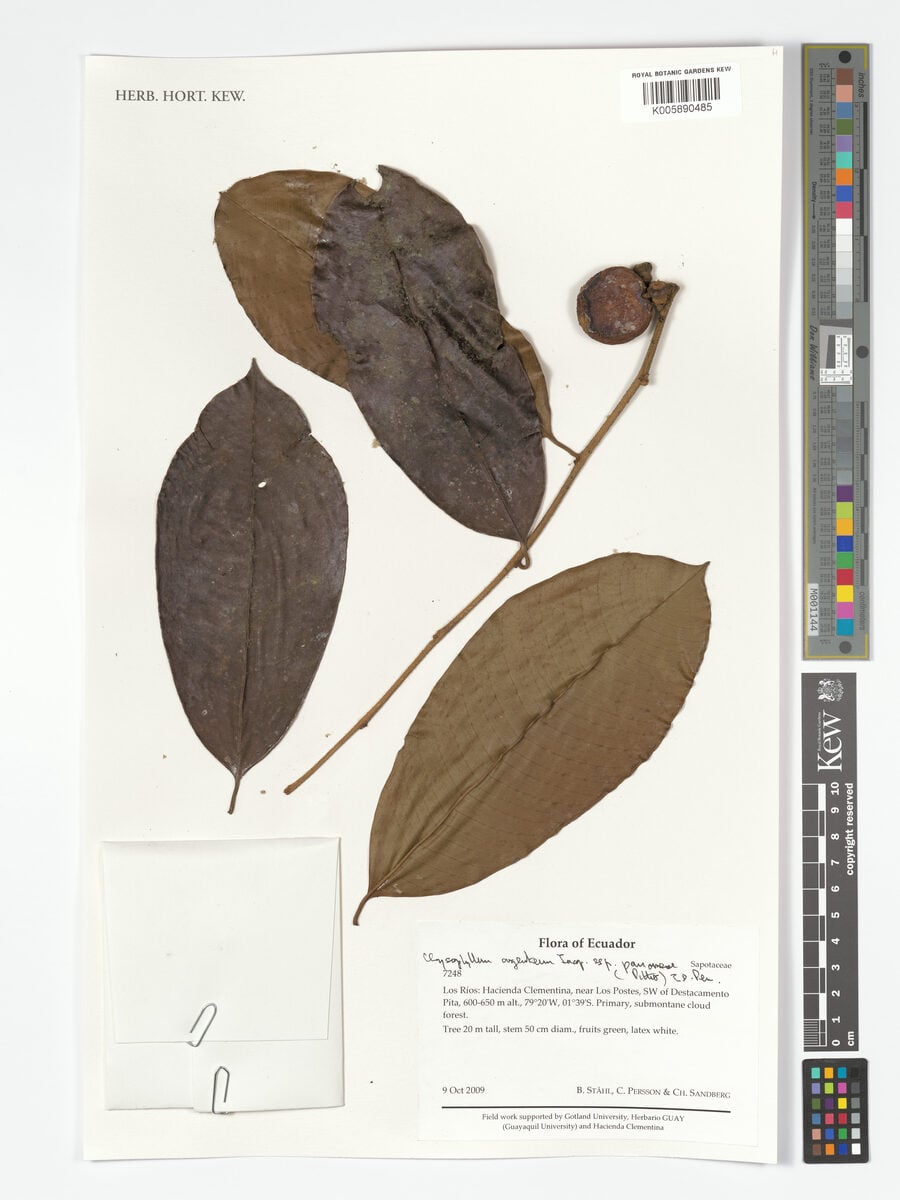
Royal Botanic Gardens, Kew
gbif· cc-by
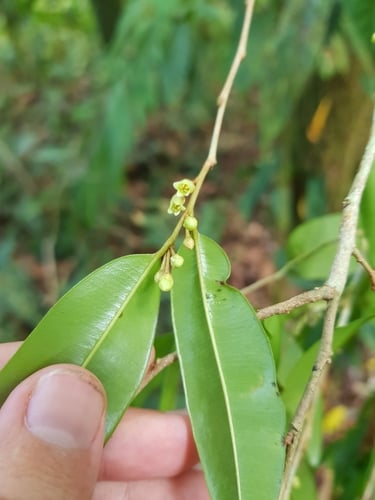
Meise Botanic Garden
Description
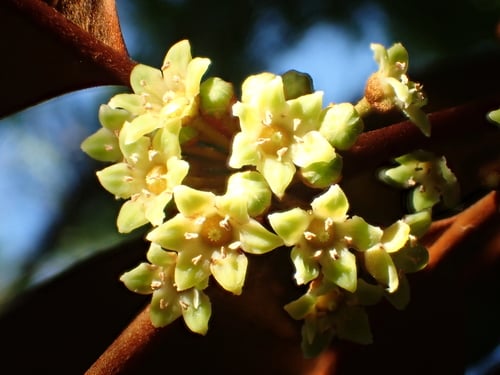
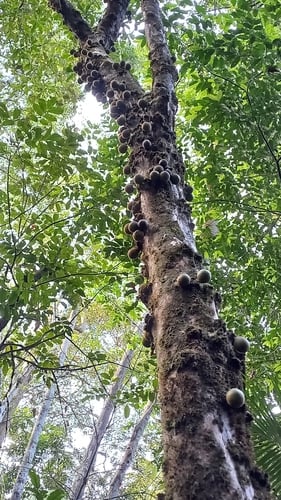
A large tree. It grows 35 m tall. The trunk is 90 cm across. The first branches are often 20 m above ground. There are steep buttresses at the base. The leaves are is spiral tufts at the ends of branches. The leaves are 8-20 cm long by 3-7 cm wide. They are wedge shaped at the base and have a short tip. The flowers are in groups 3 cm long in the axils of leaves. They are creamy white. The fruit are round and 5.5 cm across. They turn yellow-orange when ripe. They have up to 5 seeds. The seeds are narrowly oval and flattened. They are 3 cm long by 2 cm wide and 1 cm deep. They are brown and have a large scar.
Edible Uses
Fruit. The yellow-orange fruit is a globose berry up to 55mm in diameter, containing up to 5 fairly large seeds.
Distribution
It is a tropical plant. It grows in semi-deciduous forest.
Where It Grows
Africa, Benin, Cameroon, Central Africa, Congo, Côte d'Ivoire, Equatorial Guinea, Gabon, Ghana, Ivory Coast, Liberia, Nigeria, Sierra Leone, Togo, West Africa,
Cultivation
A plant of the moist tropics. Fruits are produced in the drier months of the year.
Other Uses
The heartwood is yellowish white, darkening to creamy pink; it is not clearly demarcated from the 3 - 6cm wide band of sapwood. The grain is straight, occasionally interlocked, sometimes wavy and producing a moiré aspect; the texture is fine to moderately fine; the surface lustrous. The wood is light to moderate in weight; soft; not durable, being liable to attack by fungi and termites, although it is not very susceptible to Lyctus attack. It seasons normally, with only a slight risk of checking or distortion; once dry it is moderately stable in service. It is easy to saw, works well with hand and machine tools, and it can be planed to an excellent finish; unlike Pouteria wood, it does not blunt sawteeth because it hardly contains silica; it does not easily split when nailed, and it holds nails and screws well; it has good gluing and painting properties, and peels and slices satisfactorily. It is used for interior construction, joinery, cabinet making and furniture.
Other Information
Fruit are sold in markets in Ghana.
Synonyms
Also Known As
Abam geant, Kianandio, Teke-kone, Tekene, Teyei
References (5)
- Burkill, H. M., 1985, The useful plants of west tropical Africa, Vol. 5. Kew.
- Ferns, Useful Tropical Plants
- Irvine, 1937,
- Lemmens, R.H.M.J., 2007. Chrysophyllum giganteum A.Chev. [Internet] Record from Protabase. Louppe, D., Oteng-Amoako, A.A. & Brink, M. (Editors). PROTA (Plant Resources of Tropical Africa), Wageningen, Netherlands. < http://database.prota.org/search.htm>. Accessed 14 October 2009.
- Savill, P. S. & Fox, J. E. D., Trees of Sierra Leone. p 238