Chrysophyllum lanceolatum var. stellatocarpon
P. Royen
iNaturalist· cc-by-nc
(c) Radha Veach, some rights reserved (CC BY-NC)
iNaturalist· cc-by-nc
(c) Radha Veach, some rights reserved (CC BY-NC)
iNaturalist· cc-by-nc
(c) Radha Veach, some rights reserved (CC BY-NC)
Description
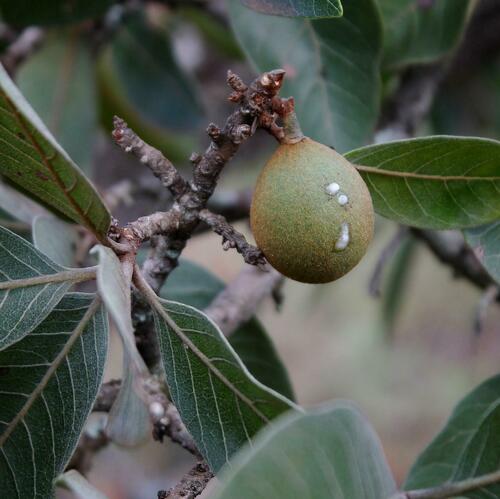
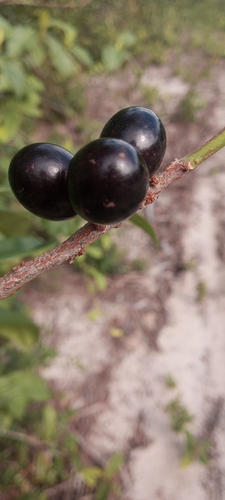
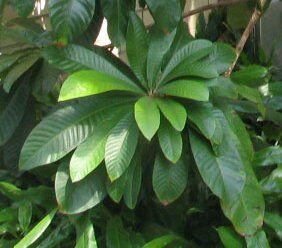
An evergreen tree. It grows 10-20 m tall. The branches are yellow and hairy. The leaf stalk is 2-7 mm long. The leaf blade is oval or sword shaped. Leaves are 5-12 cm long by 1.7-4 cm wide. They are papery with rust coloured hairs on both surfaces. The fruit are brown to purplish black. They are round but slightly flattened. The fruit are 5 ribbed and 1.5-3 cm across. They have between 1 and 5 seeds. The seeds are compressed and with a thick seed coat.
Edible Uses
The ripe fruit are eaten.
Traditional Uses
The ripe fruit are eaten.
This uses section is brief — help expand it
Medicinal Uses
The roots and leaves are used medicinally.
Distribution
A tropical plant. It grows in tropical and subtropical locations. They occur in mid altitude forests in Guangdong, Guangxi provinces in China. In Assam it grows to 1,000 m above sea level.
Where It Grows
Asia, Australia, China, Cambodia, India, Indochina, Indonesia, Laos, Malaysia, Myanmar, Northeastern India, SE Asia, Singapore, Sri Lanka, Thailand, Vietnam,
Cultivation
Plants are grown from seed. Seed should be planted fresh.
Other Information
It is a cultivated plant.
Notes
The roots and leaves are used medicinally. There are about 80-150 Chrysophyllum species. They are mostly in tropical America. There are 44 species in tropical America. Now Chrysophyllum roxburghii
Also Known As
Bon pitha, Jin ye shu, Thaibon biphang
References (7)
- Argent, G et al, nd, Manual of the Larger and More important non Dipterocarp Trees of Central Kalimantan Indonesia. Volume 2 Forest Research Institute, Samarinda, Indonesia. p 575
- Elliot, W.R., & Jones, D.L., 1984, Encyclopedia of Australian Plants suitable for cultivation. Vol 3. Lothian. p 37
- Flora China. Vol. 15 p 208 and Flora of China. www.eFloras.org
- Hazarika, T. K., et al, 2012, Studies on wild fruits of Mizoram, India used as ethno-medicines. Genetic Resources and Crop Evolution. Published on line 03 February, 2012
- Patiri, B. & Borah, A., 2007, Wild Edible Plants of Assam. Geethaki Publishers. p 77
Show all 7 references Hide references
- Townsend, K., 1994, Across the Top. Gardening with Australian Plants in the tropics. Society for Growing Australian Plants, Townsville Branch Inc. p 132
- Vink, Blumea 9: 32. 1958