Manilkara huberi
(Ducke) Chevalier
Black balata
iNaturalist· cc-by-nc
(c) Pierrot F., some rights reserved (CC BY-NC)
iNaturalist· cc-by-nc
(c) Pierrot F., some rights reserved (CC BY-NC)
iNaturalist· cc-by-nc
(c) Pierrot F., some rights reserved (CC BY-NC)
Summary
Source: WikipediaManilkara huberi, also known as masaranduba, níspero, and sapotilla, is a fruit bearing plant of the genus Manilkara of the family Sapotaceae.
Description
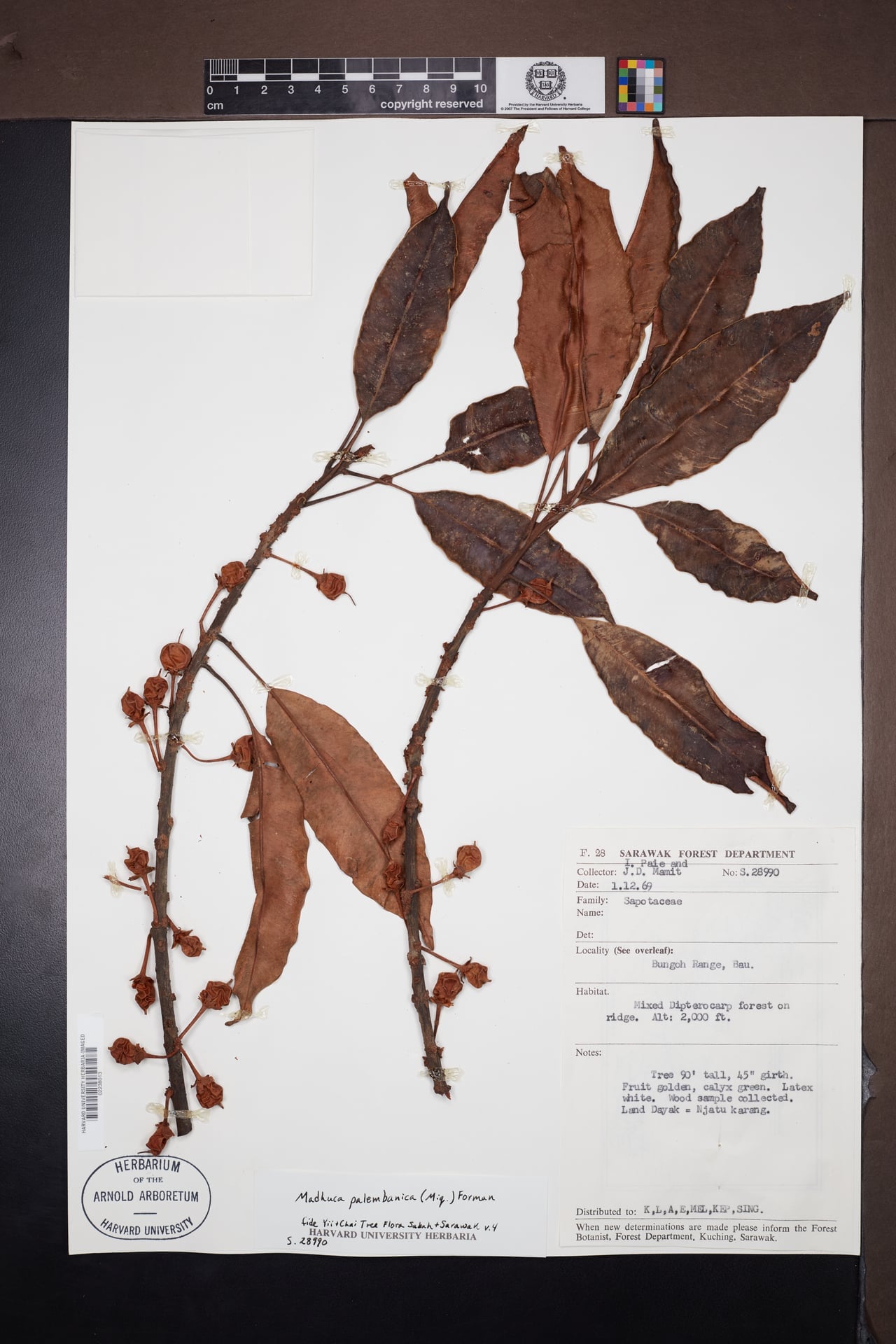
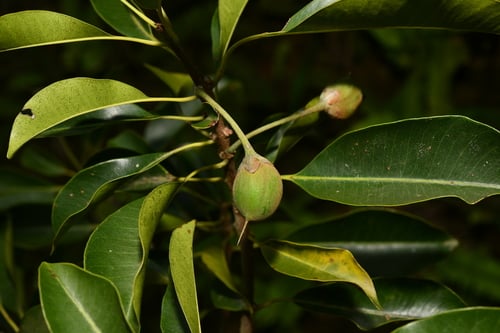
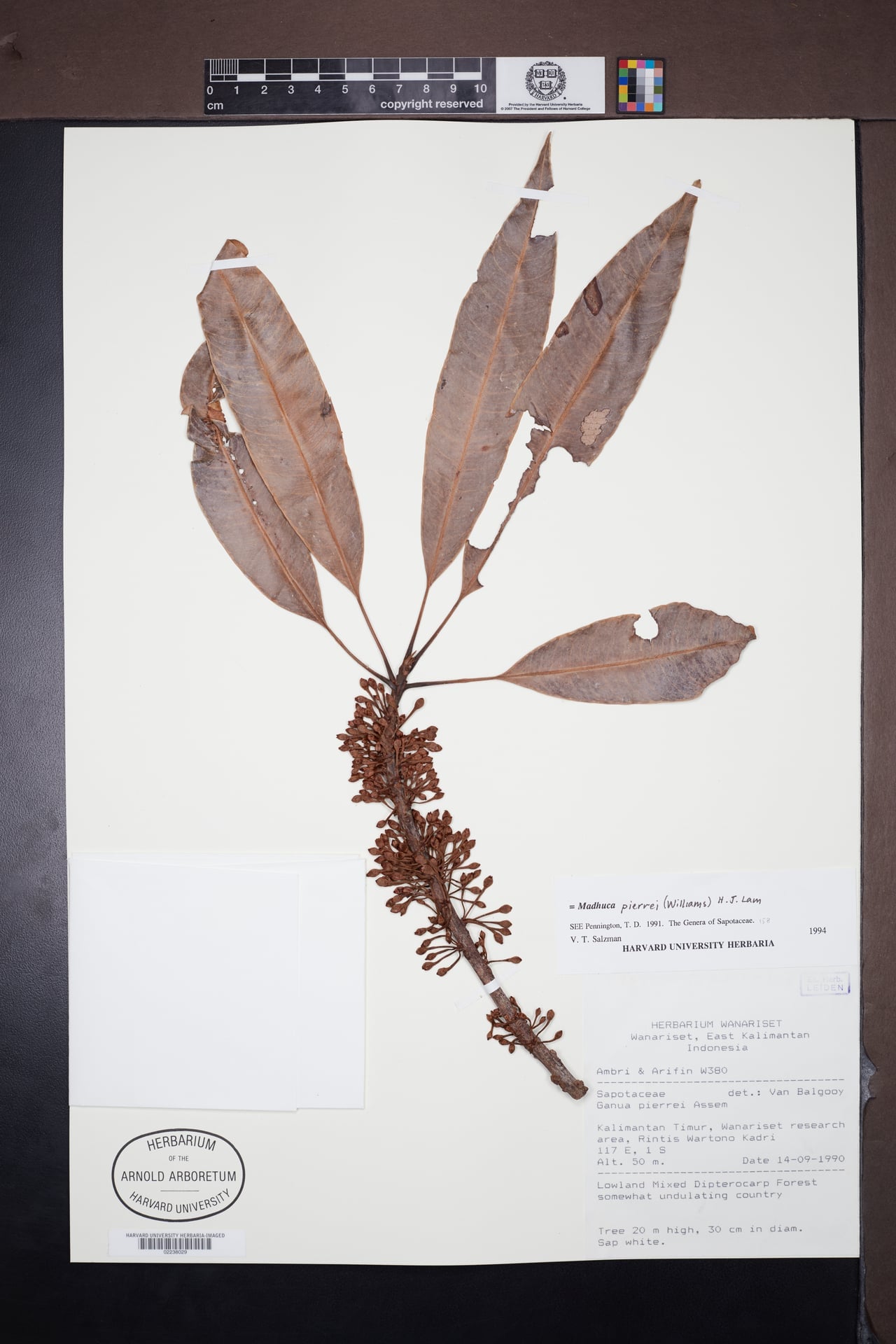
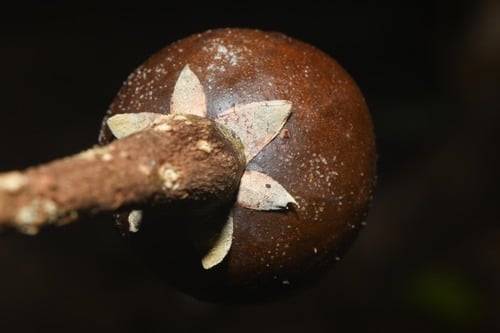
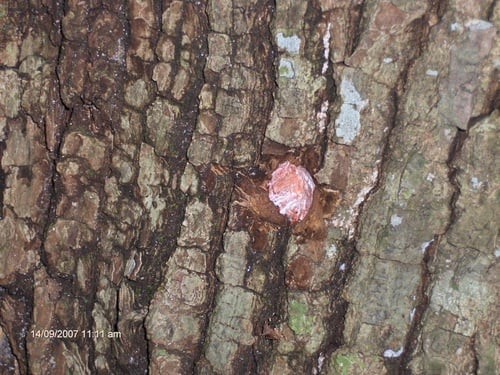
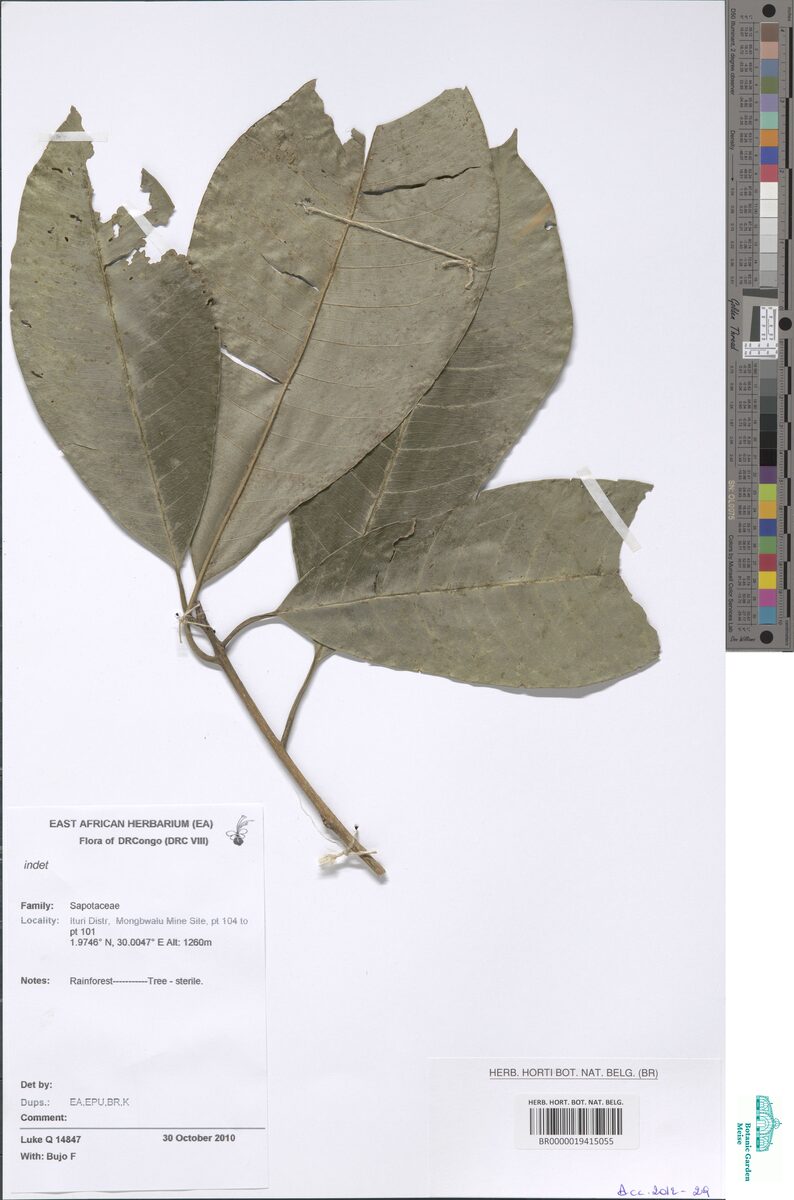
A large tree. It grows 50 m high. The trunk can be 2-3 m across. It has buttresses up to 2.5 m high. The young branches are dark brown and the tip has a shiny coat of resin. The bark is deeply cracked. The crown is rounded and widely spreading. The leaves are 15-23 cm long by 5-9 cm wide. They are oblong. There are 30-35 pairs of secondary veins. The leaf is pale yellow underneath. The leaf stalk is 3.5-6.5 cm long. There are 10-15 flowers in a group on branches from the one point. They are greenish-white. The fruit are 2.5-3 cm long by 2.5-2.8 cm wide. They are oval or rounded. The fruit are green or yellowish green when ripe.
Edible Uses
The fruit is eaten raw, offering a juicy, aromatic pulp with a sweet flavour. A drinkable milk exudes from the cut bark.
Traditional Uses
The milky sap is drinkable. The fruit is eaten raw.
This uses section is brief — help expand it
Medicinal Uses
No medicinal uses are known for this plant.
Distribution
A tropical plant. It grows in non flooded lowland rainforest. It can be up to 700 m altitude.
Where It Grows
Amazon, Brazil*, French Guiana, Guianas, Guyana, Mexico, South America, Suriname, Venezuela,
Cultivation
Plants are grown from seed. The ripe fruit are harvested and put into plastic bags to allow them to soften. The seeds are removed and washed under running water. Fresh seed are planted. They germinate in 4-8 weeks.
Propagation
Seed is best sown as soon as it is ripe in a well-drained seedbed in semi-shade. Germination generally takes 4–8 weeks, though germination rates are usually low.
Other Uses
The latex is a source of an inferior grade of balata in Guyana — a gum resembling rubber that is used to make gaskets, chewing gum, and similar products. The heartwood is dark red-brown with purplish shades, clearly demarcated from the 4–6cm wide band of whitish to pale brown sapwood. The wood is finely and uniformly textured, usually straight-grained, and is very hard, very heavy, tough, strong, and elastic. It is highly durable even in contact with soil, resisting fungi, dry wood borers, and termites, though susceptible to marine borers. It seasons slowly with a high risk of checking and distortion, and is poorly stable in service once dry. The wood has a fairly high blunting effect, making stellite-tipped and tungsten carbide tools advisable. Pre-boring is required for nailing and screwing; gluing is suitable for internal use only and requires care due to the wood's density. The timber is used for a wide range of internal and external applications including sculpture, tool handles, heavy industrial and commercial flooring, sliced veneer, stairs, furniture, shipbuilding, wood-framed houses, bridges, posts, stakes, sleepers, and heavy carpentry.
Other Information
The fruit are sold in local markets.
Notes
There are about 75 Manilkara species.
Synonyms
Also Known As
Basra-boletri, Basra-bortri, Chupon, Macaranduba, Maparajuba, Massarunduba, Massarunduba balata, Pulgo negro, Purguo, Macaranduba, Macaranduba-balata, Macaranduba-mansa, Zapote
References (10)
- Cavalcante, P.B. 1991. Frutas comestíveis da Amazônia. Edições CEJUP.
- Grandtner, M. M. & Chevrette, J., 2013, Dictionary of Trees, Volume 2: South America: Nomenclature, Taxonomy and Ecology. Academic Press p 380
- Kermath, B. M., et al, 2014, Food Plants in the Americas: A survey of the domesticated, cultivated and wild plants used for Human food in North, Central and South America and the Caribbean. On line draft. p 520
- Paz, F. S., et al, 2021, Edible Fruit Plant Species in the Amazon Forest Rely Mostly on Bees and Beetles as Pollinators. Journal of Economic Entomology, XX(XX), 2021, 1–13
- Lorenzi, H., 2002, Brazilian Trees. A Guide to the Identification and Cultivation of Brazilian Native Trees. Vol. 02 Nova Odessa, SP, Instituto Plantarum p 331
Show all 10 references Hide references
- Lorenzi, H., Bacher, L., Lacerda, M. & Sartori, S., 2006, Brazilian Fruits & Cultivated Exotics. Sao Paulo, Instituto Plantarum de Estuados da Flora Ltda. p 295
- Pennington, T.D., 1990, Sapotaceae in Flora Neotropica Monograph 52. New York Botanical Gardens. p 80
- Rev. Int. Bot. Appl. Agric. Trop. 12:276. 1932 (Standley, Trop. Woods 33:19. 1933)
- Segura, S., et al, 2018, The edible fruit species in Mexico. Genet Resour Crop Evol (2018) 65:1767–1793
- Van Roosmalen, M.G.M., & Garcia, O. M., 2000, Fruits of the Amazonian Forest. Part 2: Sapotaceae. Acta Amazonica 30(2): 187-290