Van-royena castanosperma
(C.T. White) Baehni
Saffron Boxwood, Yellow Plum, Poison Plum, Milky Plum
iNaturalist· cc-by-nc
(c) Rene, some rights reserved (CC BY-NC), uploaded by Rene
iNaturalist· cc-by-nc
(c) ella_rae, some rights reserved (CC BY-NC)
Description
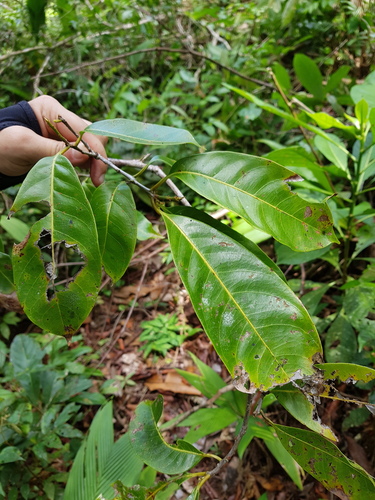
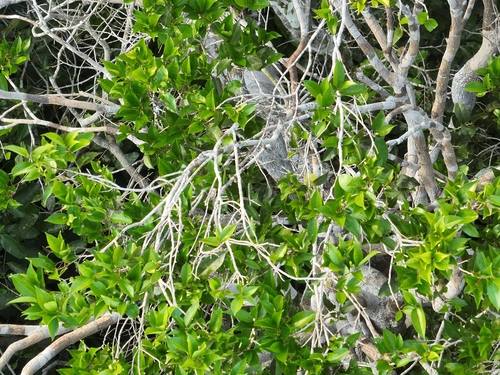
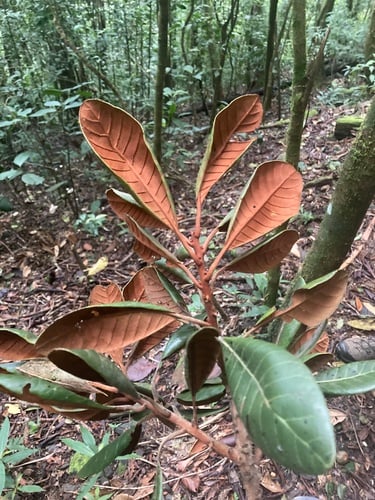
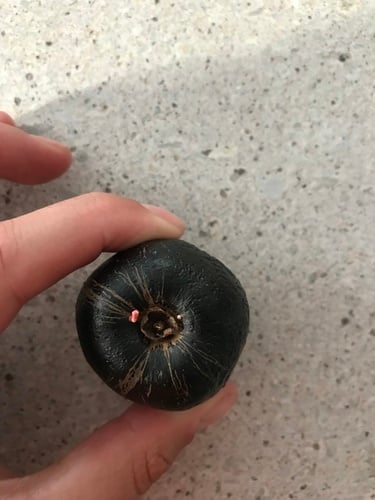
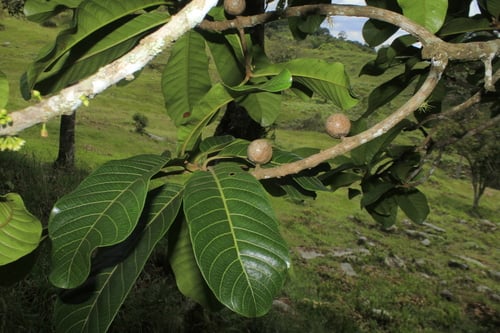
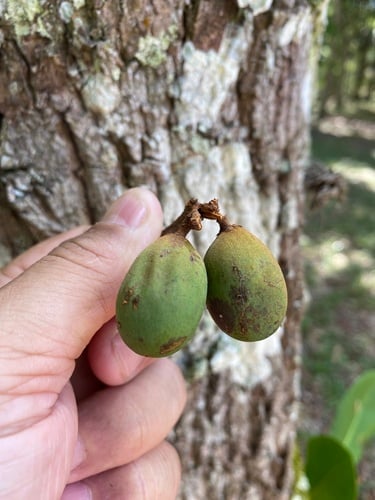
A medium sized tree. It grows 10-15 m high and spreads 5-8 m wide. The young growth has rusty hairs. The leaves are 2.5-12 cm long by 0.5-5 cm wide. They are sword shaped and thin and papery. They are green, and shiny on both surfaces. They taper to the base and have a drawn out tip. The flowers are about 1 cm long. They are cream. The stalks are 1-2 cm long. They occur in clusters of 2-3 in the axils of leaves. The fruit are berries 3-4 cm long by 1.5-4.5 cm wide. They are purple to black. There are 1-2 seeds. They are 4 cm long by 3 cm wide. They are brown.
Edible Uses
The fruit and seeds are edible.
Distribution
A tropical plant. It suits the tropics and subtropics. It grows in NE Queensland in Australia. It grows in rainforest at low and medium altitudes. In tropical Australia it grows from sea level to 1200 m altitude. It needs well drained soil.
Where It Grows
Australia*,
Cultivation
Plants can be grown from fresh seed.
Notes
There are about 150-320 Pouteria species. They grow in the tropics.
Synonyms
References (4)
- Cairns Botanical gardens sign (As Pouteria castanosperma)
- Cooper, W. and Cooper, W., 2004, Fruits of the Australian Tropical Rainforest. Nokomis Editions, Victoria, Australia. p 509
- Cribb, A.B. & J.W., 1976, Wild Food in Australia, Fontana. p 75
- Elliot, W.R., & Jones, D.L., 1997, Encyclopedia of Australian Plants suitable for cultivation. Vol 7. Lothian. p 449