Vitellaria paradoxa subsp. nilotica
(Kotschy) A. N. Henry, Chithra & N. C. Nair
Shea butter tree
iNaturalist· cc-by-nc
(c) Mohamed SAOUPKAI, some rights reserved (CC BY-NC), uploaded by Mohamed SAOUPKAI
iNaturalist· cc-by-nc-sa
(c) Enrico Castello, some rights reserved (CC BY-NC-SA), uploaded by Enrico Castello
iNaturalist· cc-by-nc
(c) ASSEDE Eméline S.P., some rights reserved (CC BY-NC), uploaded by ASSEDE Eméline S.P.
Description
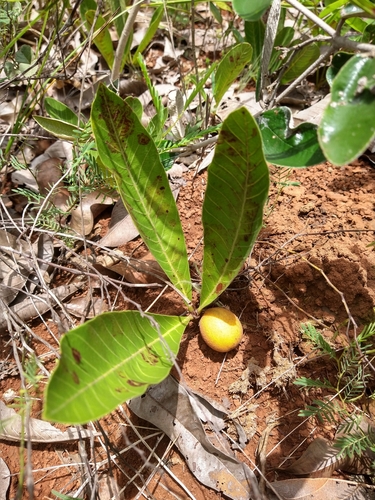
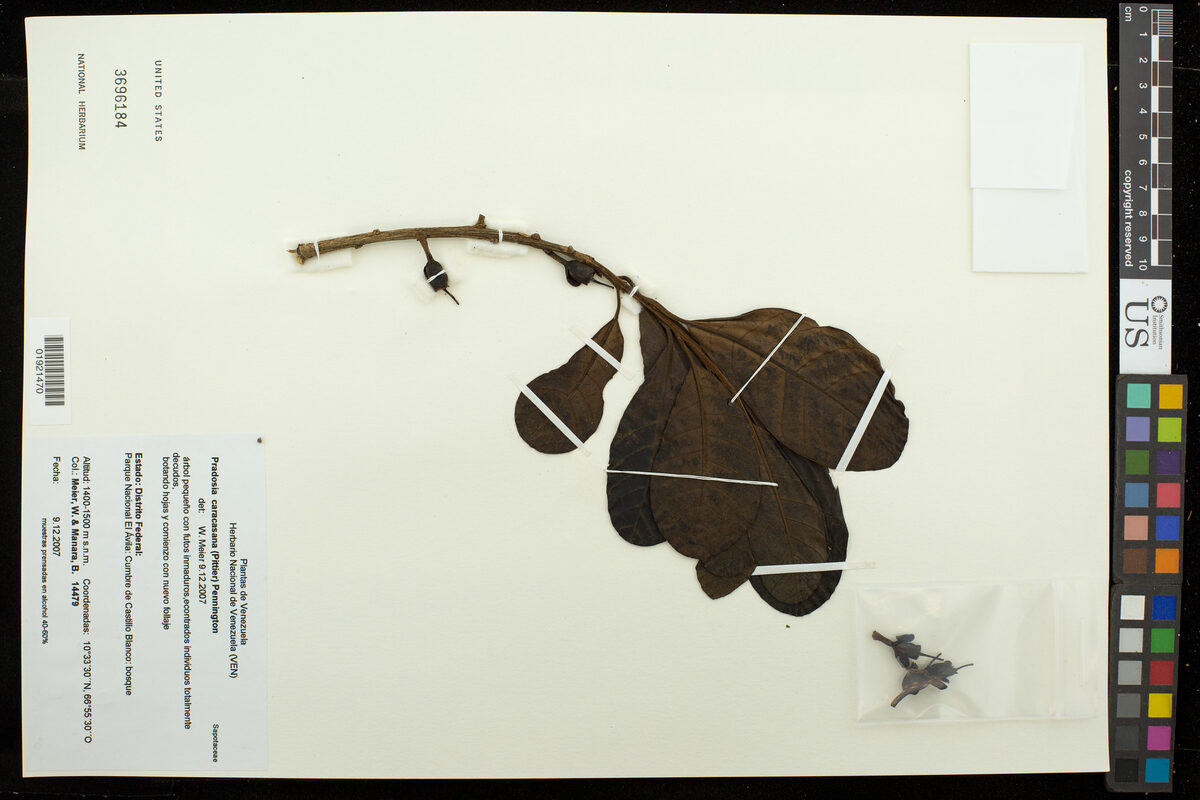
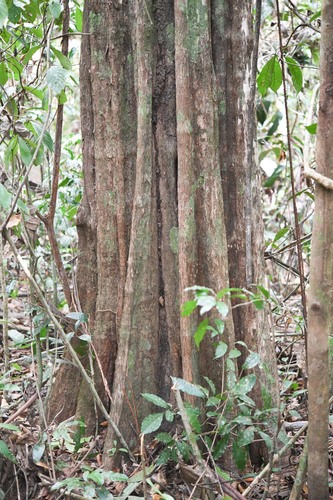
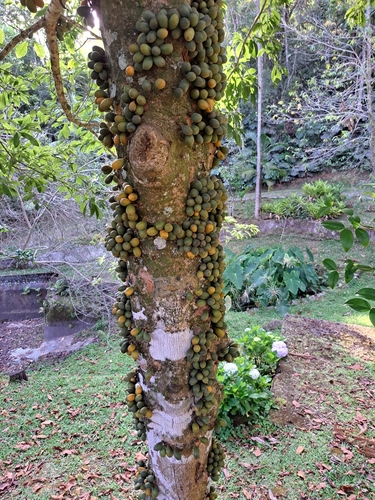
A medium sized tree. It loses its leaves during the year. It grows to 10-20 m tall. It has a thick trunk up to 4 m tall before branching. There are many branches and the crown is spreading. The branches are thick and they have many leaf scars. The bark is dark brown and thick and rough. It is chequered like a crocodile skin. The leaves are oblong and at the ends of branches. The leaves are 10-25 cm long. The tip is rounded and the leaf narrows to a long stalk. The leaf stalks are 10 cm long. The young leaves are reddish brown. The flowers are white and with a sweet scent. They occur in dense clusters in the axils of leaves. There are 8-10 sepals, petals and stamen. The fruit is egg shaped. It is about 4-6 cm long. The pulp is sweet and has one large seed embedded in it. The seed has a shiny brown coat and a long white scar on one side.
Edible Uses
Shea butter has many uses and may or may not be refined. In the West it is most commonly used as an emollient in cosmetics and is less commonly used in food. Throughout Africa it is used extensively for food, is a major source of dietary fat, and for medicinal purposes. In Ghana and Nigeria, shea butter is a major ingredient for making the African black soap. In the Lango and Acholi cultures, shea butter (known as Moo Yao in Luo), is used to enthrone clan and traditional leaders. Fat is traditionally extracted from the kernels by roasting and pressing them. The resulting liquid is boiled, sieved and cooled. The fat, shea butter, is used as food and for medicine and cosmetics. The edible protein-rich caterpillars of the moth Cirina butyrospermi which feed solely on its leaves are widely collected and eaten raw, dried or fried.
Traditional Uses
The seed can be used for food. The fruit kernel is used for shea butter.
This uses section is brief — help expand it
Distribution
A tropical plant. It is most common is savannah woodland where the rainfall is 1,000-3,000 mm a year. Trees will survive annual fires. They are also not damaged by termites.
Where It Grows
Africa, East Africa, South Sudan, Sudan, Uganda,
Cultivation
Because the seedlings have a long tap root it is best to sow them direct. The fruit can be collected in heaps and the flesh allowed to rot off over 3-4 weeks then dried to collect the seeds for planting. Seed should be then sown as fresh as possible.
Production
Trees take 30 years to mature. They can produce fruit in 15-25 years with good management. Shea butter is extracted from the seeds by roasting, grinding and then boiling the seeds.
Other Information
It is a major food in South Sudan.
Notes
Seeds contain 45-60 % oil. This becomes solid at temperatures less than 32°C. The oil can be used for cooking and in soap and margarine.
Synonyms
Also Known As
Ekunguru, Yaa, Yao
References (6)
- Cobley, L.S. (rev. Steele, W.M.) 2nd Ed., 1976, An Introduction to the Botany of Tropical Crops. Longmans. p 320 (As Butyrospermum)
- Grubben, G. J. H. and Denton, O. A. (eds), 2004, Plant Resources of Tropical Africa 2. Vegetables. PROTA, Wageningen, Netherlands. p 565 (As Butyrospermum)
- Jardin, C., 1970, List of Foods Used In Africa, FAO Nutrition Information Document Series No 2.p 32 (As Butyrospermum)
- Joseph, L. O. & Oyiki, C. O., 2000, Contribution of Wild Food Plants to the Scholi and Madi Food Basket. In Exploring the Potential of Indigenous and Wild Food Plants in Southern Sudan. USAID p 65
- Katende, A.B., Birnie, A & Tengnas B., 1995, Useful Trees and Shrubs for Uganda. Identification, Propagation and Management for Agricultural and Pastoral Communities. Technical handbook No 10. Regional Soil Conservation Unit, Nairobi, Kenya. p 140 (As Butyrospermum)
Show all 6 references Hide references
- Masters, T., 2021, Traditional food plants of the upper Aswa River catchment of northern Uganda—a cultural crossroads. Journal of Ethnobiology and Ethnomedicine (2021) 17:24