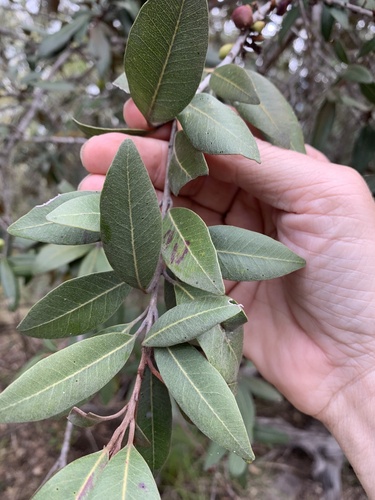
Palaquium formosanum
Hayata
Tai wan jiao mu
iNaturalist· cc0
no rights reserved, uploaded by 葉子
iNaturalist· cc0
no rights reserved, uploaded by 葉子
iNaturalist· cc-by-sa
(c) chen ying-hsiao, some rights reserved (CC BY-SA), uploaded by chen ying-hsiao
Description
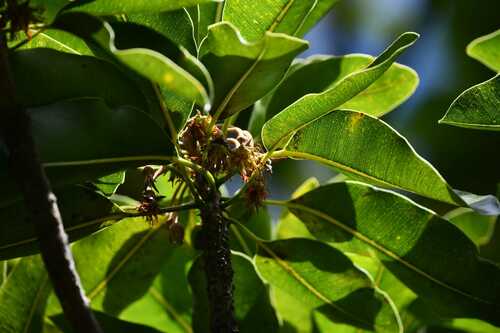
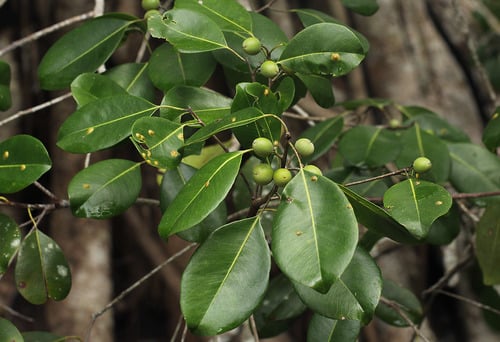
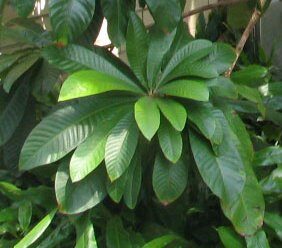
A tree often 5-7 m tall but it can grow up to 20 m tall. The bark is dark brown. The small branches have distinct leaf scars. The leaves are closely clustered at the ends of branches. The leaf stalk is about 1 cm long and the leaf blade is thick and leathery. The blade is 10-17 cm long by 4.5-7.5 cm wide. There are white hairs along the veins. The flowers can be either single or in clusters of 3-6 in the axils of leaves. The fruit is oval and 4-5 cm long by 1.5-2 cm wide. The seeds are long and thin and up to 3.5 cm long by 1 cm wide.
Edible Uses
The fruit are edible.
Traditional Uses
The fruit are edible.
This uses section is brief — help expand it
Distribution
A tropical plant. It grows in forest at low elevations.
Where It Grows
Asia, China, Pacific, Philippines, SE Asia, Taiwan,
Synonyms
References (3)
- Flora of China. Vol. 15 p 207
- J. Coll. Sci. Imp. Univ. Tokyo 30: 184. 1911.
- Kuo, W. H. J., (Ed.) Taiwan's Ethnobotanical Database (1900-2000), http://tk.agron.ntu.edu.tw/ethnobot/DB1.htm