Sideroxylon lycioides
L.
Shittamwood, Buskthorn Bumelia, Buckthorn bully
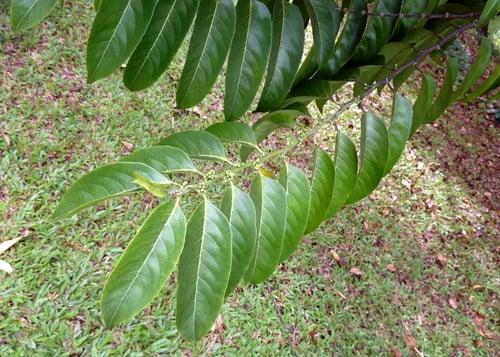
iNaturalist· cc-by-nc
(c) Mary Sullivan, some rights reserved (CC BY-NC)
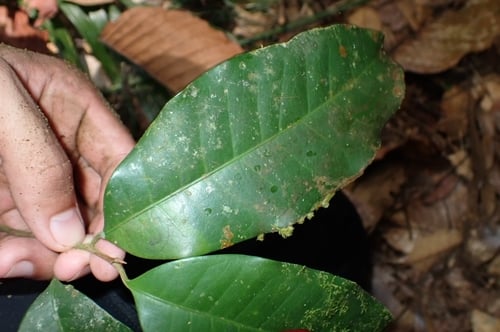
iNaturalist· cc-by-nc
(c) Mary Sullivan, some rights reserved (CC BY-NC)
iNaturalist· cc-by-nc
(c) Mary Sullivan, some rights reserved (CC BY-NC)
Summary
Source: WikipediaSideroxylon lycioides, the buckthorn bully, is a small tree in the family Sapotaceae. It is widely distributed in the southeastern United States from Texas to southeast Virginia. The fruit pulp is thin but edible and consumed by birds. Livestock browse the plant's foliage.
Description
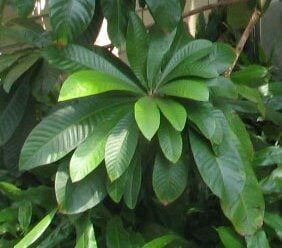
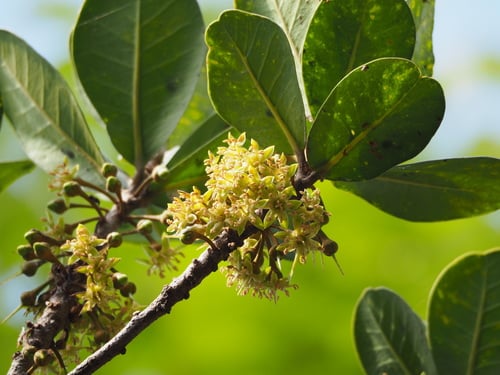
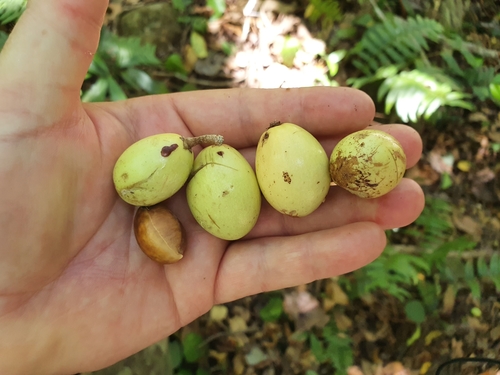
An evergreen shrub. It is shiny. It grows 6 m high. The crown is spreading and open. The trunk is 15 cm across. The bark is reddish brown and thin and smooth. The leaves are alternate or clustered on short side twigs. The leaves are pointed and 5-12 cm long by 1.2-3 cm wide. They do not have hairs. The leaves are sword shaped and widest beyond the middle. They taper to the base. They are shiny green above and paler underneath. The flowers are white and in clusters. They are 3 mm wide. They are bell shaped. The fruit are purple-black berries. They are 12 mm long. There is one large seed. The fruit pulp is edible but bitter.
Edible Uses
The fruit pulp is edible, though bitter.
Distribution
It grows along sandy creek banks and in drier forests. It grows up to 300 m altitude in the southern USA. It suits hardiness zones 6-10.
Where It Grows
North America, USA,
Notes
There are about 25 Bumelia species. The Bumelia may be merged with the Sideroxylon.
Synonyms
References (5)
- Etherington, K., & Imwold, D., (Eds), 2001, Botanica's Trees & Shrubs. The illustrated A-Z of over 8500 trees and shrubs. Random House, Australia. p 148 (As Bumelia lycioides)
- Little, E.L., 1980, National Audubon Society Field Guide to North American Trees. Alfred A. Knopf. p 631 (As Bumelia lycioides)
- Plants for a Future database, The Field, Penpol, Lostwithiel, Cornwall, PL22 0NG, UK. http://www.scs.leeds.ac.uk/pfaf/ (As Bumelia lycioides)
- Syn. pl. 1:237. 1805 (As Bumelia lycioides)
- USDA Plants Database