Drypetes mossambicensis
Hutch.
Sand drypetes, Lowveld drypetes, Lowveld iron plum
iNaturalist· cc-by-nc
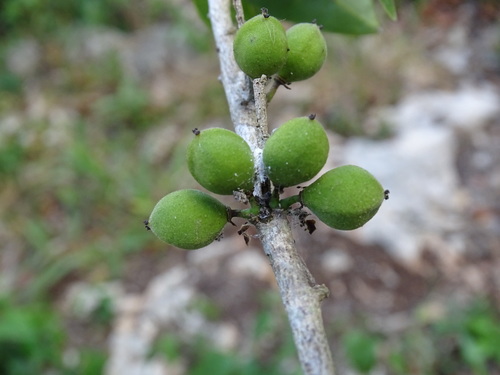
(c) graemewolfaard, some rights reserved (CC BY-NC), uploaded by graemewolfaard
iNaturalist· cc-by-nc
(c) Troos van der Merwe, some rights reserved (CC BY-NC)
Description
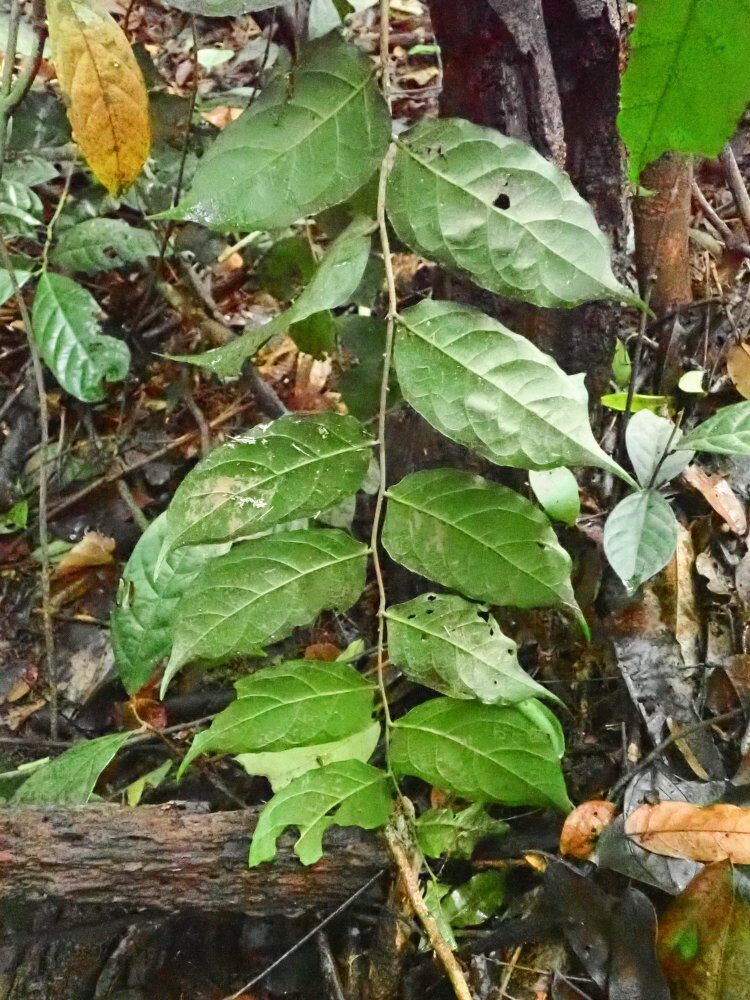
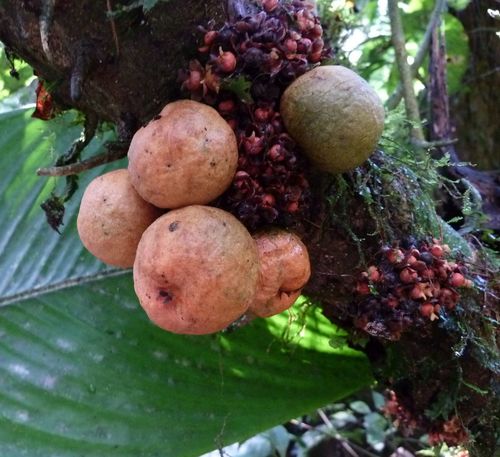
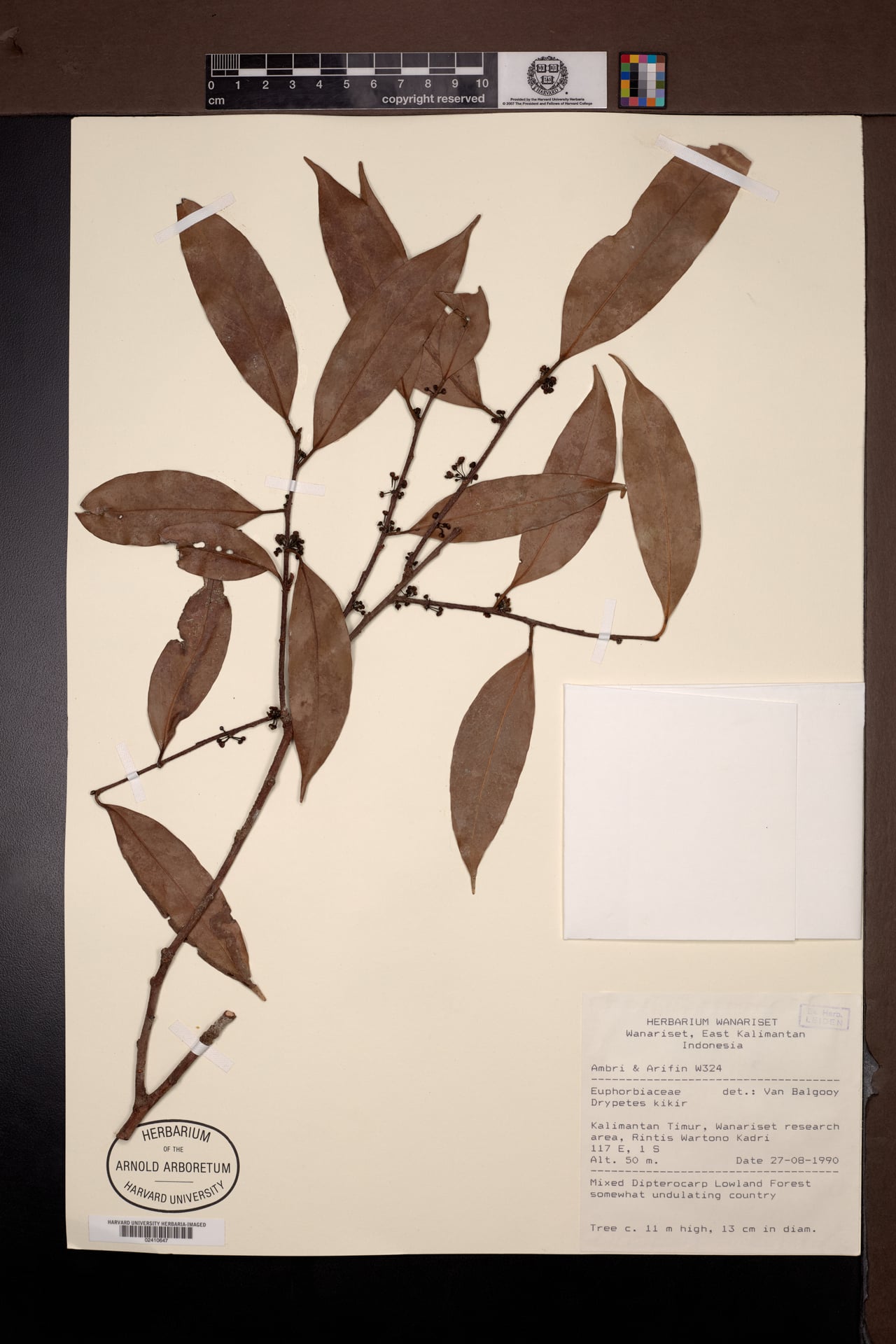
A medium sized tree. It grows 3-20 m high. The stem is whitish grey. The bark is cracked into small squares and sometimes flakes off. The leaves are dark shiny green. The leaves are oval and the base of the leaf is unequal. Leaves are 9 cm long by 1.3 cm wide. The flowers are small and green to yellow. They occur in clusters in the axils of the leaves. Male and female flowers are on different trees. The fruit is round and 1.3 cm long. The fruit is smooth.
Edible Uses
The round, smooth fruit are eaten raw and are popular.
Traditional Uses
The fruit are eaten raw.
This uses section is brief — help expand it
Distribution
A tropical plant. It grows in low altitude woodland and on rocky outcrops. It can be on termite mounds. It can grow in arid places. In Zimbabwe it grows up to 760 m above sea level.
Where It Grows
Africa, East Africa, Eswatini, Malawi, Mozambique, South Africa, Southern Africa, Swaziland, Zambia, Zimbabwe,
Other Information
The fruit are popular.
Notes
There are about 200 Drypetes species.
Also Known As
Changuare, Murocorre, Musyosyo, Water ironplum
References (11)
- Fowler, D. G., 2007, Zambian Plants: Their Vernacular Names and Uses. Kew. p 25
- Fox, F. W. & Young, M. E. N., 1982, Food from the Veld. Delta Books. p 197
- Long, C., 2005, Swaziland's Flora - siSwati names and Uses http://www.sntc.org.sz/flora/
- Palmer & Pitman, 1972,
- Peters, C. R., O'Brien, E. M., and Drummond, R.B., 1992, Edible Wild plants of Sub-saharan Africa. Kew. p 110
Show all 11 references Hide references
- Royal Botanic Gardens, Kew (1999). Survey of Economic Plants for Arid and Semi-Arid Lands (SEPASAL) database. Published on the Internet; http://www.rbgkew.org.uk/ceb/sepasal/internet [Accessed 16th April 2011]
- Ruiters-Welcome, A. K., 2019, Food plants of southern Africa. Ph.D. thesis. Univ. of Johannesburg p 93
- Schmidt, E., Lotter, M., & McCleland, W., 2007, Trees and shrubs of Mpumalanga and Kruger National Park. Jacana Media p 276
- Swaziland's Flora Database http://www.sntc.org.sz/flora
- Welcome, A. K. & Van Wyk, B.-E., 2019, An inventory and analysis of the food plants of southern Africa. South African Journal of Botany 122 (2019) 136–179
- World Checklist of Useful Plant Species 2020. Royal Botanic Gardens, Kew