Drypetes lasiogyna
(F. Muell.) Pax & Hoffm
Grey Bark, Yellow Tulip
wikimedia· cc-by
Wikimedia Commons - John Braggins
wikimedia· cc-by
Wikimedia Commons - John Braggins
Description
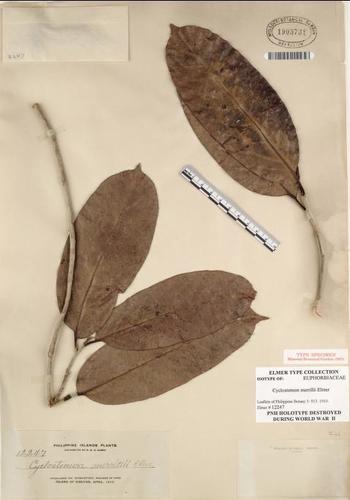
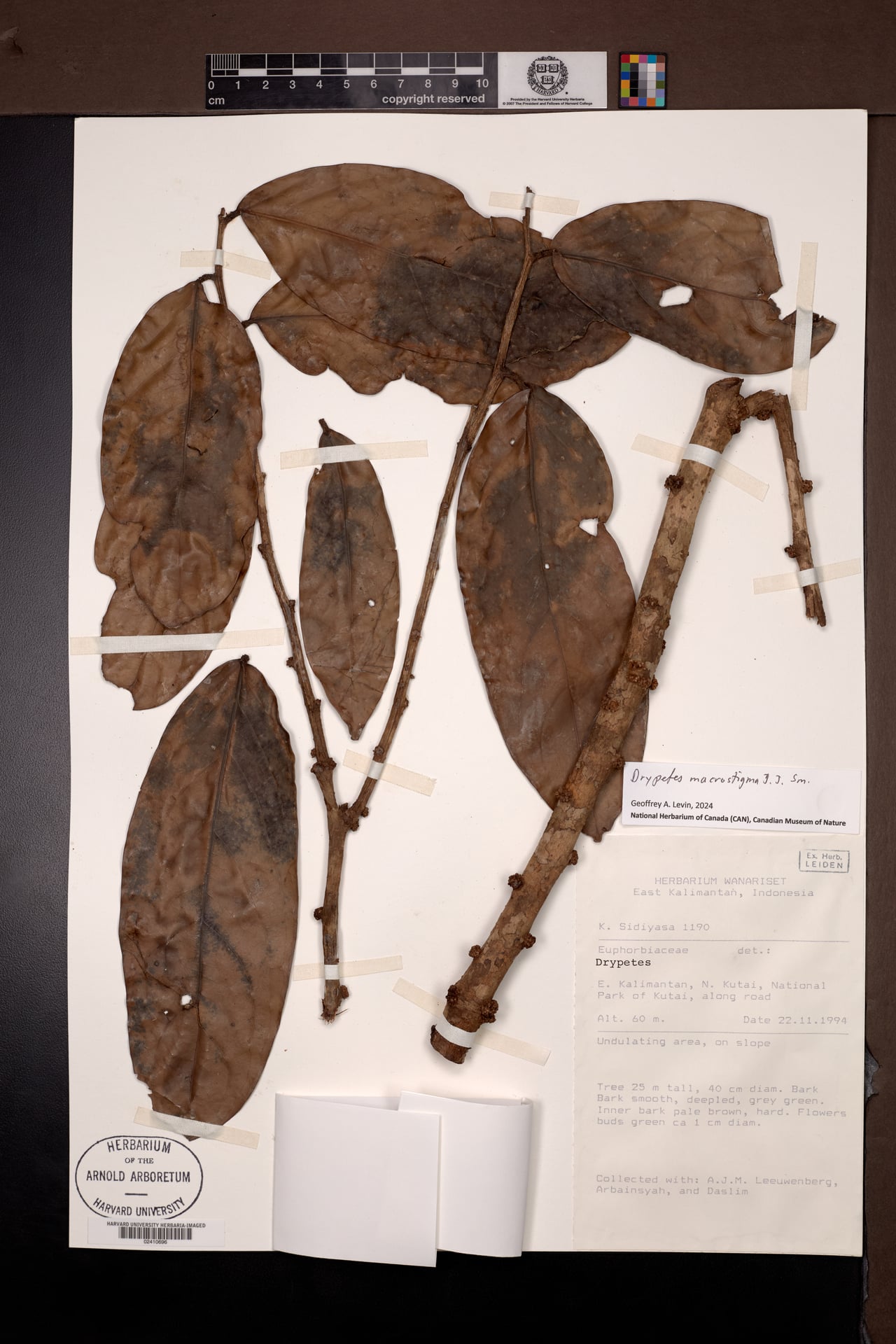
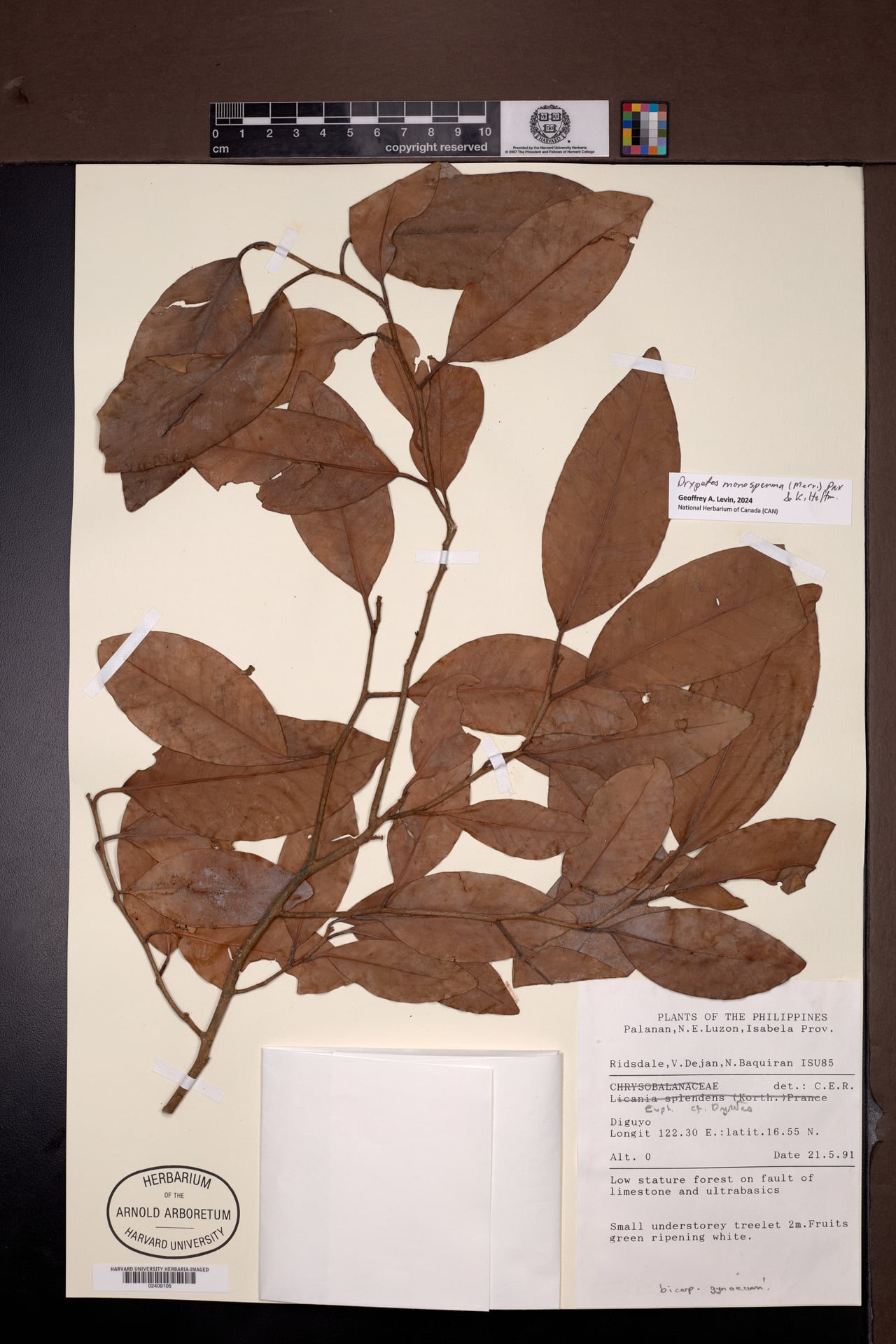
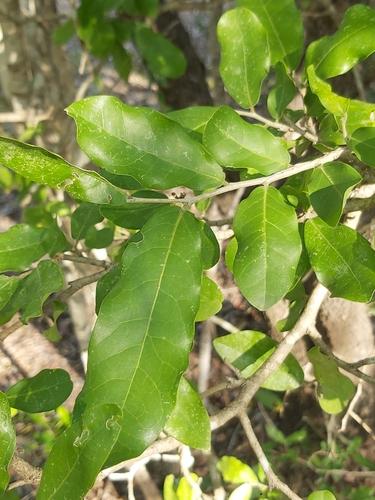
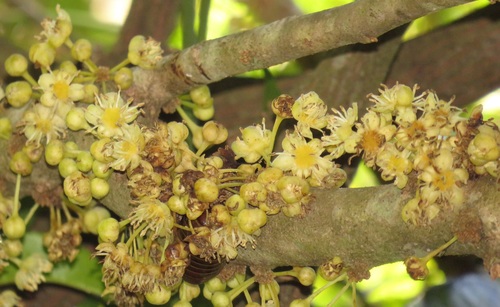
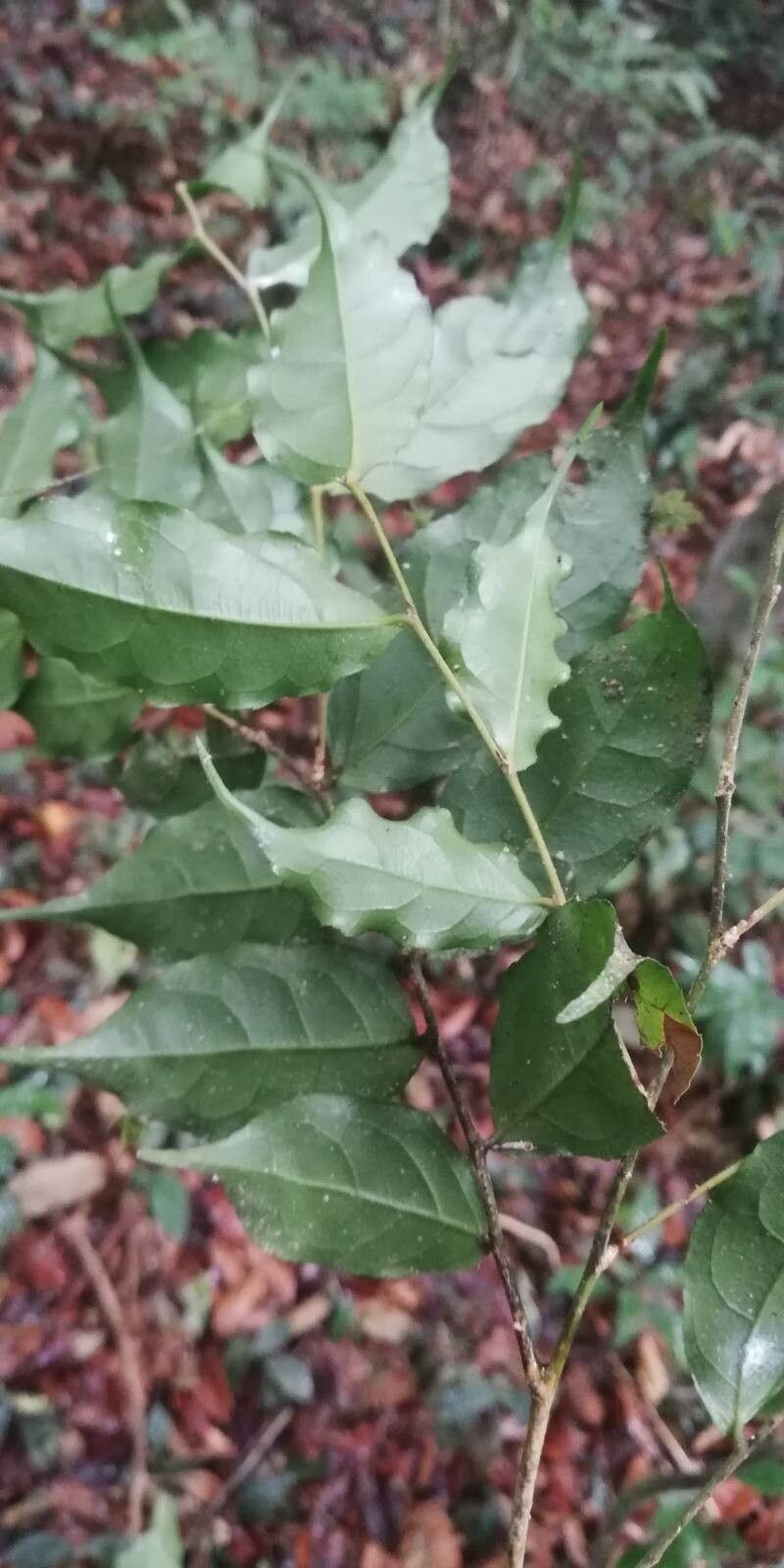
A small to medium sized tree. The trunk is straight. There are often flanges or buttresses at the base. The bark is grey or brown and scaly. The crown is dense and dark green producing shade and shelter. The leaves are 2-10 cm long by 1-3 cm wide. They are bright green and glossy. The edges of the leaves are wavy and can be toothed. The young leaves have sharp teeth. The flowers are single, yellow and 0.4 cm across. They can occur in clusters in the axils of leaves. Male and female flowers occur on separate trees. The female flowers tend to have longer stalks. The fruit is 1-2 cm long and bright red with yellow flesh around a seed.
Edible Uses
The fruit are eaten raw. The leaves are used as a cooking herb to improve the flavour of food.
Traditional Uses
The fruit are eaten raw. The leaves are used as a cooking herb to improve the flavour of food.
This uses section is brief — help expand it
Medicinal Uses
The leaves are used as a cooking herb to improve the flavour of food.
Distribution
A tropical plant. It grows in coastal rainforests. They need protection from hot sun when young. They suit well drained acid soils.
Where It Grows
Australia*, Pacific, Papua New Guinea, PNG,
Cultivation
Plants are grown from seed which must be sown fresh. Male and female trees are needed for fruit.
Production
In Australia, fruit mature February to April.
Notes
There are about 200 Drypetes species.
Synonyms
Also Known As
Anwurrbbu, Yimungkawawurdarra
References (17)
- Brock, J., 1993, Native Plants of Northern Australia, Reed. p 144
- Cherikoff V. & Isaacs, J., The Bush Food Handbook. How to gather, grow, process and cook Australian Wild Foods. Ti Tree Press, Australia p 144, 199
- Cherikoff V. & Isaacs, J., The Bush Food Handbook. How to gather, grow, process and cook Australian Wild Foods. Ti Tree Press, Australia p 144 (As Drypetes australasica)
- Cribb, A.B. & J.W., 1976, Wild Food in Australia, Fontana. p 75 (As Drypetes australasica)
- Cribb, A.B. & J.W., 1976, Wild Food in Australia, Fontana. p 75
Show all 17 references Hide references
- Elliot, W.R., & Jones, D.L., 1984, Encyclopedia of Australian Plants suitable for cultivation. Vol 3. Lothian. p 372
- Elliot, W.R., & Jones, D.L., 1984, Encyclopedia of Australian Plants suitable for cultivation. Vol 3. Lothian. p 371 (As Drypetes australasica)
- Garde, M., et al, 2003, A Preliminary List of Kundedjnjenghmi Plant Names. Northern Land Council. (Arnhem Land, Australia)
- Hibbert, M., 2002, The Aussie Plant Finder 2002, Florilegium. p 90
- Lazarides, M. & Hince, B., 1993, Handbook of Economic Plants of Australia, CSIRO. p 85
- Levitt, D., 1981, Plants and people. Aboriginal uses of plants on Groote Eylandt. Australian Institute of Aboriginal Studies, Canberra. p 94
- Smith, N. M., 1991, Ethnobotanical Field Notes from the Northern Territory, Australia, J. Adelaide Bot. Gard. 14(1): 1-65
- Townsend, K., 1994, Across the Top. Gardening with Australian Plants in the tropics. Society for Growing Australian Plants, Townsville Branch Inc. p 170
- Wheeler, J.R.(ed.), 1992, Flora of the Kimberley Region. CALM, Western Australian Herbarium, p 599
- Wightman, G. & Andrews, M., 1991, Bush Tucker Identikit. Common Native Food Plants of Australia’s top end. Conservation Commission Northern Territory. p 10
- Wightman, G. M. & Andrews, M.R., 1989, Plants of Northern Territory Monsoon Vine Forests (Vol 1). Conservation Commission of Northern Territory. p 38
- Williams, J.B., Harden, G.J., and McDonald, W.J.F., 1984, Trees and shrubs in rainforests of New South Wales and Southern Queensland. Univ. of New England, Armidale. p 75, 100 (As Drypetes australasica)