Grewia sclerophylla
Roxb. ex G. Don
wikimedia· cc0
Wikimedia Commons - Basu, Baman Das; Kirtikar, Kanhoba Ranchoddas
Description
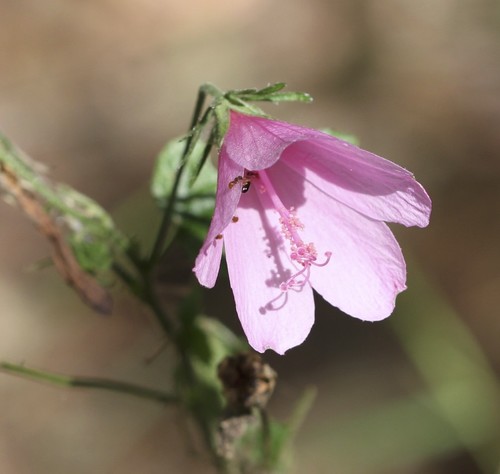
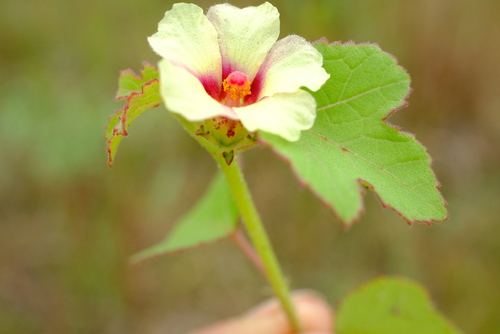
A shrub. It grow to 2 m high. The young parts are covered with short hairs. The leaves have stalks. The leaves are 11-20 cm long by 6-12.5 cm wide. They are oval and with irregular teeth. There are often glands at the tip. The base is rounded and with 3 veins. The flowers are white. The fruit is fleshy and have a hard covering over the seed. It is round and hairy.
Edible Uses
The ripe fruit are eaten raw or used to make drinks.
Traditional Uses
The ripe fruit are eaten raw. They are also used for drinks.
This uses section is brief — help expand it
Medicinal Uses
Grewia species are valued in many cultures for their medicinal virtues. The main medicinal action appears to come from the mucilage that is found in the leaves, stems and roots, which has been shown to have soothing and healing properties. Taken internally it is often used as a remedy for diarrhoea and dysentery, for example, whilst externally it is applied to wounds, cuts, ulcers, irritations etc. The plant can be taken as a simple infusion or decoction, or it can be applied topically as a poultice of the plant, or the mucilage can be extracted from the plant, if required, by maceration and then decoction. The roots are prescribed in cough and irritable conditions of intestine and bladder, while its decoction is used as an emollient enema. An alcoholic extract of aerial parts demonstrated anticancer activity.
Distribution
A tropical plant. In Nepal it grows between 400-1500 m altitude. It usually grows in grassland.
Where It Grows
Asia, Bangladesh, Himalayas, India, Indochina, Myanmar, Nepal, Northeastern India, Pakistan, SE Asia, Sri Lanka,
Cultivation
Plants are grown from seed.
Propagation
Seed - we have no specific information for this species but seed of this genus is generally best sown as soon as it is ripe. Stored seed has a hard seedcoat and may benefit from scarification before sowing in order to speed up and improve germination. This can usually be done by pouring a small amount of nearly boiling water on the seeds (being careful not to cook them!), allowing the mix to cool somewhat and then leaving it in a warm place to soak for 12 - 24 hours. Sow the seeds in situ or in a nursery seedbed or trays - do not allow the compost to become dry. Germination and early growth are usually quite quick. Cuttings - best taken with a heel.
Other Uses
A fibre obtained from the bark is used for making ropes and cordage.
Production
In NE India plants flower and fruit May to September.
Notes
There are about 200 Grewia species. They are mostly tropical. The fruit of most may be edible. These were in the Sparrmanniaceae and the Tiliaceae.
Synonyms
Also Known As
Bankajana, Bipu bum tha, Dapher, Dhaman, Farsa, Gaphri, Gurbheli, Jogghaman, Kattukkadali, Pandi, Phalsa, Pharsia, Pharso, Phet-shat, Sithagathalu, Taglar
References (16)
- Ambasta, S.P. (Ed.), 2000, The Useful Plants of India. CSIR India. p 249
- Avinash, B. K., Kumar, R., et al, 2013, Ethnoboptany of Tharus of Dudhwa National Park, India. Mintage journal of Pharmaceutical & Medical Science 6-11
- Dangol, D. R. et al, 2017, Wild Edible Plants in Nepal. Proceedings of 2nd National Workshop on CUAOGR, 2017.
- Gautam, R. S., et al, 2020, Wild Edible Fruits of Nepal. Int. J. Appl. Sci. Biotechnol. Vol 8(3): 289-304
- Gen. hist. 1:550. 1831
Show all 16 references Hide references
- Hedrick, U.P., 1919, (Ed.), Sturtevant's edible plants of the world. p 334 (As Grewia scabrophylla)
- Jadhav, R., et al, 2015, Forest Foods of Northern Western Ghats: Mode of Consumption, Nutrition and Availability. Asian Agri-History Vol. 19, No. 4: 293-317
- Jeeva, S., 2009, Horticultural potential of wild edible fruits used by the Khasi tribes of Meghalaya. Journal or Horticulture and Forestry Vol. 1(9) pp. 182-192
- Kiran, K. C., et al, 2019, Diversity and Seasonal Availability of Potential Wild Edible Plants from Vidarbha Region of Maharashtra State, India. Int.J.Curr.Microbiol.App.Sci (2019) 8(2): 1434-1446
- Manandhar, N.P., 2002, Plants and People of Nepal. Timber Press. Portland, Oregon. p 252
- Pasha, M. K. & Uddin, S. B., 2019, Minor Edible Fruits of Bangladesh. Bangladesh J. Plant Taxon. 26(2): 299–313
- Patiri, B. & Borah, A., 2007, Wild Edible Plants of Assam. Geethaki Publishers. p 18
- Prabha, Y. P., et al, 2010, Documentation of Wild Edible Plants of Melghat Forest, Dist. Amravati, Maharashtra State, India. Ethnobotanical Leaflets 14: 751-58, 2010.
- Sawian, J. T., et al, 2007, Wild edible plants of Meghalaya, North-east India. Natural Product Radiance Vol. 6(5): p 418
- Singh, H.B., Arora R.K.,1978, Wild edible Plants of India. Indian Council of Agricultural Research, New Delhi. p 62
- Upreti, K., et al, 2010, Diversity and Distribution of Wild Edible Fruit Plants of Uttarakhand. Bioversity Potentials of the Himalaya. p 174