Milicia excelsa
(Welw.) C. C. Berg
African teak
iNaturalist· cc-by-nc
(c) David Bygott, some rights reserved (CC BY-NC), uploaded by David Bygott
iNaturalist· cc-by-nc
(c) Stephen Ssemwaka, some rights reserved (CC BY-NC)
iNaturalist· cc-by-nc-nd
(c) Joachim Louis, some rights reserved (CC BY-NC-ND), uploaded by Joachim Louis
Summary
Source: WikipediaMilicia excelsa is a tree species from the genus Milicia of the family Moraceae. Distributed across tropical Central Africa, it is one of two species (the other being Milicia regia) yielding timber commonly known as ọjị, African teak, iroko, intule, kambala, moreira, mvule, odum and tule. The tree has several medicinal applications and is considered sacred in parts of West Africa. It is currently listed as "near-threatened" by the International Union for Conservation of Nature.
Description
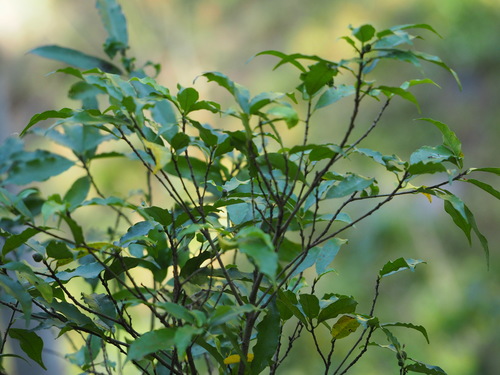
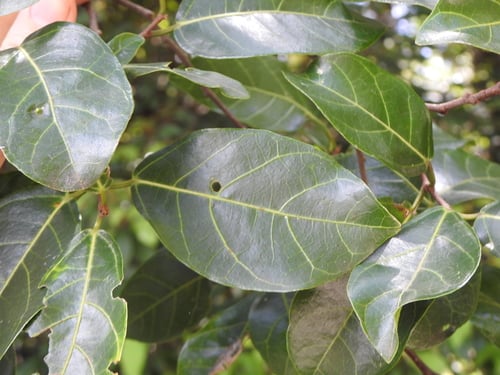
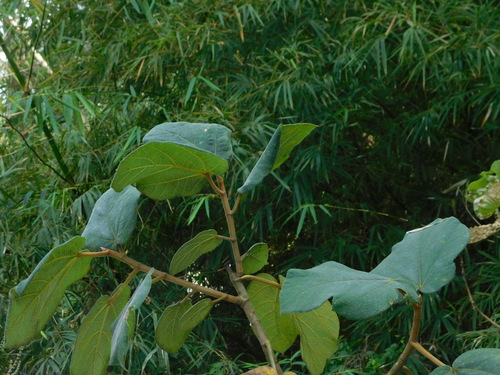
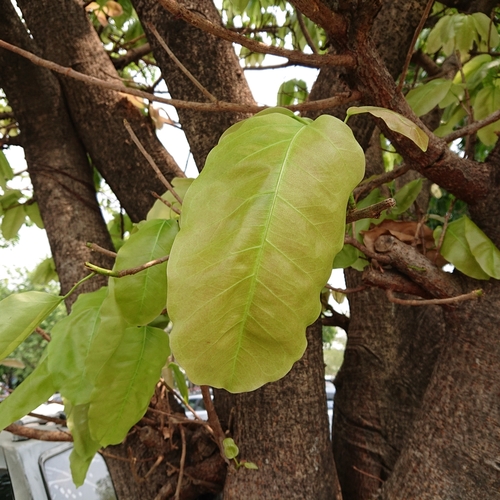
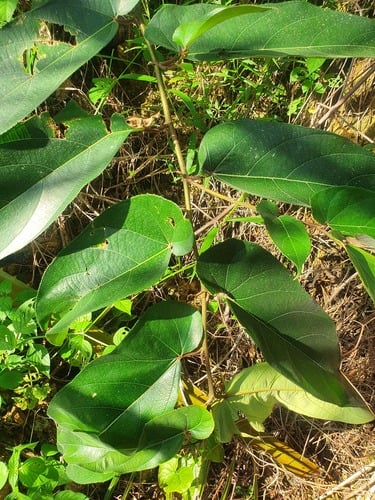
A large tree. It grows to 50 m tall. The bark is pale whitish grey. It is rough and scaly. It has buttresses. The trunk is straight. The leaves are simple and alternate. They are large and oblong. They are 12-18 cm long by 6.5-9.5 cm wide. They are green on top and paler and finely hairy underneath. The old leaves become bright yellow. The base of the leaf is lobed. The edges are wavy. The male and female flowers occur separately on separate trees. The male spike is long and slender. It is 6-14 cm long by 0.5 cm wide. The flowers are white. The female spikes are short and thick. They are 2-3 cm long by 1 cm wide. They are greenish. The fruit is a small nutlet. It has fleshy lobes around it. These occur close together like a mulberry.
Edible Uses
Young leaves are edible when cooked. The ripe fruits are edible and the fruit juice is used as a flavouring. The fruit is green, wrinkled, and fleshy, resembling a fat green caterpillar; it grows up to 7.5cm long and 2.5cm wide.
Traditional Uses
The ripe fruit are eaten. The fruit juice is used for flavouring. The cooked young leaves are eaten. They are used in soup.
This uses section is brief — help expand it
Medicinal Uses
African teak is widely used in African traditional medicine. Research has shown that chlorophorin, a phenolic compound in the plant, inhibits melanin biosynthesis, and its more stable derivative hexahydrochlorophorin shows potential for use in skin-whitening agents and for treating pigmentation disorders. Two phenolic compounds, chlorophorin and iroko, have shown in-vitro anti-amoebic activity. A methanol extract of the stem bark has demonstrated in-vivo anti-inflammatory properties. A root decoction is taken to treat female sterility. A decoction of the root and stem bark is used as an aphrodisiac. The bark is aphrodisiac, galactagogue, purgative, and tonic, used for cough, asthma, heart trouble, lumbago, spleen pain, stomach pain, abdominal pain, oedema, ascites, dysmenorrhoea, gonorrhoea, general fatigue, rheumatism, and sprains. Bark preparations applied externally treat scabies, wounds, hair loss, fever, venereal diseases, and sprains, and are also used as an enema for piles, diarrhoea, and dysentery. The latex is considered galactagogue and is taken internally for stomach problems, hypertension, tumours, and throat obstructions; externally it is applied to burns, wounds, sores, eczema, and other skin problems. The leaves are galactagogue; they are eaten to treat insanity and a leaf decoction is taken for gallstones. Externally, leaf preparations treat snakebites and fever, and are used as eye drops for filariasis.
Known Hazards
The wood and sawdust may cause dermatitis, irritation to nose and throat, and asthmatic reactions, due to the presence of the phenol chlorophorin.
Distribution
A tropical plant. It grows in low altitude evergreen forest. It grows in the transitional areas between dense forest and grassland. It can grow in a wide range of conditions in tropical regions. It can grow in arid places. in Zimbabwe it grows between 300-500 m above sea level. In Nigeria it is recorded up to 1,360 m above sea level. It suits hardiness zones 11-12.
Where It Grows
Africa*, Angola, Asia, Benin, Burkina Faso, Burundi, Cameroon, Central Africa, Central African Republic, CAR, Congo DR, Congo R, Côte d'Ivoire, East Africa, Equatorial Guinea, Ethiopia, Gabon, Ghana, Guinea-Bissau, India, Ivory Coast, Kenya, Liberia, Malawi, Mozambique, Nigeria, Rwanda, Sao Tome and Principe, Sierra Leone, Southern Africa, Sudan, Tanzania, Togo, Uganda, West Africa, Zambia, Zimbabwe,
Cultivation
Plants are grown by fresh seeds. It takes 2-3 weeks and needs light. The fruit are soaked for 6 hours in water and then the seeds squeezed out.
Propagation
Seed can be stored at room temperature for at least 12 months. Fresh seed typically germinates at rates of 90% or more within 2–4 weeks. Sow in a seedbed and transplant to pots or nursery beds 3 weeks after germination. Grow seedlings under shade to limit attacks by Phytolyma spp. After about 4 months the seedlings will be around 30cm tall and ready for field planting. Young plants transplant well. Stem cuttings can be taken from 1- and 2-year-old trees; cuttings from mature trees should come from coppice shoots. Root cuttings and grafting are also viable methods.
Other Uses
Mature leaves have been used as sandpaper. The bark is used for dyeing leather and cloth and for making house roofing. Bark from young trees has been used to make loincloths. The heartwood is pale yellow, darkening on exposure to yellowish, greenish, or sometimes chocolate brown, clearly demarcated from a 50–75mm wide band of yellowish-white sapwood. The grain is interlocked with a medium to coarse, mottled texture. The wood is somewhat greasy and odourless, of medium weight, moderately hard, and durable, being resistant to fungi, dry wood borers, and termites. It generally works well with hand and machine tools, though interlocked grain can hamper sawing and planing, and hard calcium carbonate deposits known as 'iroko stones' can blunt cutting edges. Tearing in planing can be avoided by using cutting angles of 15° or less. The wood has good nailing, screwing, mortising, gluing, and turning properties and finishes well, though filler is needed. It contains the stilbene derivative chlorophorin, which prevents oil-based paints from drying and corrodes metals in contact with it; steam-bending properties are moderate. It is used for construction, shipbuilding, marine carpentry, sleepers, sluice gates, framework, trucks, draining boards, joinery, stairs, doors, frames, garden furniture, cabinet work, panelling, flooring, and decorative profile boards. Additional uses include carving, domestic utensils, musical instruments, and toys. Its resistance to acids and bases makes it suitable for food and chemical tanks and barrels and for laboratory benches. It is used as sliced veneer but rarely as rotary veneer, and serves as firewood and for charcoal production. The tree also supports soil improvement through leaf mulch and soil conservation, and as a natural pioneer species it is a candidate for reforestation projects restoring native woodland.
Production
It grows quickly.
Notes
There are 2 Milicia species. They occur in tropical Africa. It is an important timber tree.
Synonyms
Also Known As
Abeng, Ala, Bang, Bangi, Bangui, Diedie, Iroko, Kambala, Leke, Mucuco, Murritulula, Muule, Mvule, Ngunde, Nkamba, Nkambala, Odum, Tule, Uloko
References (26)
- Abbiw, D.K., 1990, Useful Plants of Ghana. West African uses of wild and cultivated plants. Intermediate Technology Publications and the Royal Botanic Gardens, Kew. p 41
- Alyegba, S. S. et al, 2013, Ethnobotanical Survey of Edible Wild Plants in Tiv Communities of Benue State, Nigeria. Journal of Natural Sciences Research. Vol.3, No.7
- Ambasta, S.P. (Ed.), 2000, The Useful Plants of India. CSIR India. p 120 (As Chlorophora excelsa)
- Babalola, F. D., Borokini, T. I. and Onefeli, A. O., 2013, Socio-Economic Benefits of Iroko Trees (Milicia excelsa (Welw.) C.C. Berg) in Ibadan Metropolis, Oyo State, Nigeria, International Journal of African and Asian Studies - An Open Access International Journal Vol.1, pp. 11-13.
- Bull. Jard. Bot. Belg. 52:227. 1982
Show all 26 references Hide references
- Codjia, J. T. C., et al, 2003, Diversity and local valorisation of vegetal edible products in Benin. Cahiers Agricultures 12:1-12
- Dansi, A., et al, 2008, Traditional leafy vegetables and their use in the Benin Republic. Genet Resour Crop Evol (2008) 55:1239–1256
- Dansi, A., et al, 2009, Traditional leafy vegetables in Benin: folk nomenclature, species under threat and domestication. Acta Bot. Gallica 156(2), 183-199
- Etherington, K., & Imwold, D., (Eds), 2001, Botanica's Trees & Shrubs. The illustrated A-Z of over 8500 trees and shrubs. Random House, Australia. p 480 Gen. pl. 3:363. 1883 (As Chlorophora excelsa)
- Jardin, C., 1970, List of Foods Used In Africa, FAO Nutrition Information Document Series No 2.p 66 (As Chlorophora excelsa)
- Latham, P., 2004, Useful Plants of Bas-Congo province. Salvation Army & DFID p 186
- Latham, P & Mbuta, A., 2017, Useful Plants of Central Province, Democratic Republic of Congo. Volume 2. Salvation Army p 34
- Mansfeld (As Chlorophora excelsa)
- Martin, F.W. & Ruberte, R.M., 1979, Edible Leaves of the Tropics. Antillian College Press, Mayaguez, Puerto Rico. p 205 (As Chlorophora excelsa)
- Ofori, D.A., 2007. Milicia excelsa (Welw.) C.C.Berg. [Internet] Record from Protabase. Louppe, D., Oteng-Amoako, A.A. & Brink, M. (Editors). PROTA (Plant Resources of Tropical Africa), Wageningen, Netherlands. < http://database.prota.org/search.htm>. Accessed 19 October 2009.
- Okigbo, B.N., Vegetables in Tropical Africa, in Opena, R.T. & Kyomo, M.L., 1990, Vegetable Research and development in SADCC countries. Asian Vegetable Research and development Centre. Taiwan. p 44 (As Chlorophora excelsa)
- Oteng-Amoako, A. A. (Ed.), 2006, 100 Tropical African Timber Trees from Ghana. Forestry Research Institute of Ghana. p 178
- Palgrave, K.C., 1996, Trees of Southern Africa. Struik Publishers. p 101 (As Chlorophora excelsa)
- Polansky, C., 2018, Annex: Tree Identification and Propagation Images and text for 29 species found in Nimba County, Liberia. ACDI p 45
- Purseglove, J.W., 1968, Tropical Crops Dicotyledons, Longmans. p 378 (As Chlorophora excelsa)
- Royal Botanic Gardens, Kew (1999). Survey of Economic Plants for Arid and Semi-Arid Lands (SEPASAL) database. Published on the Internet; http://www.rbgkew.org.uk/ceb/sepasal/internet [Accessed 4th May 2011]
- Sukarya, D. G., (Ed.) 2013, 3,500 Plant Species of the Botanic Gardens of Indonesia. LIPI p 398
- Vivien, J. & Faure, J.J., 1985, Abres des forets dense d'Afrique Centrale. Agence de Cooperation Culturelle et Technique. Paris. p 306 (As Chlorophora excelsa)
- White, F., Dowsett-Lemaire, F. and Chapman, J. D., 2001, Evergreen Forest Flora of Malawi. Kew. p 3
- Williamson, J., 2005, Useful Plants of Malawi. 3rd. Edition. Mdadzi Book Trust. p 63 (As Chlorophora excelsa)
- World Checklist of Useful Plant Species 2020. Royal Botanic Gardens, Kew