Dypsis tsaravoasira
Beentje,
Tsaravoasira
wikimedia· pd
Franz Eugen Köhler, Köhler's Medizinal-Pflanzen (via Wikimedia Commons)
gbif· cc-by
Royal Botanic Gardens, Kew
Summary
Source: WikipediaDypsis tsaravoasira is a species of flowering plant in the Arecaceae family. It is a palm endemic to Madagascar, where it grows in rainforests. There are perhaps 500 plants remaining, and the population is decreasing due to overharvest.
Description
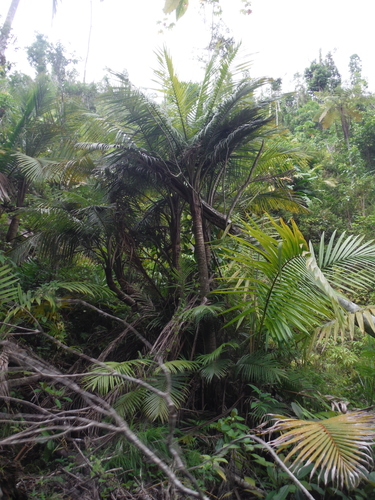
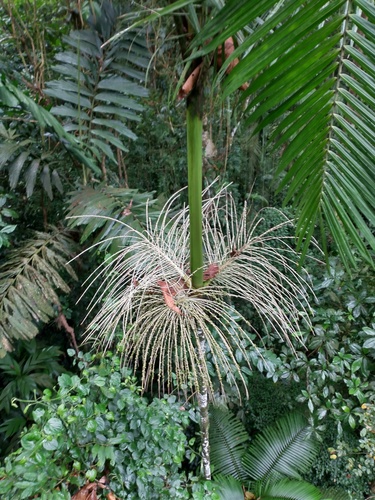
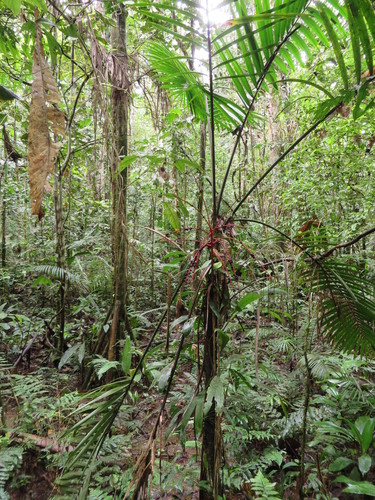
A solitary palm. The trunk is 10-25 m tall. It is 40 cm across. It is smooth and straight. The younger pats are green. There are rings of lighter coloured leaf base scars. The crown-shaft is 1.3-1.6 m tall. It is yellowish green. The leaves are 3.1 m long and erect. They arch over. The leaflets are 1.3 m long and stiff.
Edible Uses
Leaves - cooked. The apical bud, known as a 'palm heart' is eaten as a vegetable. Eating this bud leads to the death of the tree because it is unable to make side-shoots. The name tsaravoasira apparantly means 'good with salt' in the local language. It thus doesn't really need to be said that the palm heart is eaten.
Medicinal Uses
The plant (parts not specified but probably the bark and/or the fruits) is used in the treatment of headaches, jaundice and hepatitis; and also as an aid to lactation.
Known Hazards
This is an endangered plant.
Distribution
A tropical plant. It grows between 275-1050 m altitude in Madagascar. It grows in rainforest. It suits humid locations.
Where It Grows
Africa, Australia, East Africa, Madagascar,
Cultivation
Grows best in a sunny, moist, but well drained position.
Notes
There are 140 Dypsis species. It is an endangered plant.
Also Known As
Hovotravavy, Lavaboko
References (5)
- Dransfield, J. & Beentje, H., 1995, The Palms of Madagascar. Royal Botanical Gardens, Kew and The International Palm Society. p 155
- Haynes, J., & McLaughlin, J., 2000, Edible palms and Their Uses. University of Florida Fact sheet MCDE-00-50-1 p 6
- Hibbert, M., 2002, The Aussie Plant Finder 2002, Florilegium. p 90
- Riffle, R.L. & Craft, P., 2003, An Encyclopedia of Cultivated Palms. Timber Press. p 333
- World Checklist of Useful Plant Species 2020. Royal Botanic Gardens, Kew