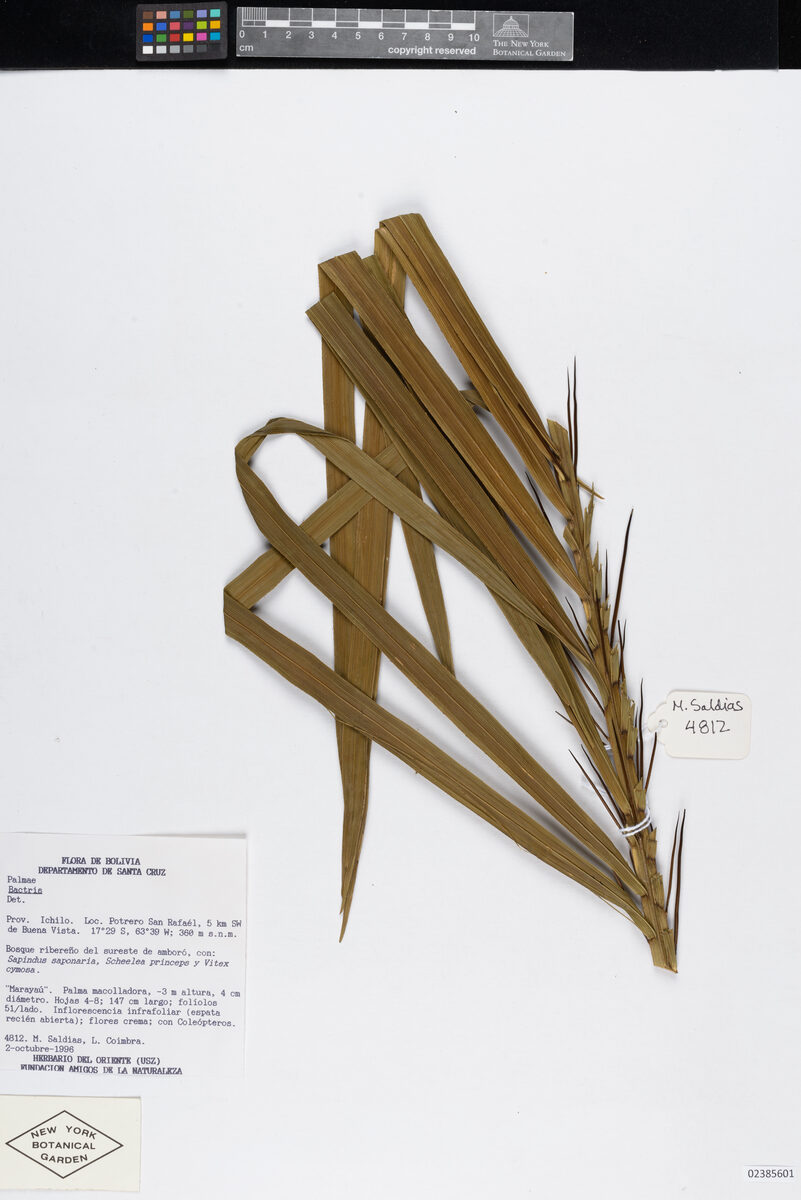
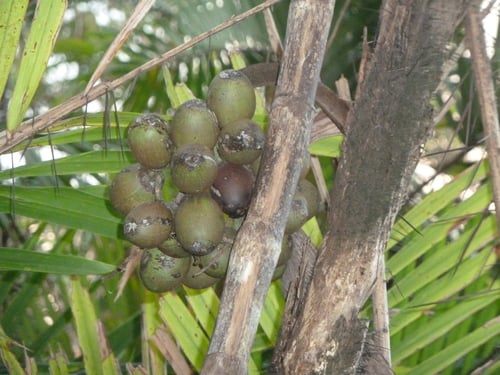
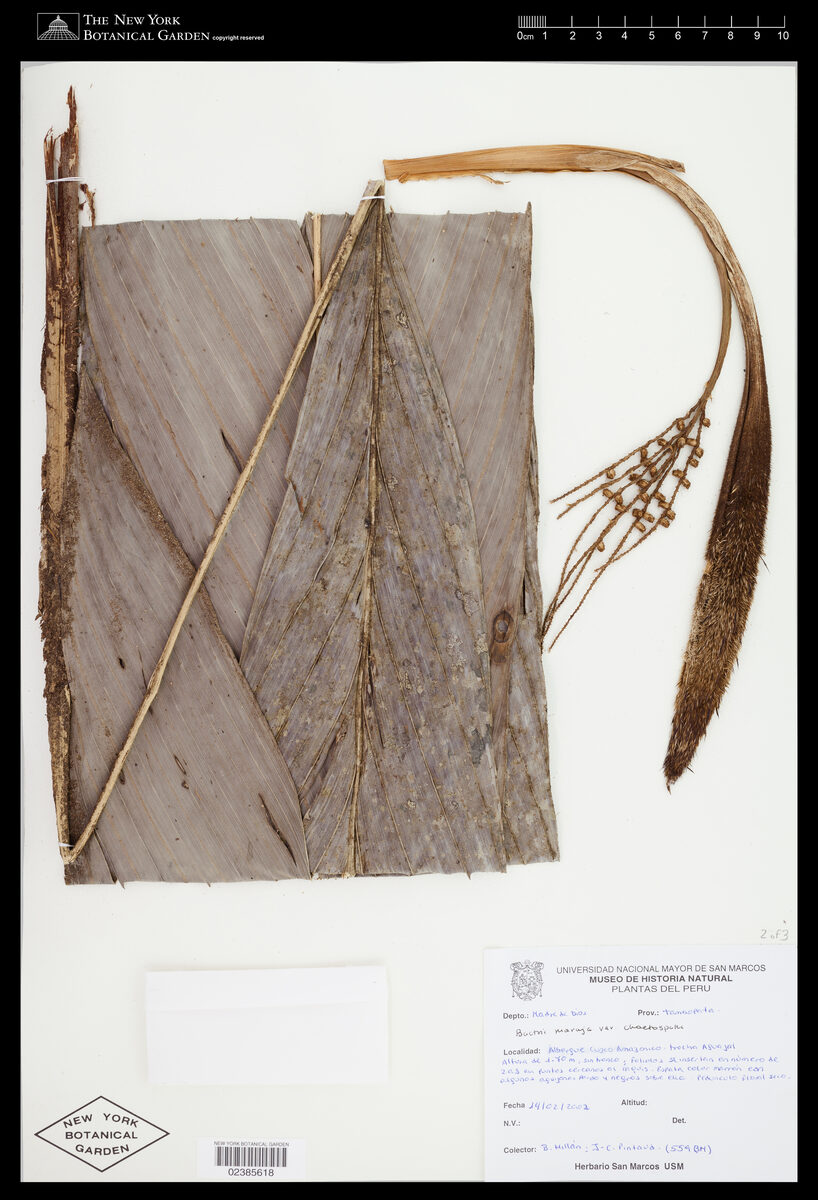
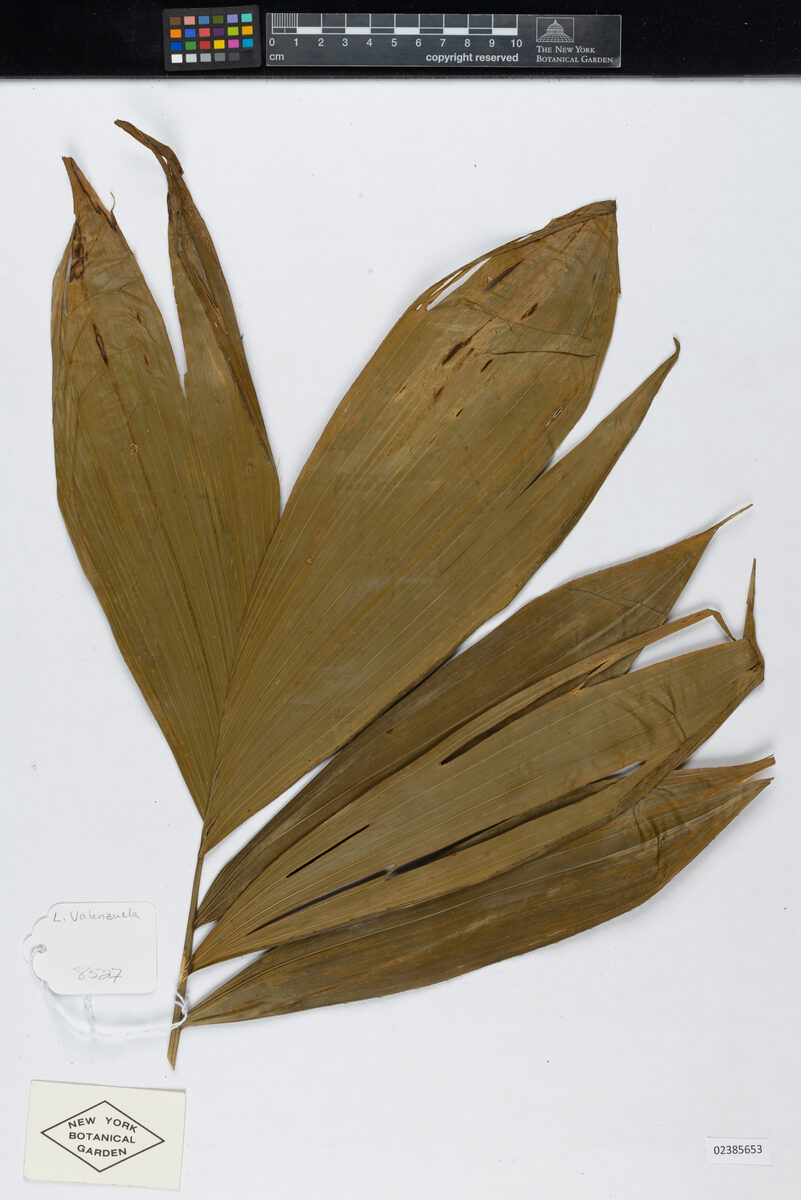
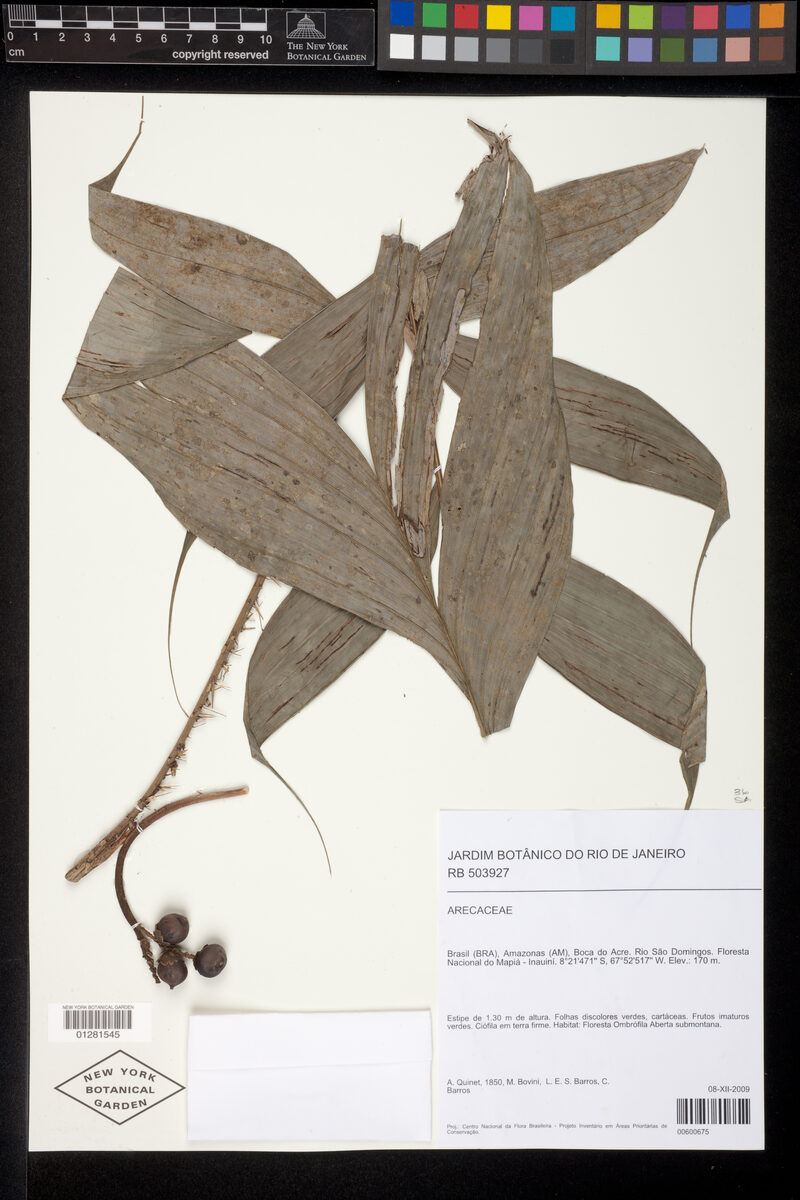
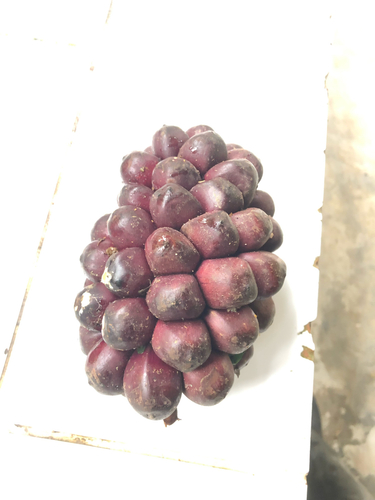
Daemonorops sparsiflora
Becc.
Wi ruah air
gbif· cc0
President and Fellows of Harvard College
gbif· cc0
President and Fellows of Harvard College
gbif· cc0
President and Fellows of Harvard College
Description
A tropical rattan or cane in the palm family, with limited physical description available.
This description is brief — help expand it
Edible Uses
The palm hearts are edible.
Medicinal Uses
The resin is astringent and stimulant. It has been used in dentifrices and as a mouth wash.
Distribution
A tropical plant.
Where It Grows
Asia, Brunei, Indonesia, Malaysia, SE Asia,
Cultivation
A plant of lowland moist tropics. Most species in this genus are more or less vigorous climbing plants in rainforests. In general, they are likely to grow best with their roots in the shade but with enough gap in the canopy to encourage their stems to grow up towards the light. They are also likely to grow best in a humus-rich soil. A dioecious species, both male and female forms need to be grown if fruit and seed are required.
Other Uses
The split cane is locally used for tying. The sheathed stems are around 20 - 30mm in diameter. A red resin, known as 'dragon's blood', is extracted from the fruit scales. The fruits are first dried and the resin then removed by rubbing the fruit with cockle shells. The resin so collected is processed by wrapping in a cloth, dampening in hot water and then being squeezed. It is used in varnishes and lacquers, where it gives a mahogany-like stain. It is also used in photo engraving on zinc, where it protects the metal parts that are not to be etched.
Notes
There are 115 Daemonorops species.
Also Known As
Wei laya
References (2)
- Hoare, A., 2003, Food use of the Lundayeh SW Sabah. Borneo Research Council.
- Johnson, D.V., 1998, Tropical palms. Non-wood Forest products 10. FAO Rome. p 66