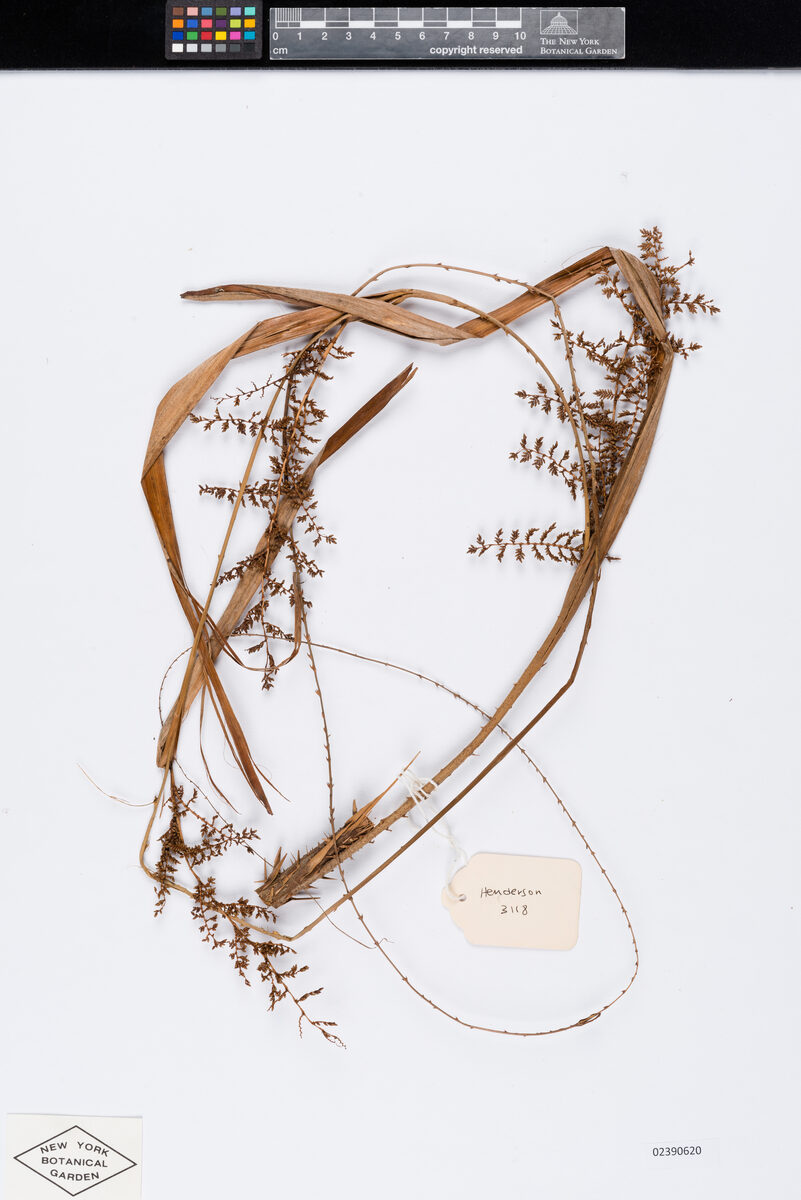
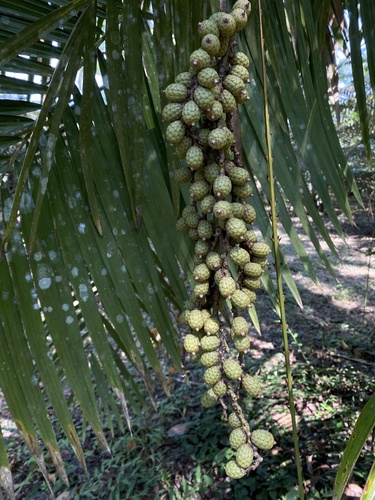
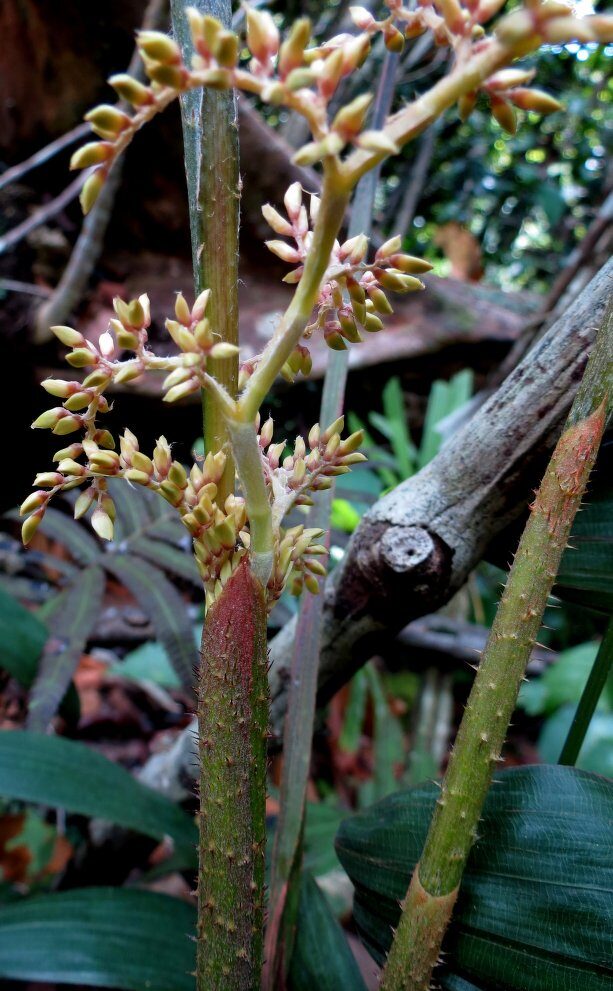
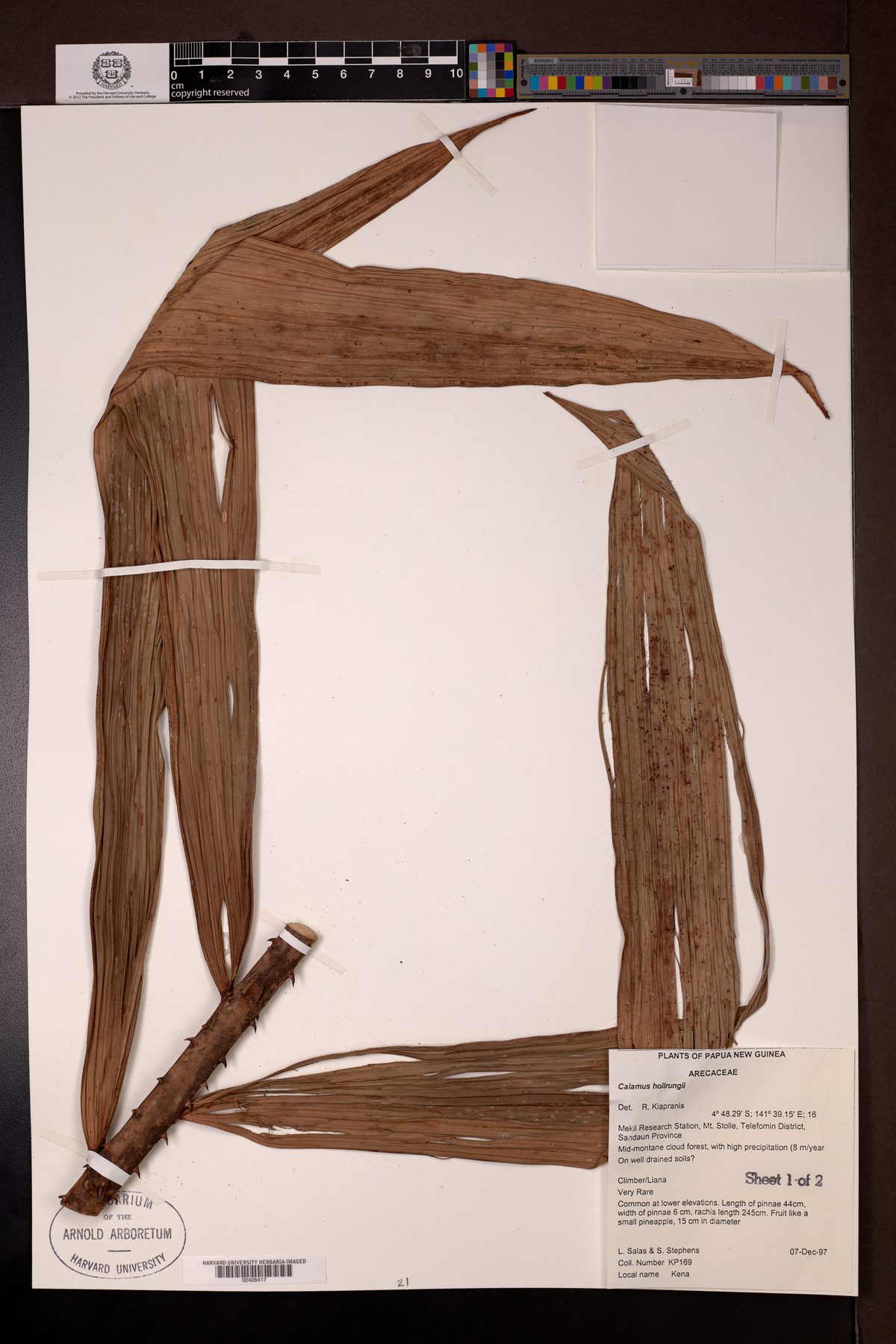
Desmoncus cirrhiferus
A. H. Gentry & Zardini
Matamba, Bora negra
gbif· cc-by
The New York Botanical Garden
gbif· cc-by
The New York Botanical Garden
gbif· cc-by
The New York Botanical Garden
Description
A spiny palm. It has a cluster of stems. These are 5 m tall and 1-2 cm across. They are green. The leaf sheaths are hairy and also have short spines which curve backwards. The leaf axis is 1.7 m long. There are 5-11 leaflets on each side. They are oval and 20 cm long. The tips end on long slender coiled tails 11 cm long. The flowering stalks have 15-19 short flowering branches. The fruit are oval and 1.5-2 cm long by 1-1.5 cm across. They are red. The fruit are edible.
Edible Uses
The fruit are edible.
Distribution
A tropical plant. It grows in coastlands and up to 800 m altitude.
Where It Grows
Andes, Central America, Colombia, Ecuador, Panama, South America,
Notes
There are 7 Desmoncus species.
Also Known As
Biita chuwa, Bi-to-choa, Chilande, Chiyant, Matampa, Pillande, Tejanteka, Vara negra
References (9)
- Haynes, J., & McLaughlin, J., 2000, Edible palms and Their Uses. University of Florida Fact sheet MCDE-00-50-1 p 5
- Henderson, A., Galeano, G and Bernal, R., 1995, Field Guide to the Palms of the Americas. Princeton. p 198
- Johnson, D.V., 1998, Tropical palms. Non-wood Forest products 10. FAO Rome. p 92
- Kermath, B. M., et al, 2014, Food Plants in the Americas: A survey of the domesticated, cultivated and wild plants used for Human food in North, Central and South America and the Caribbean. On line draft. p 303
- Kew Plants of the World onLine
Show all 9 references Hide references
- Marcia, M. J., et al, 2011, Palm Uses in Northwestern South America: A Quantitative Review. Bot. Rev. (2011) 77:462-570
- Roa, J. A. G. & Boada, D. S. G., 2018, Fundación para el Fortalecimiento de la Fruticultura y Plantas Alimenticias no Convencionales en Colombia.
- Torre, de la L., et al, 2008, Enciclopedia de las Plantas Útiles del Ecuador. Herbario QCA. Pontificia Universidad Católica del Ecuador. p 199
- World Checklist of Useful Plant Species 2020. Royal Botanic Gardens, Kew