Desmoncus orthacanthos
Mart.
Big kamwari, Basket tie-tie rattan
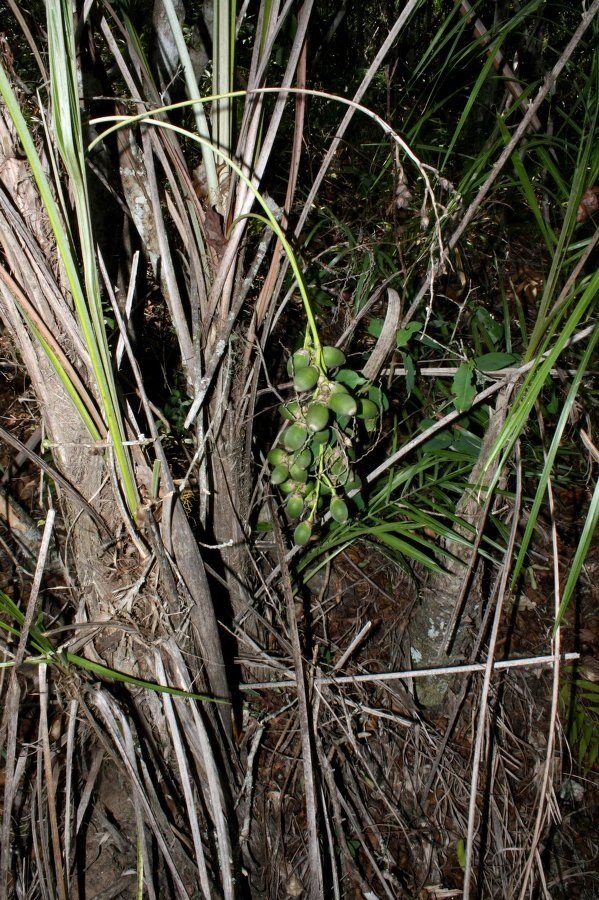
iNaturalist· cc-by-nc
(c) Vinod Babu, some rights reserved (CC BY-NC), uploaded by Vinod Babu
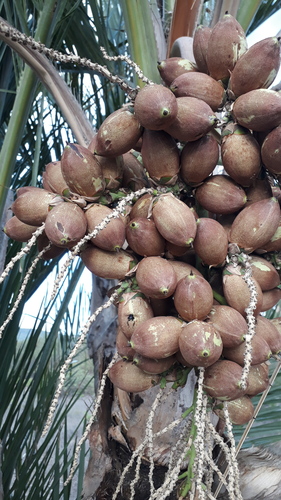
iNaturalist· cc-by-nc
(c) Francisco Jose Gomez Marin, some rights reserved (CC BY-NC), uploaded by Francisco Jose Gomez Marin
Summary
Source: WikipediaDesmoncus orthacanthos is a spiny, climbing palm native to tropical South America. Stems grow clustered together, and are 2–12 m long and 1.5–2 cm in diameter. Stems, leaf sheaths and often leaves are covered with black spines up to 6 cm long. Desmoncus orthacanthos is found in Colombia, Venezuela, Trinidad and Tobago, Guyana, Suriname, French Guiana, Brazil, Bolivia, Ecuador and Peru. The stems are used for basket weaving.
Description
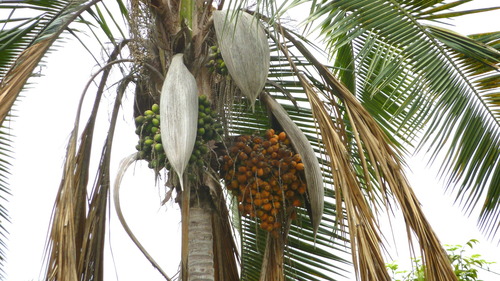
A climbing palm. It grows in clusters. The stems are heavily armed. The stems are 2-12 m long and 1.5-2 cm wide. The sheaths have short black spines. The leaves have hooks that curve backwards near the tip. The leaves have leaflets along the stalks. There are 7-25 on each side. The flowering shoots are large. The fruit is bright red and fleshy. There is one seed.
Edible Uses
The fruit is eaten, and the jelly inside the seed is consumed.
Traditional Uses
The fruit and the jelly inside the seed is eaten.
This uses section is brief — help expand it
Medicinal Uses
A decoction of the root is used as a drastic; it is considered excellent for treating dartre, eczema and certain dermatoses.
Distribution
It is a tropical plant. It grows in secondary forests and swamp forests. It grows up to 1,000 m above sea level.
Where It Grows
America, Asia, Belize, Brazil, Central America, Colombia, Guiana, Guianas, Guyana, Indonesia, Mexico, SE Asia, South America*, Suriname, Trinidad & Tobago, Venezuela,
Cultivation
Plants can be grown from seeds.
Other Uses
Mature stems are used for basket making.
Synonyms
Also Known As
Alakule, Atitara, Bambamaka, Bayal, Grigri palm, Hi yoron, Iatitara, Jacitara, Kamwari, Ratan titi, Tucum-preto, Urubamba, Weheyu
References (7)
- Bortolotto, I. M., et al, 2015, Knowledge and use of wild edible plants in rural communities along Paraguay River, Pantanal, Brazil. Journal or Ethnobiology and Ethnomedicine. 11:46
- Bortolotto, I. M., et al, 2018, Lista preliminar das plantas alimenticias nativas de Mato Grosso do Sul, Brasil. Iheringia, Serie Botanica, Porto Alegre, 73 (supl.):101-116
- Kermath, B. M., et al, 2014, Food Plants in the Americas: A survey of the domesticated, cultivated and wild plants used for Human food in North, Central and South America and the Caribbean. On line draft. p 303
- Reis, S. V. and Lipp, F. L., 1982, New Plant Sources for Drugs and Foods from the New York Botanical Garden herbarium. Harvard. p 18 (As Desmoncus prostratus)
- Roa, J. A. G. & Boada, D. S. G., 2018, Fundación para el Fortalecimiento de la Fruticultura y Plantas Alimenticias no Convencionales en Colombia.
Show all 7 references Hide references
- Sukarya, D. G., (Ed.) 2013, 3,500 Plant Species of the Botanic Gardens of Indonesia. LIPI p 776
- van Andel, T., 2000, Useful plants of Guyana. Non-timber forest products of the North-West District of Guyana. Part 2. A Field Guide. Tropenbos-Guyana Programme. p 298