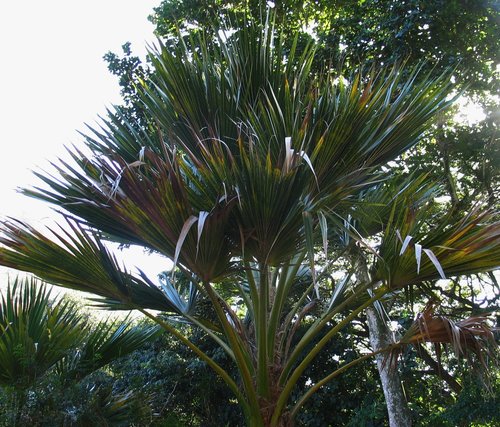
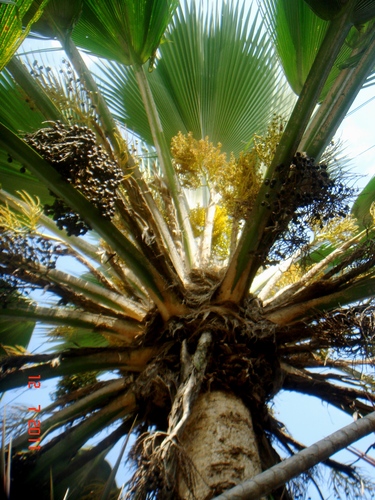
Deckenia nobilis
H. Wendl. ex Seem.
Palmiste
iNaturalist· cc-by
(c) Drew Avery, some rights reserved (CC BY)
iNaturalist· cc-by-nc
(c) Andy Goerdel - Texas Master Naturalist, Good Water Chapter, some rights reserved (CC BY-NC)
Summary
Source: WikipediaDeckenia nobilis (cabbage palm or millionaire's salad) is a species of flowering plant in the family Arecaceae. It is monotypic within the genus Deckenia, and is endemic to the Seychelles, where it is threatened by habitat loss. It was described in 1870.
Description
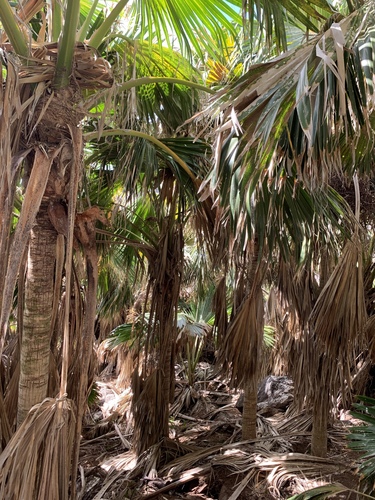
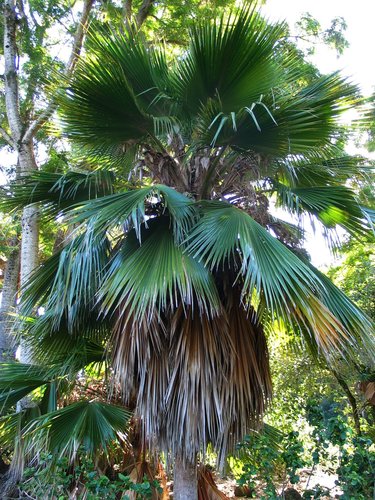
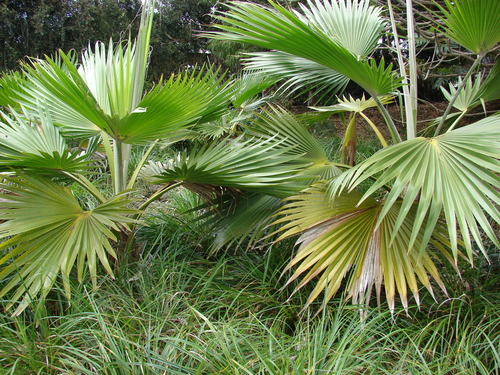
A tall palm. It has a slender trunk which may be 35 m tall. The crown is dark green. The leaves have leaflets along the stalk and the leaflets are slender. Each one has a pointed tip and is hairy underneath. The sheathing bases and leaf stalks are prickly. The fruit are oval and dark purple to black when ripe.
Edible Uses
The palm heart and cabbage (heart) are edible portions.
Traditional Uses
Caution: It is an at risk plant so should not be harvested from the wild.
This uses section is brief — help expand it
Known Hazards
This is an at-risk plant and should not be harvested from the wild.
Distribution
It is a tropical plant. It is very cold sensitive. It needs very good drainage. It grows in rainforest and hills and slopes. It can grow from sea level to 660 m altitude. It suits hardiness zone 10b. In Townsville palmetum.
Where It Grows
Africa, Australia, Seychelles,
Cultivation
It can be grown from seeds.
Production
It is slow growing.
Notes
There is only one Deckenia species. It is an at risk plant.
References (6)
- Balick, M.J. and Beck, H.T., (Ed.), 1990, Useful palms of the World. A Synoptic Bibliography. Colombia p 85
- Gard. Chron. 1870:561. 1870
- Gibbons, M., 1993, Palms. Compact study Guide and Identifier. Sandstone. p 39
- Jones, D.L., 1994, Palms throughout the World. Smithtonian Institution, Washington. p 57, 207
- Jones, D.L., 2000, Palms of Australia 3rd edition. Reed/New Holland. p 153
Show all 6 references Hide references
- Oldfield, S., et al, 1998, The World List of Threatened Trees. World Conservation Press. p 169